
Last updated November 15, 2026
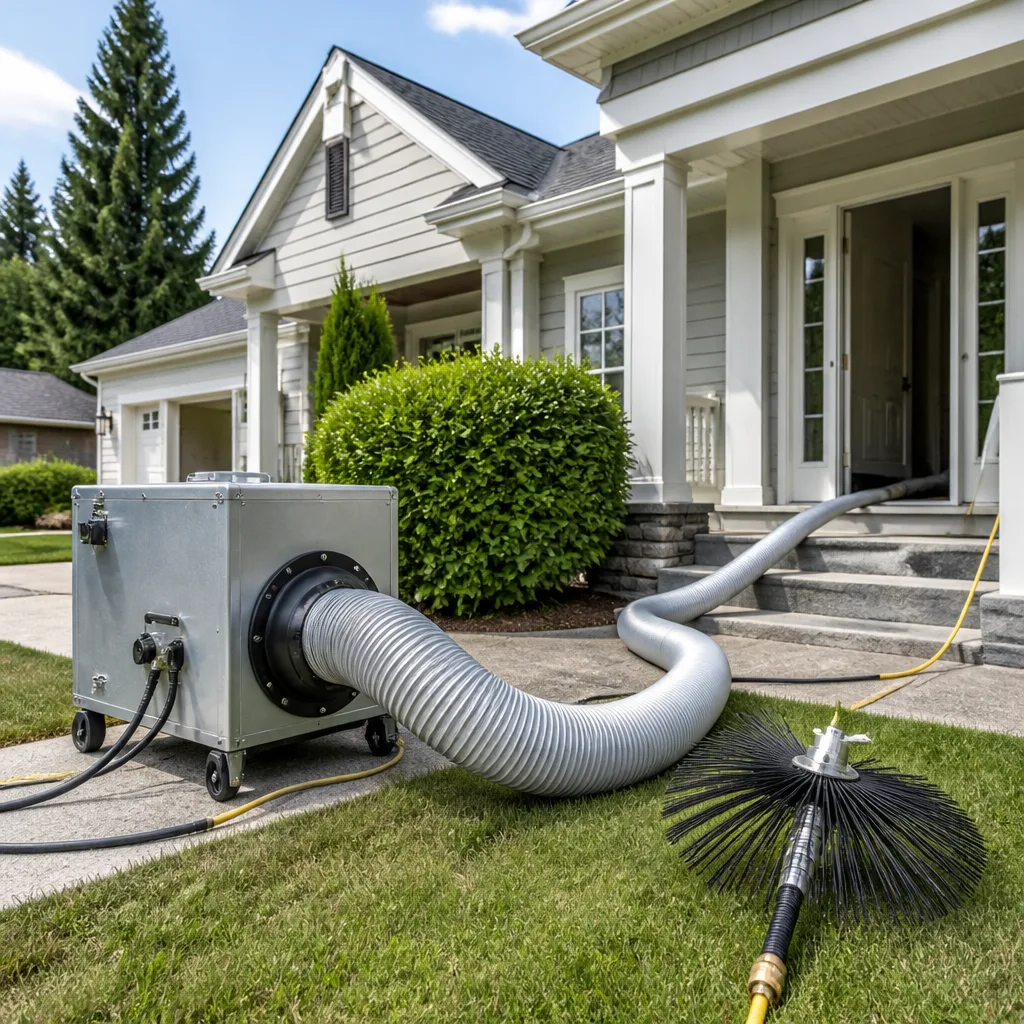 Whole-home duct cleaning
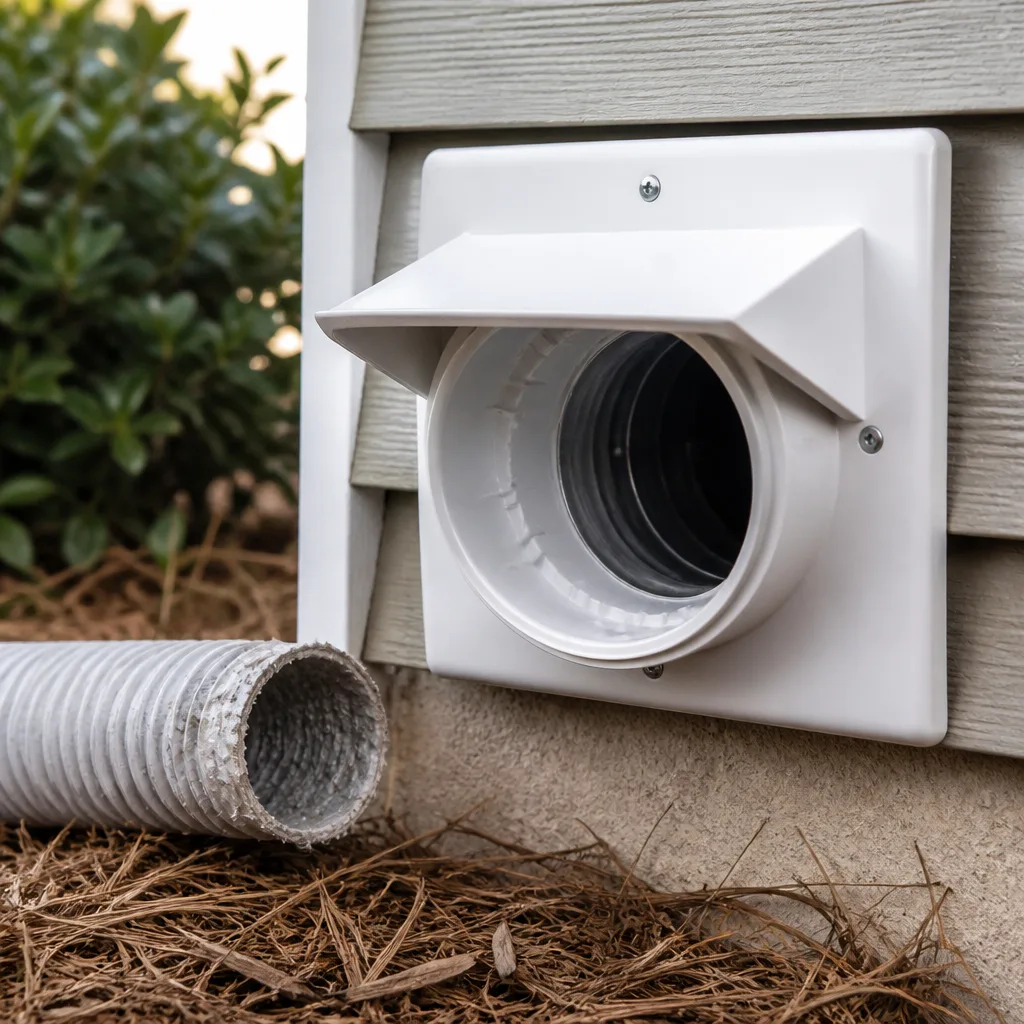 Dryer vent cleaning
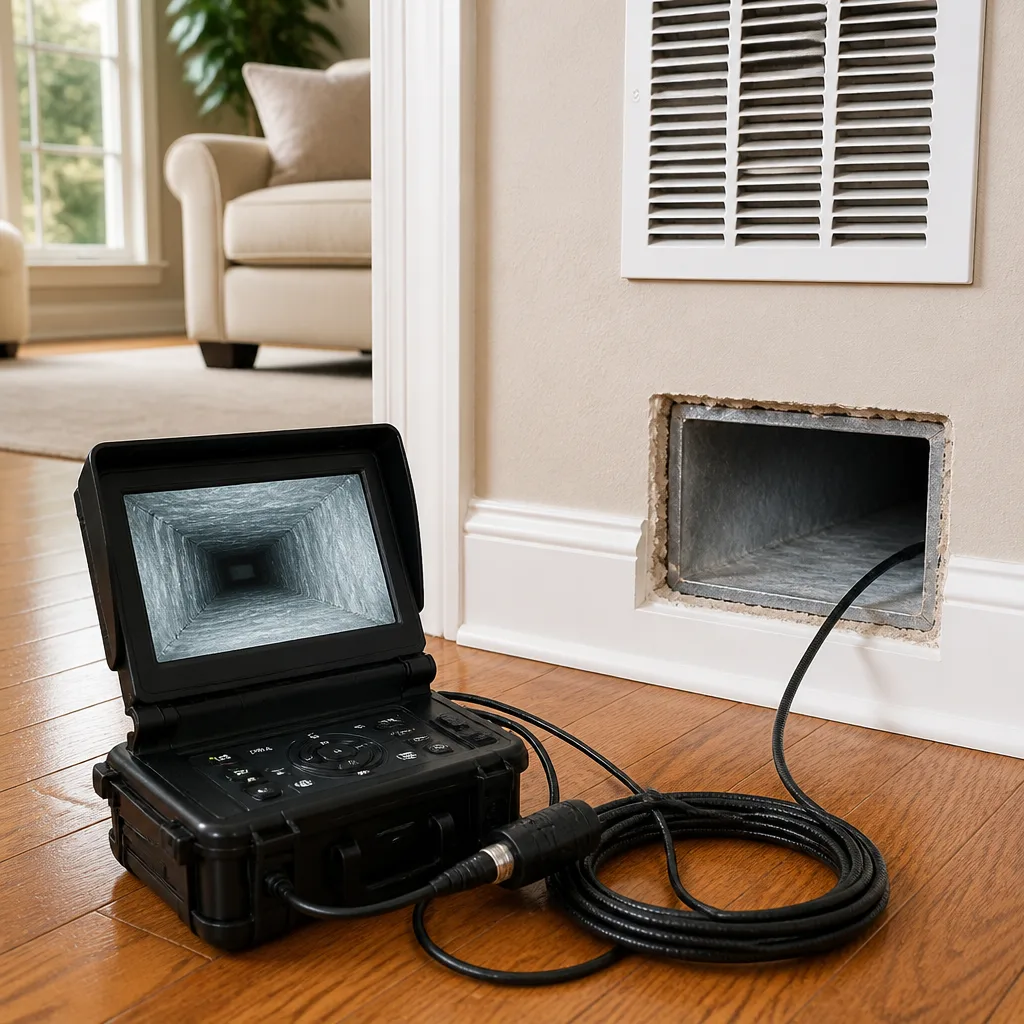 Camera inspection
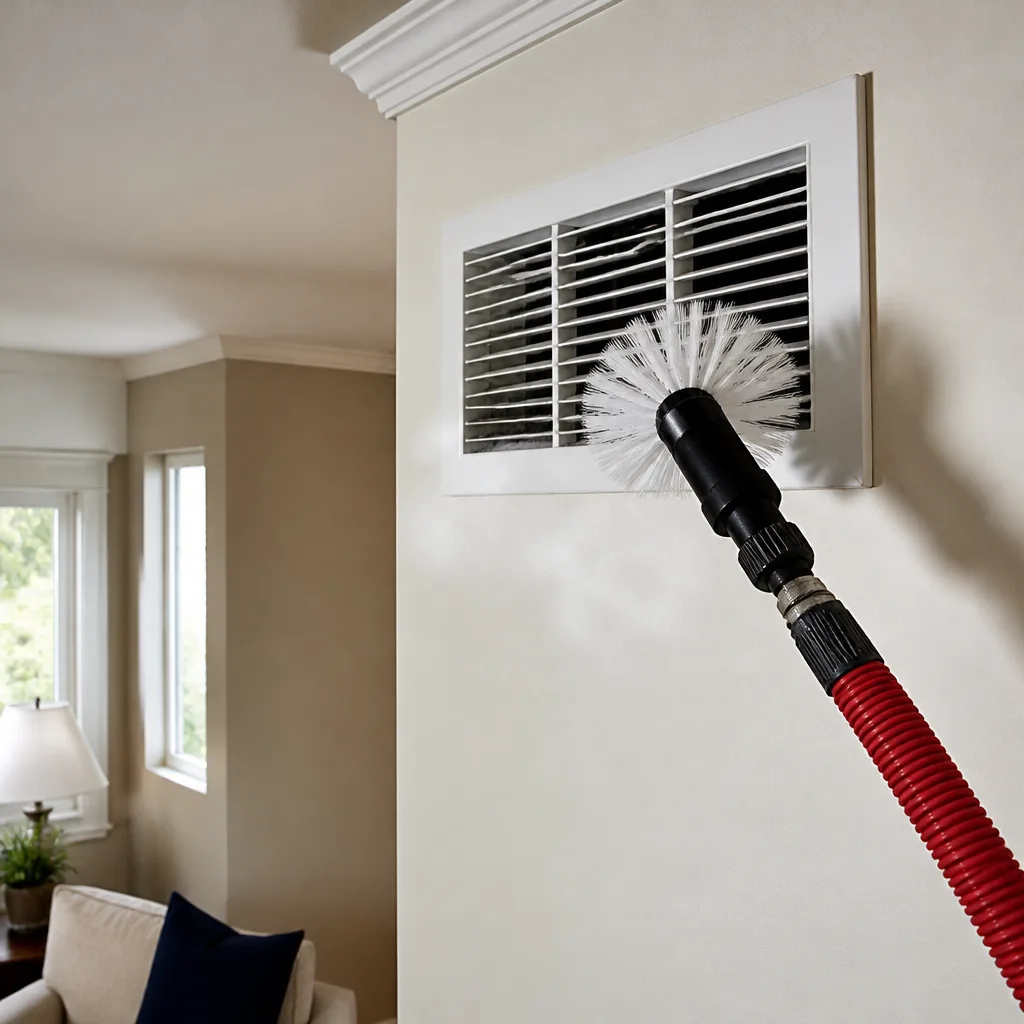 Sanitizing & deodorizing
Whole-system duct and dryer vent check with before-and-after photos - you see exactly what came out of your vents
That "$99 whole-house special" is a bait ad - the real number appears once they are in your hallway, or the "clean" is a shop-vac at the register. We photograph the inside of your ducts before and after instead.
Air Duct Cleaning Troubleshooting in St. Louis: Common Problems and How to Fix Them
If a dirty duct were your only problem, a shop-vac and a weekend video would fix it. That’s the myth worth retiring first. Most duct issues come back because cleaning addressed the debris but missed the disconnected joint, the collapsed flex run, or the undersized return that caused the buildup in the first place. In St. Louis, where summer humidity sits on your ducts like a wet blanket and winter dry air pulls dust off every surface, those mechanical faults show up faster and louder. This guide teaches you to read your system’s symptoms before you spend a dollar. You’ll learn which complaints point to cleaning, which point to repair, and which mean the furnace or AC unit itself needs a look.
Quick Answer
Most home duct problems in St. Louis come down to one of four causes: accumulated debris, a leak or disconnected joint, a crushed or undersized duct run, or an HVAC equipment issue upstream of the ducts. Cleaning is the right fix only for the first. Before booking anything, match your symptom to its cause: weak airflow in one room usually means a duct problem, whole-house dust and musty smell usually means cleaning plus sealing, and a burning smell on startup usually means the furnace, not the ducts. If you can’t tell which, a professional inspection at cleaning time will separate the two on the same visit.
Styles & brands we work with
- Whole-home duct cleaning
- Dryer vent cleaning
- Camera inspection
- Sanitizing & deodorizing
Table of Contents
- Symptom-to-Cause Matrix: What Your Ducts Are Telling You
- How to Tell a Cleaning Problem from a Repair Problem
- Why St. Louis Humidity Makes Mold and Dust Hard to Tell Apart
- Duct Leakage: The Hidden Cause Behind Repeat Buildup
- When the Problem Is the HVAC Unit, Not the Ductwork
- One Room Won’t Cool: How to Troubleshoot a Single Problem Room
- Why Dust Comes Back Weeks After Cleaning
- Safe Visual and Airflow Checks You Can Do Yourself
Symptom-to-Cause Matrix: What Your Ducts Are Telling You
Most homeowners call with a complaint, not a diagnosis. That’s fine. Complaints are the starting point. The real work is translating the complaint into the likely cause so the fix matches the problem. Here’s how the common symptoms map in St. Louis homes.
| Symptom | Most Likely Cause | Right Fix |
|---|---|---|
| One room won’t cool or heat | Disconnected, crushed, or undersized duct run | Duct repair or rebalance |
| Dust reappears within weeks | Duct leakage pulling airborne debris in from attic or crawlspace | Cleaning plus sealing |
| Musty smell that gets worse in summer | Moisture-driven biological growth on register or interior duct surfaces | Inspection, cleaning, moisture control |
| Burning or “hot metal” smell on startup | Dust on the heat exchanger or HVAC component issue | HVAC service call |
| Whole-house dust, no single hot room | Accumulated debris throughout the trunk and branches | Full air duct cleaning |
| Dryer takes two or three cycles to dry a load | Lint buildup in the vent line | dryer vent cleaning |
| Whistling or hissing at a register | Restriction or leak in the run feeding that register | Inspection, likely repair |
Read the matrix as a starting hypothesis, not a verdict. A crushed duct and a failing blower can produce the same weak-airflow symptom, and only a physical look separates them. But the matrix saves you from spending money on the wrong fix first, which is the single most expensive mistake in duct troubleshooting.
How to Tell a Cleaning Problem from a Repair Problem
The distinction matters because cleaning and repair use different tools and solve different problems. Cleaning removes what’s already inside the ducts. Repair corrects the reason material is inside the ducts or not moving through them. Booking one when you needed the other is why people feel like duct work “never really solves anything.”
Here’s the split, in plain terms:
- Cleaning problem: dust, debris, pet hair, construction dust, and light biological growth built up on duct interior surfaces. Symptoms show up everywhere, not just one room.
- Repair problem: a joint pulled apart, a run crushed under attic decking, a flexible duct kinked at a connection, or a supply boot disconnected from the floor register. Symptoms concentrate in one room or one zone.
- Both at once: the most common situation in older St. Louis homes. A leak pulls in attic dust, dust builds up, airflow drops, and the homeowner notices both the dust and the weak room. Cleaning without sealing brings the problem back within the season.
Bellmont carries duct repair as a core service for exactly this reason. When our technicians find a separated joint or collapsed flex run during cleaning, they can fix it on the same visit instead of leaving you to track down a second contractor who may not want to touch ductwork someone else cleaned. We clean it, and if it’s broken, we fix it. That’s the whole point of pairing extraction equipment with repair capability.
Why St. Louis Humidity Makes Mold and Dust Hard to Tell Apart
St. Louis summers swing from 60% to 90% relative humidity without warning, and that swing has a real effect on what grows and collects inside ducts. Homeowners misread the signs constantly, usually in the direction of panic. Dust looks suspicious when humidity has darkened it, and low-level surface growth looks like a full mold problem when it’s a spot on one register.
Here’s how to read a register without guessing:
- Dust and lint: gray or light brown, dry to the touch, easily wiped away, feels soft. Common on return registers in every home.
- Biological growth (mold-like): darker, patches of black, green, or gray, sometimes with a musty smell that intensifies when the AC runs. Feels slightly damp or tacky.
- Construction dust: fine white or gray powder that appears after a renovation and settles evenly, not in patches.
- Corrosion residue: orange-brown streaks near a register that got wet repeatedly. Points to a leak getting into the duct, not a growth problem.
If you see dark patches, don’t scrape them to test. Note where they are and how many registers show the same thing. That information is what a duct specialist needs to decide between cleaning, containment with Bellmont Air Duct Cleaning-grade HEPA equipment, and a referral for a broader inspection. Bellmont carries Abatement Technologies containment gear for this reason: the difference between surface growth on one register and growth on the interior of a duct chase calls for different handling, and clean removal without cross-contamination is the standard we hold ourselves to. Underlying moisture problems that aren’t in the ductwork itself are outside our scope, but we’ll tell you when we see one.
Duct Leakage: The Hidden Cause Behind Repeat Buildup
Duct leakage is the most overlooked root cause in St. Louis duct troubleshooting. A duct system runs through attics that hit 140°F in July and crawlspaces that hover near freezing in January. Flexible duct expands and contracts with that swing, and joint tape dries out, mastic cracks, and collars loosen over time. Every gap pulls in unfiltered air from wherever the duct runs.
That’s why cleaning alone can feel pointless. You pay to clean the inside of the ducts, and the leaks refill them from the attic or crawlspace within weeks. In older St. Louis homes, particularly in neighborhoods where homes were updated with flex duct in piecemeal fashion, the return side is often the worst offender because it runs under negative pressure and actively sucks in attic particles.
Our technicians check for leakage points as part of every job:
- Inspect accessible duct joints in the attic and basement for separated tape, cracked mastic, or disconnected collars.
- Check flex duct for kinks, sagging spans, and crushed runs behind joists.
- Confirm each supply boot is attached and sealed to the floor register.
- Look at the return trunk where it meets the air handler, a common leak point.
- Note any points where ductwork passes through unconditioned space without a seal at the penetration.
Sealing isn’t the same service as cleaning, and we don’t sell it as a bundle. But the two belong together in the conversation because the buildup you see is usually the symptom and the leak is usually the cause. If you’re going to invest in cleaning, address the openings pulling debris back in. Otherwise you’ll be back here next summer troubleshooting the same dust.
When the Problem Is the HVAC Unit, Not the Ductwork
Not every airflow problem is a duct problem, and pretending otherwise wastes your money. The ducts are the delivery system. The furnace and air handler are the source. When the source is the issue, cleaning the ducts is like mopping a floor under a dripping sink.
Signs the equipment itself needs attention:
- Airflow is weak at every register, not just one or two, and it’s getting worse over weeks.
- The blower runs but pushes very little air even after filter replacement.
- A burning, hot-metal, or singed smell on startup that continues after the first minute. This is a furnace issue, not a duct issue, and it warrants an immediate call to an HVAC technician. Don’t run the system until someone looks at it.
- Ice on the indoor coil or the refrigerant line in summer.
- Frequent short-cycling by the furnace or AC.
- Whole-house pressure symptoms like doors that pull shut when the system runs.
If you’re seeing any of those, get an HVAC company in first. Once the equipment is sorted, duct cleaning and repair make sense as a separate step. Bellmont’s scope is duct-related services only: cleaning, dryer vent cleaning, and repair. We don’t do HVAC installation, mold remediation, or general contracting, and we’d rather tell you that upfront than blur the line. If a look at the ducts points to the unit, we’ll say so.
One Room Won’t Cool: How to Troubleshoot a Single Problem Room
A single hot room is the most common complaint we hear from St. Louis homeowners. It’s also the easiest symptom to misdiagnose, because “cleaning” sounds like the answer and almost never is. When one room won’t cool while the rest of the house is fine, the problem is almost always mechanical.
Run this check before you book anything:
- Compare airflow. Hold a tissue over the register in the hot room and one in a working room. If the hot room’s airflow is half or less, that’s a run problem, not a dust problem.
- Look at the register and boot. Check whether the boot is attached to the floor or wall and whether the supply is fully open. A closed damper at the register or at a branch damper in the basement causes exactly this symptom.
- Look at the duct run if visible. In the basement or attic, trace the run feeding the hot room. A kink, a crushed span, or a disconnected collar is easy to spot.
- Check for a return in the room. Rooms without a return depend on undercut door gaps to return air. A carpet that blocks the gap or a door that seals tight can strangle airflow.
- Note whether it’s hot in both heating and cooling seasons. Year-round, it’s a duct problem. Summer only, it may be a sun load or balancing issue.
If steps 1 through 3 point at the run, it’s a repair. If the run looks fine and the system simply never balanced that room, it’s an HVAC balance question. In a handful of cases, the run was sized too small when the house was built, and no amount of cleaning will fix the math. A technician can measure it and tell you which scenario you have.
Why Dust Comes Back Weeks After Cleaning
Dust returning within weeks of a cleaning is frustrating, but it’s also the easiest problem to diagnose if you know what to look for. The dust isn’t coming from nowhere. It’s either new dust the system is pulling in, dust the cleaning didn’t remove, or dust that was never in the ducts at all.
Three real causes, in order of frequency:
- Return-side leakage: the return duct draws air from the attic or crawlspace. Every particle that gets through lands in the system and gets pushed out through the supply registers. The fix is sealing.
- Incomplete cleaning or source control: surface-only cleaning leaves the interior of branches and the trunk partly loaded. That dust re-enters circulation as soon as the blower runs. Professional-grade extraction systems like the Rotobrush and Nikro equipment we use are built to remove material, not just move it around.
- Source problems outside the ducts: a dirty filter, a leaky return in a musty basement, an oversized return in a central hallway pulling in ambient dust, or a home with recent renovation work. No amount of duct cleaning fixes a source that’s still running.
If you’re calling after cleaning dust returns in St. Louis, ask whoever cleaned what equipment was used and whether they checked the return for leaks. If they can’t answer both questions clearly, that tells you something. Before-and-after photos of your own ducts should be a standard part of any professional job, not a special request.
Safe Visual and Airflow Checks You Can Do Yourself
A homeowner can do a surprising amount of accurate troubleshooting with nothing but a flashlight, a tissue, and a few minutes. These checks are safe, they tell you whether you’re looking at a cleaning problem or a repair problem, and they give whoever you call useful information to work with.
- Register airflow check: hold a tissue against each supply register with the system running. Compare movement between rooms.
- Filter check: pull the filter and hold it up to a light. If barely any light passes through, the filter is overdue and airflow is restricted. Replace it and recheck airflow before assuming anything else.
- Register and boot look: shine a light into each supply register. Note visible debris, dark patches, moisture streaks, or gaps where the boot meets the floor or wall.
- Accessible duct run look: in the attic or basement, look for kinks, sagging spans, disconnected tape, and crushed sections. Don’t move or cut anything, just look.
- Return register check: look for large visible debris and confirm the register is unobstructed.
What you shouldn’t do: reach into ducts, spray household cleaners or disinfectants inside them, tape up joints yourself, or pull flex duct apart to look inside. Ducts share air with every room in the house, and a well-intentioned fix can introduce more material than it removes. Those steps belong with someone using professional containment and HEPA equipment, which is exactly why we carry Abatement Technologies gear. There’s also a genuine safety hazard in the equipment side of things: electrical connections and gas-fired heat exchangers are not for amateur diagnosis. A burning or gas smell means turn off the system and call an HVAC professional, not a duct service.
Common Mistakes to Avoid
- Booking cleaning without asking about equipment. A consumer-grade blower that agitates debris without proper extraction leaves more behind than it removes. Ask what system the technician uses and whether containment is part of the job.
- Ignoring return-side leakage. In older St. Louis homes, the return duct is often the biggest source of repeat dust. Cleaning without sealing the return is the classic reason dust comes back in weeks.
- Assuming musty means mold remediation. A musty smell can come from a wet register, a leaky boot, or surface growth on one section of duct. Diagnosis first, scope decisions second. Broad moisture problems that aren’t in the ductwork belong with the right specialist.
- Cleaning ducts before fixing a hot room. If one room is the problem, cleaning won’t fix it. Trace the run first.
- Accepts quotes without a written scope. A professional quote names what gets cleaned, how containment is handled, and whether repair is included. Verbal-only quotes are where bait-and-switch begins.
- Skipping the filter. A clogged filter can mute airflow enough to imitate a duct problem. Check it before you call anyone.
- Ignoring a burning smell at startup. That’s an HVAC issue and a genuine safety concern, not a duct cleaning problem. Turn the system off and call an HVAC technician.
See the difference
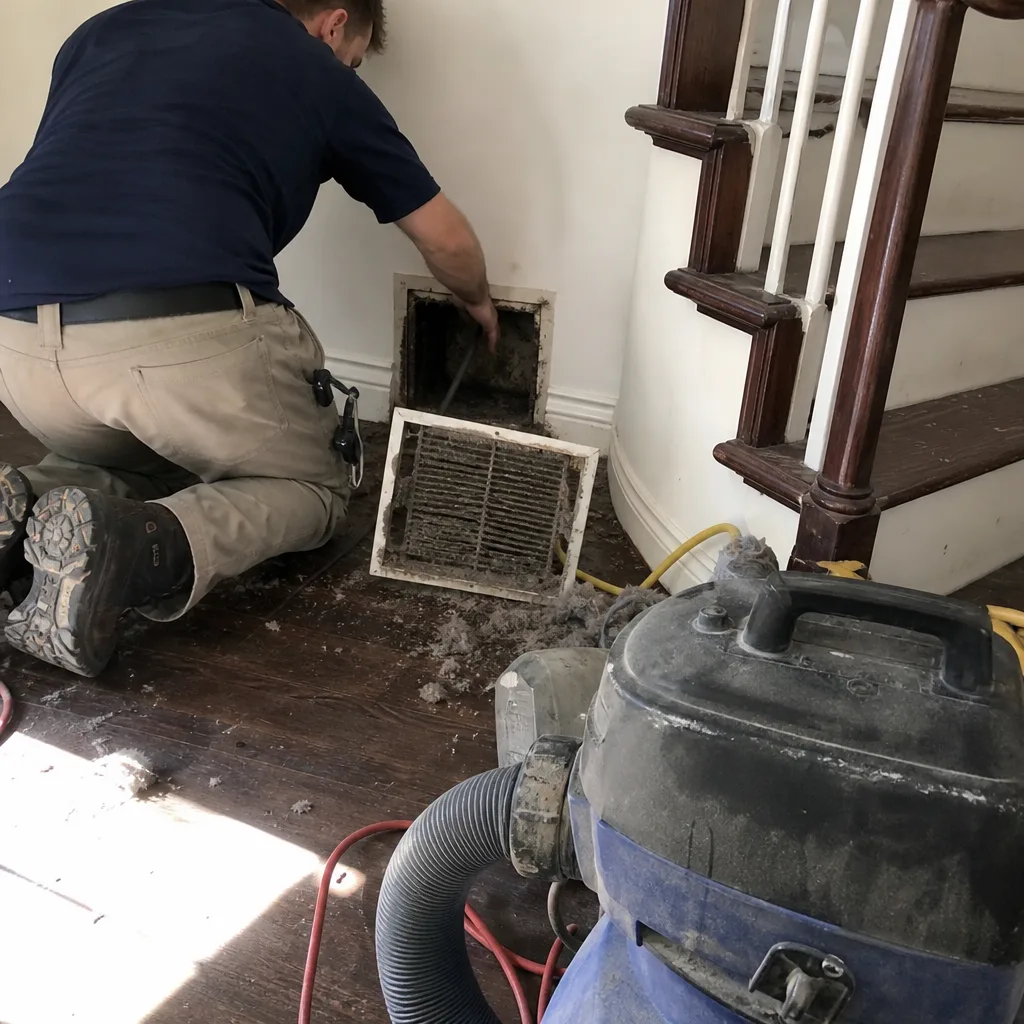 Before
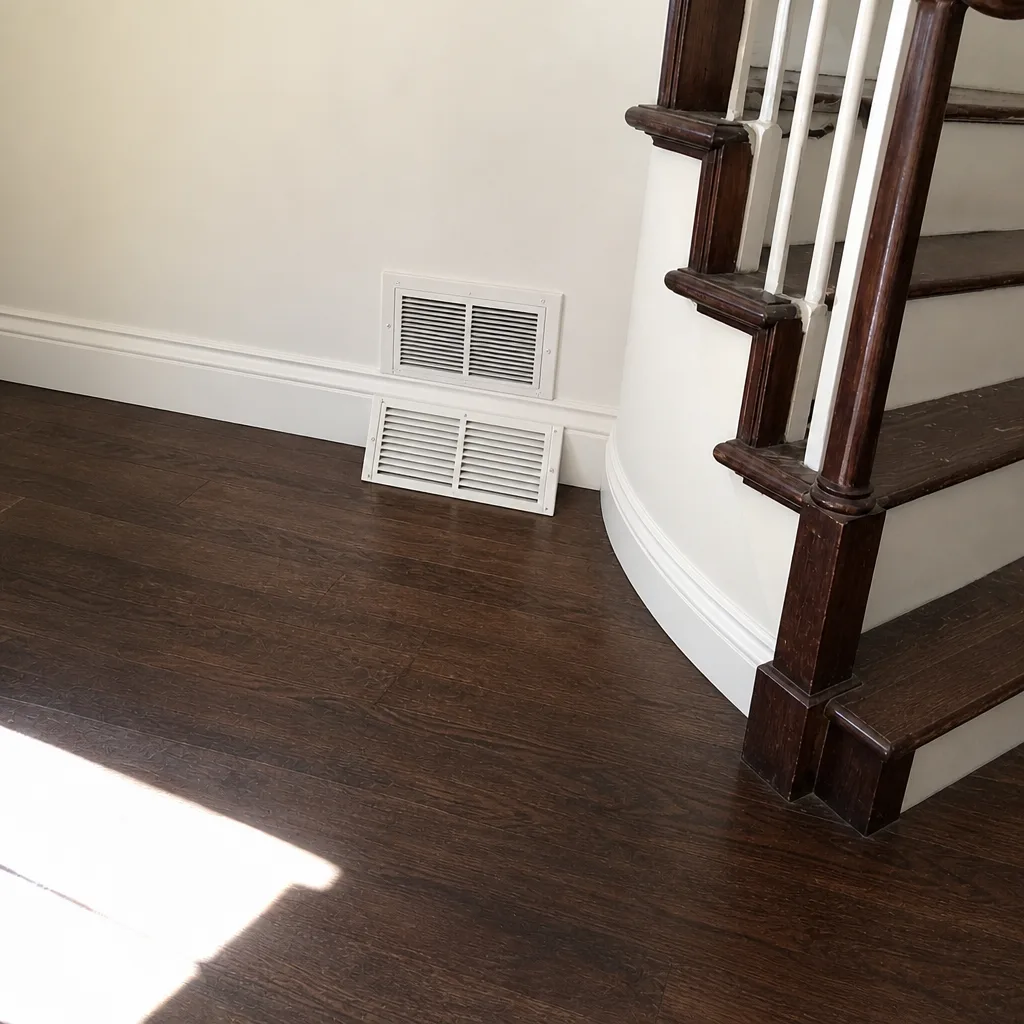 After
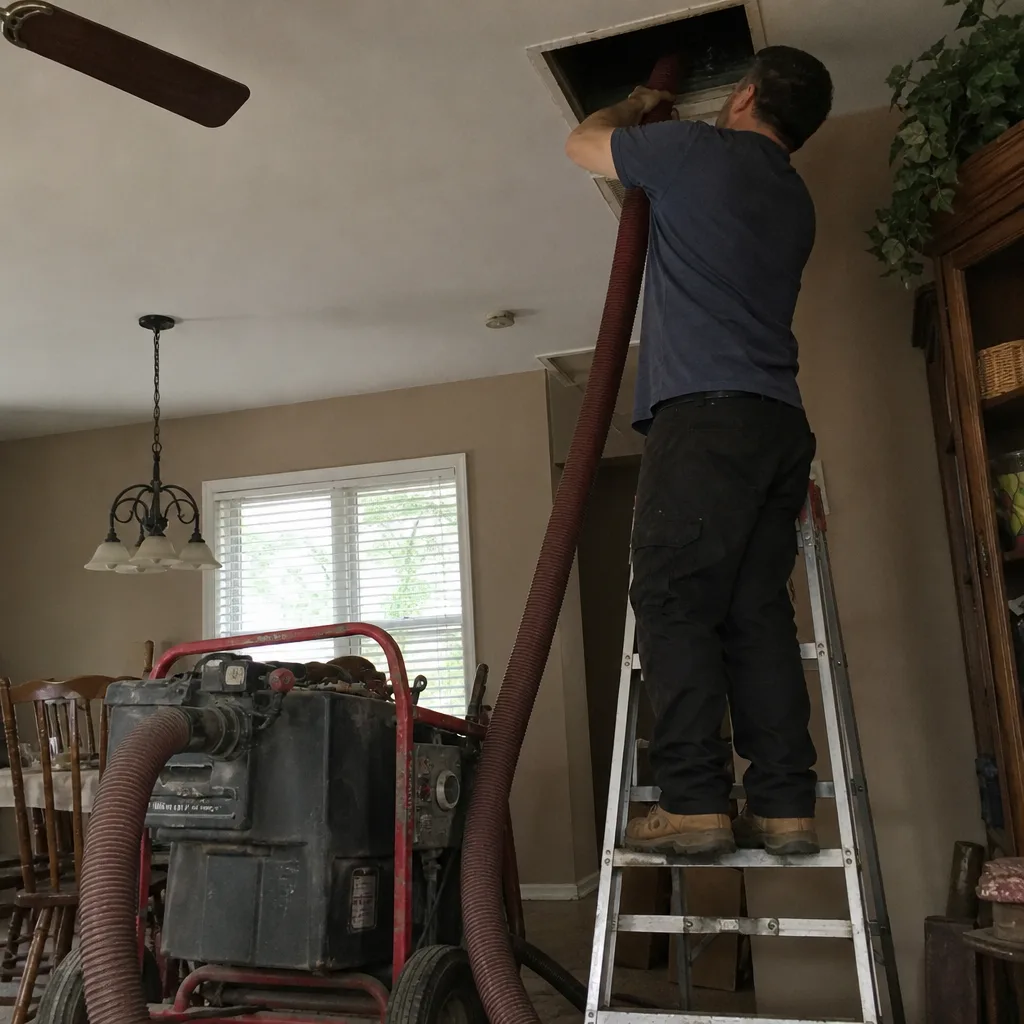 Before
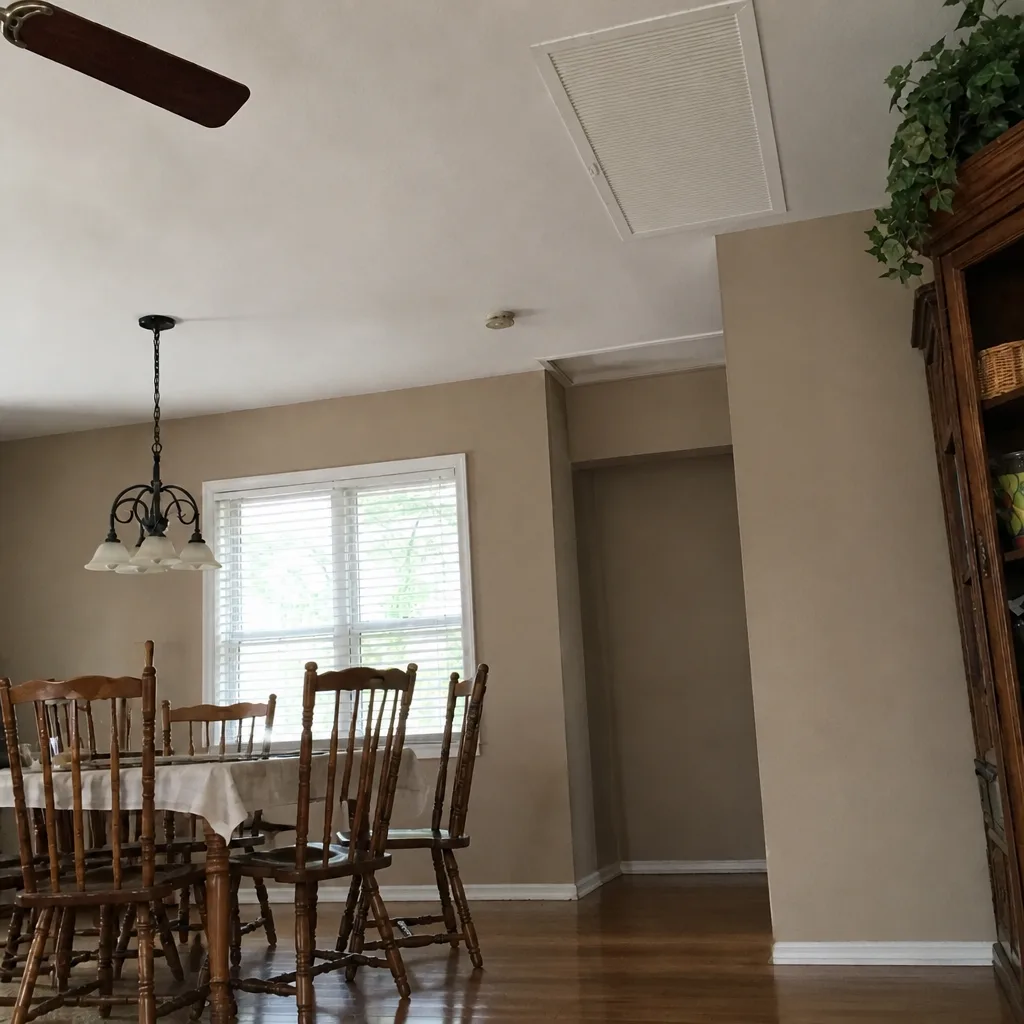 After
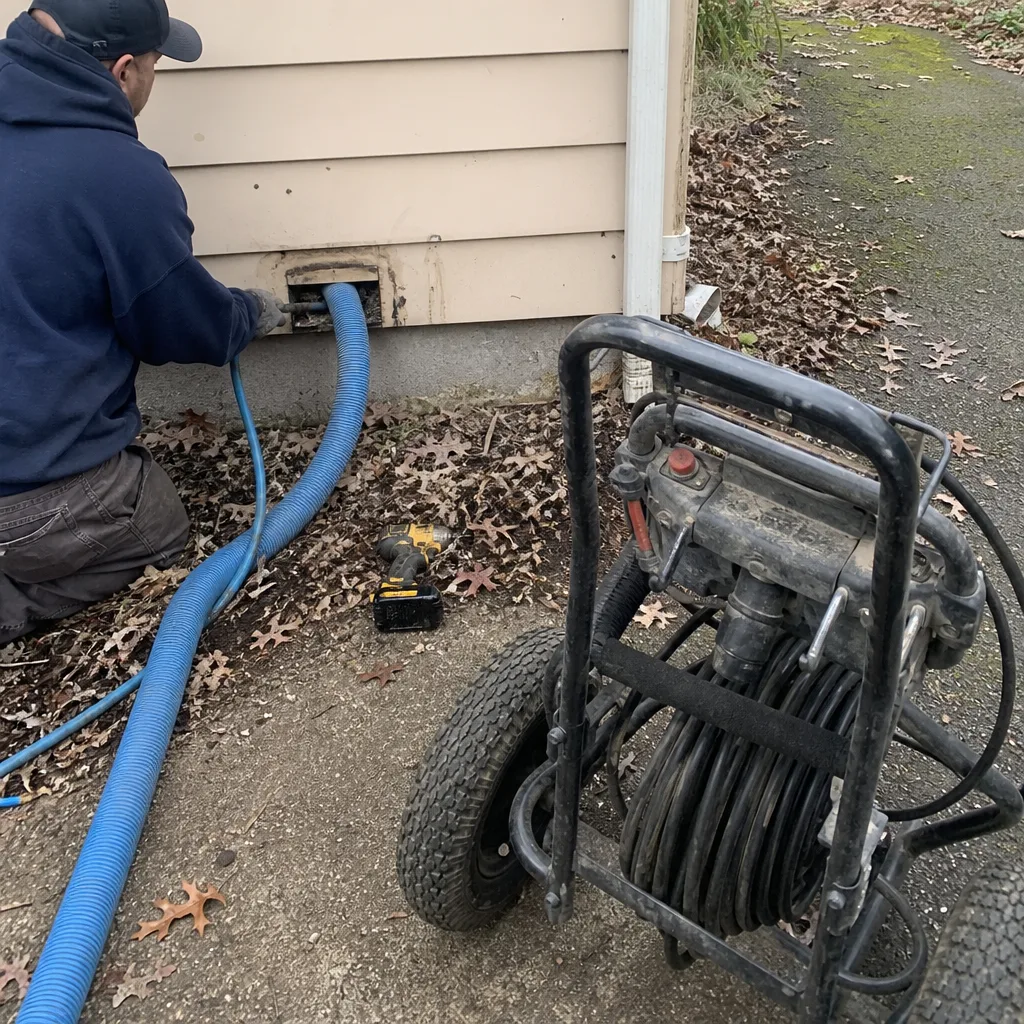 Before
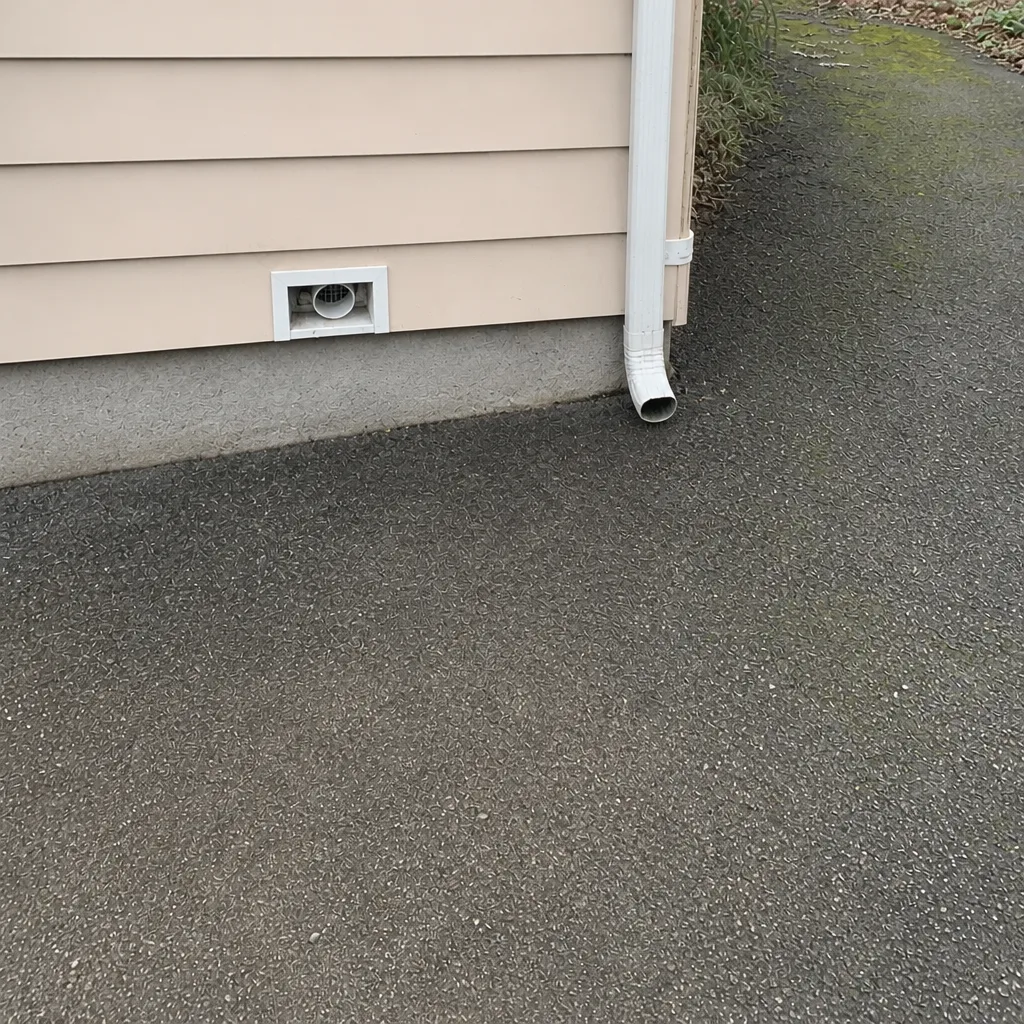 After
When to Call a Professional
Call a professional when you’ve narrowed the problem down but can’t see the fix yourself, when the symptom keeps returning after cleaning, or when a visual check turns up something you don’t recognize. Specific scenarios: dust disappears after cleaning then comes back within a few weeks (leakage); one room won’t hold temperature while the rest of the house is fine (run problem); a register shows dark patches or a musty smell that won’t clear (likely biological growth); a duct run in the attic or basement is visibly crushed or separated; your dryer takes two cycles to dry a load (vent restriction); or the whole system is pulling dust from a musty basement or attic. Bellmont Air Duct Cleaning offers free estimates in St. Louis. Call (877) 349-6189. We answer 24/7. Fast dispatch from 7am to 7pm, Sunday through Friday. Our technicians have up to 9 years of experience, and we carry the equipment to clean, contain, and repair in one visit rather than handing you a list of other people to call.
Frequently Asked Questions
Whole-system air duct cleaning in St. Louis typically runs as a single flat price per system, not a per-vent rate, and the written estimate sets the final number before any work begins. That’s the standard we hold ourselves to because the per-vent model is where bait-and-switch pricing enters the conversation. Call (877) 349-6189 for a free estimate based on your specific system.
Lower quotes usually mean surface-level cleaning with lighter equipment, no containment, and no code capability for repair when the tech finds a broken joint. The low number buys you a partial clean and it’s often the reason the dust is back in a few weeks. Ask what system is used and whether before-and-after photos are included. Call (877) 349-6189 for an honest scope in St. Louis.
Before-and-after photos of your own ducts, taken by the technician, are the standard proof. Ask for them before the job starts so nobody has to scramble at the end. Professional containment also leaves traces: sheets down, filter not disturbed, and no dust drift through the house during the work. If a company can’t show you the photos, that tells you how the job was run.
Most homes in St. Louis benefit from cleaning every few years, and homes with pets, recent renovation, or a return duct running through a musty basement may need it sooner. There is no universal calendar. If your ducts were cleaned recently and dust is back, the problem is cause, not frequency.
No. Cleaning removes debris; it doesn’t correct a kinked run, a disconnected boot, or an undersized supply. If a single room is the problem, the fix is duct repair or rebalancing, and cleaning first just delays the real diagnosis. Call (877) 349-6189 in St. Louis and we’ll tell you which one it is.
Cleaning removes what’s accumulated inside the ducts. Repair corrects the mechanical fault that caused the accumulation or blocked airflow. Bellmont offers both as separate services on the same visit, which is why our St. Louis customers don’t have to schedule a second contractor when the tech finds a broken joint. That’s the difference between solving the symptom and solving the problem.
The Bottom Line
Most duct problems in St. Louis go back to four causes: debris, leakage, a damaged run, or the HVAC equipment itself. Cleaning fixes the first. Sealing and repair address the rest. Before you book anything, match your symptom to its cause: dust everywhere points one way, one hot room points another, and a burning smell at startup means the furnace, not the ducts. Duct repair on the same visit as cleaning is the practical advantage of using a specialist who does both, and it’s the difference between solving the problem and paying twice. Bellmont Air Duct Cleaning offers free estimates and carries the professional-grade equipment to do the job properly. Ready to get ahead of a return call? Reach out and we’ll take a look.
Written by the team at Bellmont Air Duct Cleaning.