
Last updated November 15, 2026
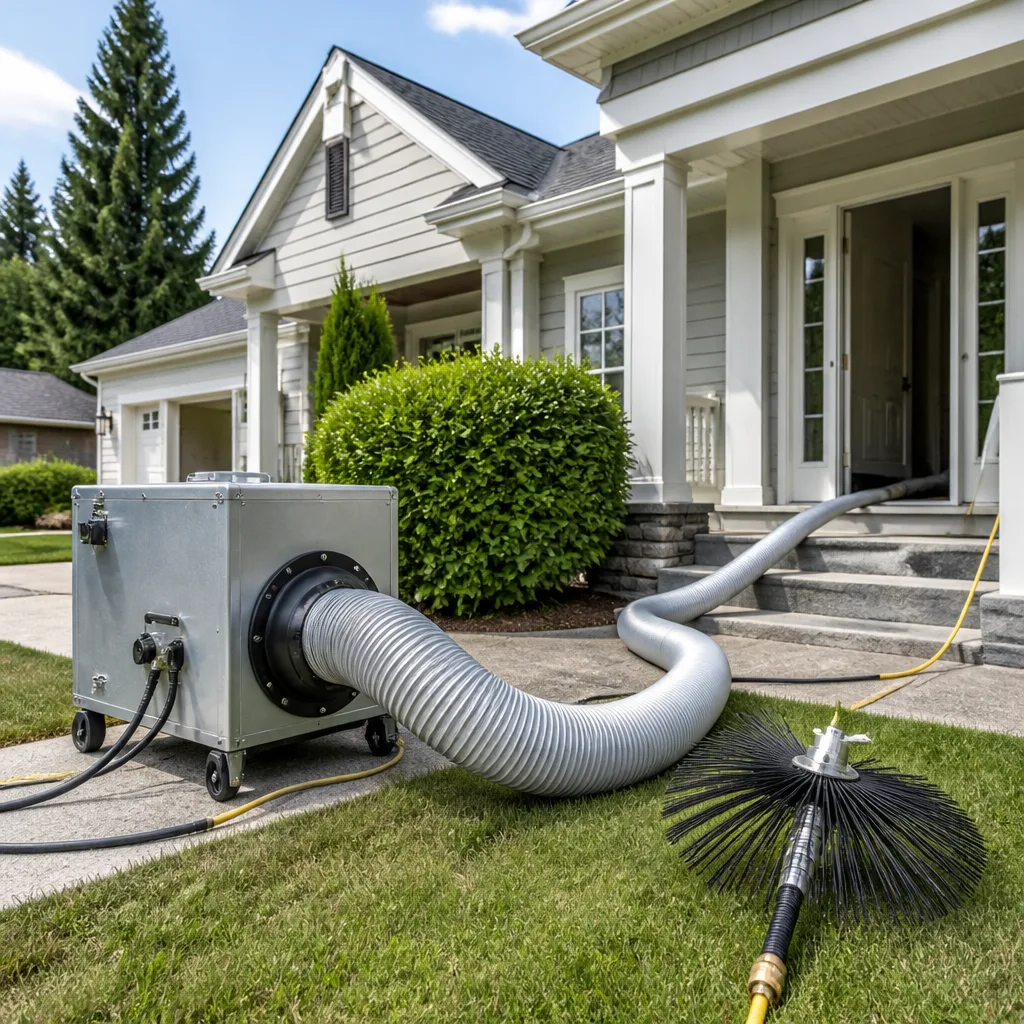 Whole-home duct cleaning
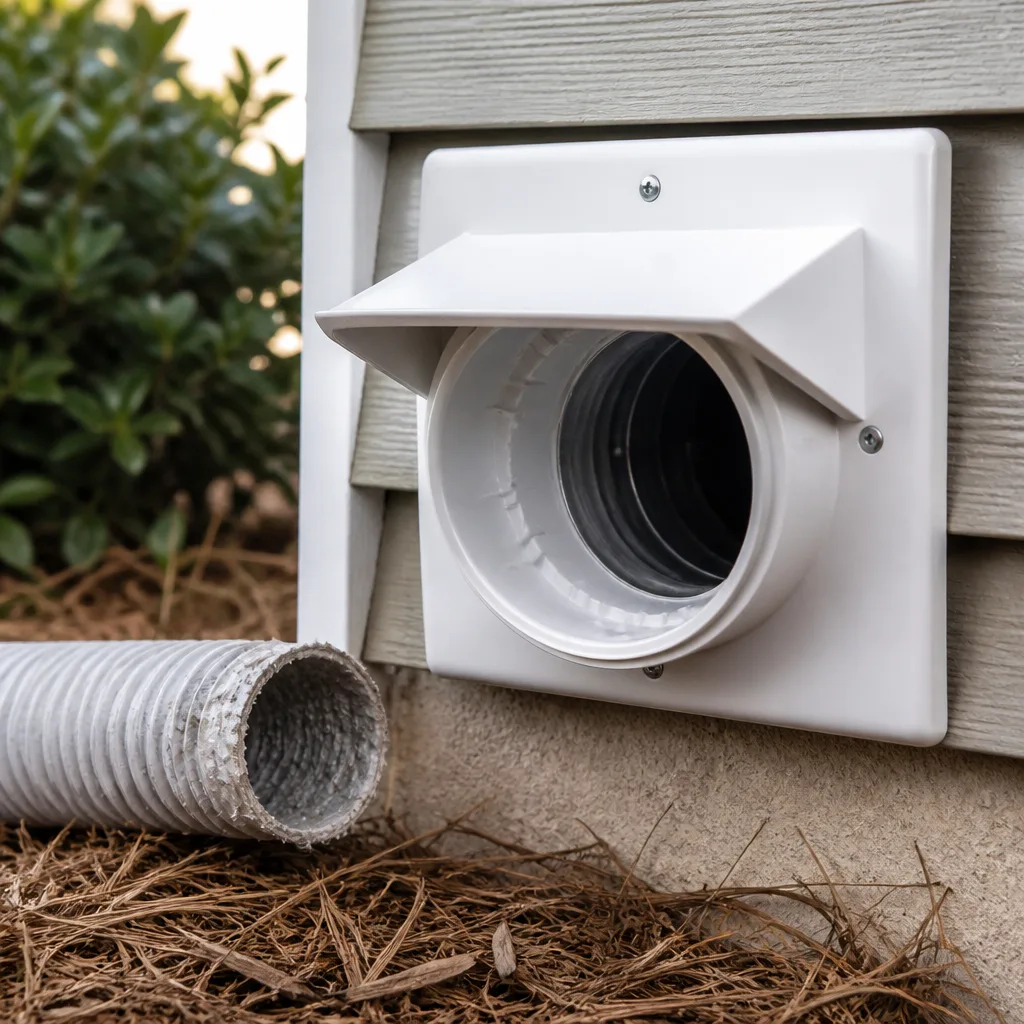 Dryer vent cleaning
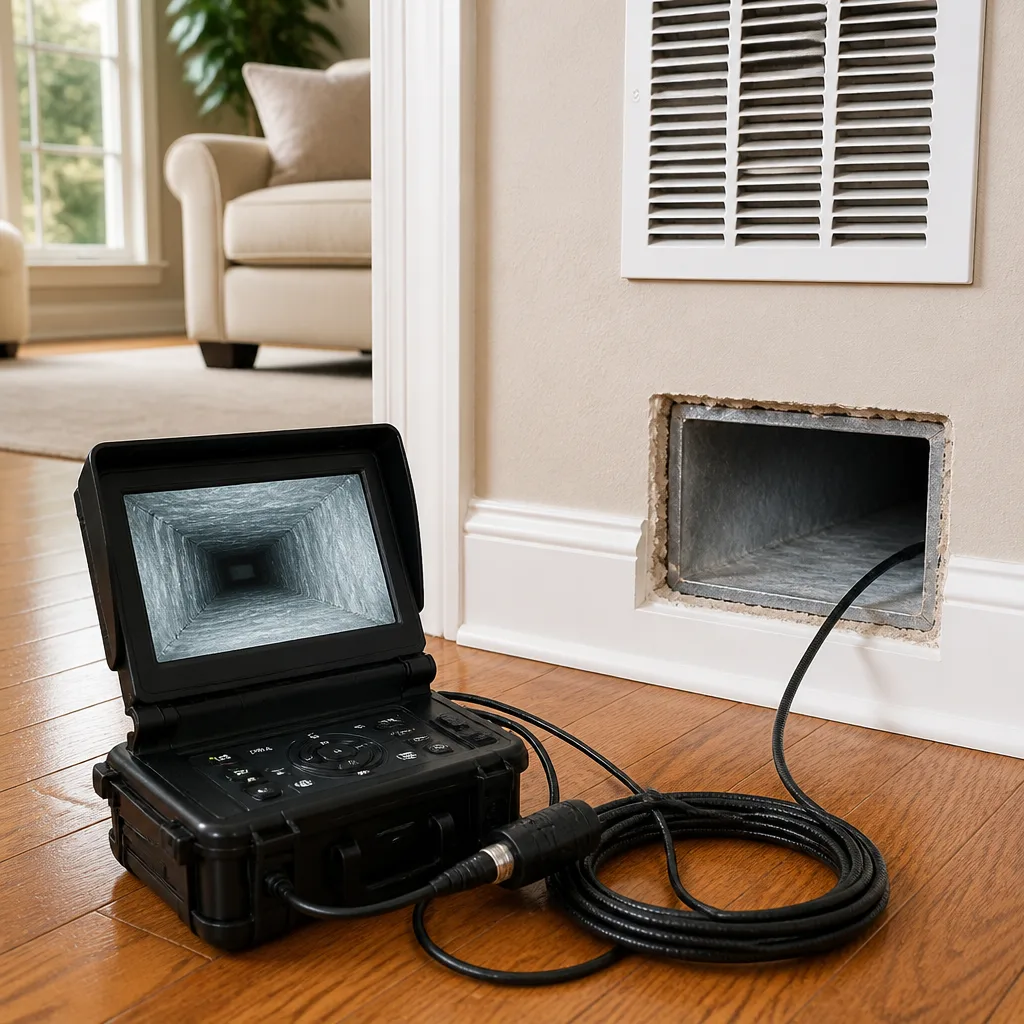 Camera inspection
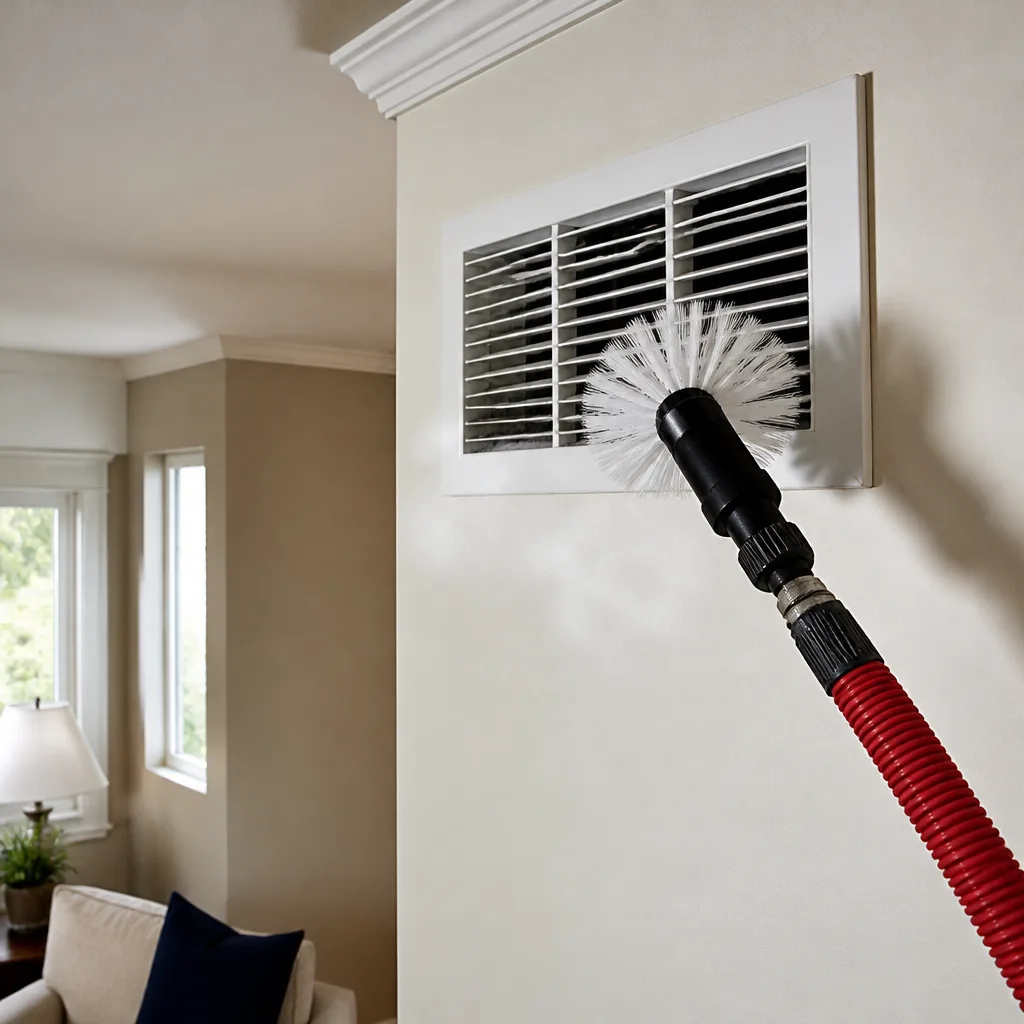 Sanitizing & deodorizing
Whole-system duct and dryer vent check with before-and-after photos - you see exactly what came out of your vents
That "$99 whole-house special" is a bait ad - the real number appears once they are in your hallway, or the "clean" is a shop-vac at the register. We photograph the inside of your ducts before and after instead.
DIY vs Professional Air Duct Cleaning: The St. Louis Homeowner’s Decision Guide
Here’s the part most guides skip: DIY duct cleaning isn’t dangerous. It’s just structurally limited, and the ceiling is lower than you’d expect. A homeowner with a shop-vac and a brush attachment can genuinely clean the first 18 inches of a register. The other 200 feet of ductwork in a typical house will sit there exactly as dirty as it was before you started. That gap, between what you can reach and what actually carries air through your house, is the whole decision. This guide walks through what DIY can honestly accomplish, where consumer equipment runs out of physics, when a DIY attempt makes things worse, and how to judge whether the professional price is worth it in St. Louis.
Quick Answer
DIY air duct cleaning handles surface dust at the registers and filters you can reach, and it’s worth doing. It cannot replicate negative-pressure source removal, which is the process that actually pulls settled debris out of the duct system and captures it instead of pushing it into your rooms. Professional cleaning in St. Louis is the right call when you have visible debris beyond the first stretch, a recent renovation, allergen sensitivity, or a system you haven’t had cleaned since you moved in.
Styles & brands we work with
- Whole-home duct cleaning
- Dryer vent cleaning
- Camera inspection
- Sanitizing & deodorizing
Table of Contents
- What DIY Duct Cleaning Can Legitimately Accomplish
- Why Negative-Pressure Extraction Can’t Be Replicated
- When DIY Attempts Make the Problem Worse
- The Honest Cost-Benefit Calculation
- What St. Louis Homes Do to Ductwork
- What to Do Between Professional Cleanings
- How to Evaluate Professional Duct Cleaning Quotes
- Common Mistakes to Avoid
What DIY Duct Cleaning Can Legitimately Accomplish
We want to be direct about this: some of what you can do yourself is real work, and skipping it because you hired someone once a few years ago isn’t smart either. There’s a legitimate layer of duct maintenance that belongs to the homeowner, and knowing exactly what it covers keeps expectations honest.
DIY duct cleaning, done well and safely, covers three things:
- Register and grille cleaning. Pull every supply and return grille, wash it in the sink or tub with mild soap, dry it fully, and reinstall. This is where most of the visible dust in a house accumulates, and a clean grille alone changes how the system looks and smells.
- Basic visual inspection. With a flashlight and a phone camera, you can look into the first stretch of duct at each register and the return plenum where accessible. You’ll see whether there’s matted debris, standing moisture, pest evidence, or a loose joint. That inspection tells you whether to call a professional sooner rather than later.
- Filter system optimization. Checking that your filter is the right size, correctly seated with no gaps around the frame, and changed on the schedule the manufacturer lists is one of the highest-value things a homeowner can do. A filter that doesn’t seal at the edges lets air bypass it entirely, and no amount of duct cleaning fixes that.
Notice what’s missing from that list: the ducts themselves. The interior of the trunk line, the branch runs feeding upstairs bedrooms, the return chase behind the wall. Those need equipment that pulls debris out of the system rather than pushing it around inside it, and that’s where consumer gear hits a wall. In older St. Louis homes, where the original ductwork has often been modified and reconnected over several renovations, that interior work is usually the part that matters most.
Why Negative-Pressure Extraction Can’t Be Replicated
The core technique in professional duct cleaning is negative-pressure source removal. A high-powered vacuum unit hooks up to the main trunk line and pulls the whole duct system into negative pressure, so every opening in the system is drawing air in. Then agitation tools run through the ducts, breaking dust loose and letting the vacuum carry it out to a HEPA-filtered collection unit. Nothing is blown into the living space; everything is captured.
You cannot replicate this with consumer equipment, and it’s not about power. It’s about airflow volume and containment. Here’s what’s actually happening inside the duct when debris gets disturbed:
- Dust and lint that have settled on duct walls become airborne the moment they’re touched. That’s the point of agitation.
- Airborne particulate rides whatever airstream exists. If there’s no strong negative pressure pulling it toward a collection point, it moves with the air that the HVAC system or the room is moving through the space.
- Consumer vacuums move enough air to loosen debris but nowhere near enough to capture it in volume. The system ends up delivering a fine layer of what was on the duct walls back into the room air.
- Without HEPA containment on the exhaust side, whatever the shop-vac does capture still passes particulate through its own filter and out into the room.
This is why the professional setup matters. The air duct cleaning we do relies on Rotobrush and Nikro extraction systems with Abatement Technologies containment equipment. Those aren’t bigger versions of a shop-vac; they’re built for the physics of moving suspended particulate out of an enclosed system without releasing it into the house. Consumer gear can’t get there, and no technique on the homeowner side bridges the gap.
When DIY Attempts Make the Problem Worse
There’s a real risk category in DIY duct cleaning, and it’s not injury. It’s damage and redistribution. Most homeowners who make things worse do it by accident, trying to do the right thing with the wrong tools. Two scenarios come up over and over in St. Louis homes.
Scenario one: disturbing settled debris without extraction. Debris that has settled in a duct is mostly harmless sitting there. Disturb it and it becomes airborne. If there’s no strong negative pressure pulling it out, it lands somewhere else in the system, clogs the evaporator coil in a way that reduces efficiency, or exits into rooms through the nearest register. What looked like a dusty vent turns into dusty rooms for weeks. In humid St. Louis summers, when the system is running hard and constantly moving air, that redistribution spreads quickly through every room the system serves.
Scenario two: dislodging flexible duct connections. A lot of St. Louis homes, particularly post-1980 construction and any remodeled attic or basement run, use flex duct. The connections between flex sections and metal boots are secured with zip ties, tape, or mastic and can be fragile after years of temperature cycling. Running a brush attachment deep into a flex run with a shop-vac can pull a joint loose. A disconnected flex run doesn’t look any different at the register, but the room it was serving now gets a fraction of the airflow it used to, and the duct is dumping conditioned air into a wall cavity or attic. It’s a repair problem hiding behind an invisible symptom.
Both scenarios share a common feature: the damage is quiet until it isn’t. That’s the strongest argument for staying within the register-and-filter layer on your own and calling a professional for anything deeper.
The Honest Cost-Benefit Calculation
Here’s where we’d rather give a straight answer than a sales pitch. The price gap between DIY and professional cleaning is real, and whether it’s justified depends entirely on your situation. For some St. Louis homeowners, a thorough DIY register-and-filter effort is genuinely sufficient. For others, it’s the wrong trade and the gap to professional results is large.
The scenarios where DIY is a reasonable answer:
- You bought a home recently and the previous cleaning was documented within the last few years.
- Visible dust is confined to grilles and filter boxes and the interiors look clean on inspection.
- No recent renovation, no pets with heavy shedding, no known allergen sensitivities in the household.
- You’re looking to maintain a decent system, not fix a problem.
The scenarios where the professional price is justified without much debate:
- You’ve never had the ducts cleaned and don’t know their history.
- The home has had a renovation involving drywall, sanding, or major HVAC work.
- Someone in the house has asthma, allergies, or an indoor-air concern.
- You see debris, matting, or visible soiling beyond the register throat.
- Airflow is uneven between rooms or individual rooms seem under-served.
Bellmont’s cleaning is quoted as one flat price per system, agreed before work starts, with before-and-after photos of your own ducts so you can see what was actually there and what was removed. That structure matters in this calculation. If the price is fixed up front, you can compare it to the value of what you’re getting in one move rather than discovering the real number after the technician is already on site. Call (877) 349-6189 for a free estimate and you’ll get a specific range for your home, not a teaser rate that gets renegotiated at the door.
What St. Louis Homes Do to Ductwork
St. Louis has a few conditions that make duct care a different equation than in, say, Phoenix or Denver. None of them are alarming; they’re just the local realities a homeowner should factor in when deciding whether to clean or wait.
Humidity and the cooling season. St. Louis summers run humid, and an HVAC system in a humid climate has to work its evaporator coil harder to dehumidify. A dusty coil is less effective at that job, and a duct system that hasn’t been cleaned in years holds a reservoir of particulate that keeps re-contacting the coil. In a house where the system runs daily from May through September, that’s a long stretch of continuous exposure.
Aging housing stock. A large share of St. Louis homes, from the older neighborhoods to the city’s permanent housing core, have ductwork that has been modified, extended, and reconnected across multiple renovations. Original sheet-metal trunk lines meet flex branches. Returns get added in ways the original system didn’t anticipate. That accumulated construction history means debris accumulation patterns are more varied and harder to predict than in a uniform newer build. Professional inspection finds what the homeowner can’t.
Return-side design. In a lot of St. Louis homes, the return plenum is one of the dustiest spots in the system because it’s the low-pressure side and sees debris that never quite made it to the filter. It’s also the hardest to reach. If you haven’t had a look there, you don’t know the state of your system.
None of this means every St. Louis house needs immediate professional cleaning. It means the decision should be based on this home, this system, and this history, not on a generic answer from the internet.
What to Do Between Professional Cleanings
The most useful DIY role in the whole duct care picture is the maintenance interval. A professional cleaning resets the system; the homeowner’s job is to keep it in decent shape between visits. Doing the maintenance layer well extends the interval, sometimes significantly, and it doesn’t require any special equipment.
- Change the filter on schedule. Follow the filter manufacturer’s interval, not a general rule. A high-MERV filter clogs faster than a basic one, and a clogged filter reduces airflow, which affects everything downstream.
- Verify the filter fits and seals. Check that the filter seats fully in its frame with no visible gaps at the edges. If air is bypassing the filter, it’s carrying dust past your main defense.
- Clean the supply and return grilles every few months. A damp cloth or a quick wash in the sink is enough. Dust on the grille face is a symptom, not a cause, but keeping it clean helps you spot changes faster.
- Check the return plenum annually. With a flashlight and a phone camera, look into the return path near the air handler. Photograph what you see so you have a comparison point next year.
- Watch for warning signs between cleanings. Uneven airflow, musty smells at registers, visible debris on the supply side, or a sharp drop in HVAC efficiency are all reasons to schedule a professional look before the interval you planned.
- Keep a filter log. Write the date you change the filter on the filter itself. It’s a small habit that removes any guessing about whether you’re actually on schedule.
The one legitimate opportunity here is that a professional cleaning can catch things your DIY maintenance can’t. If a Bellmont technician finds a loose or disconnected duct joint during a scheduled cleaning, we can repair it on the same visit rather than leaving you to find a second contractor. That’s a real advantage of hiring a specialist: the diagnosis and the fix happen in one appointment. Our technicians have up to 9 years of experience reading the interior of a duct system and knowing when a joint is compromised versus just dusty.
How to Evaluate Professional Duct Cleaning Quotes
Most homeowners’ real hesitation about hiring a professional is the reputation this industry has earned. A coupon price that becomes a much larger invoice once the technician is on site. Per-vent pricing that balloons. Bait-and-switch on the scope. All of those are real problems and the way to protect yourself is to know what to ask.
Here’s the checklist we’d give a friend:
- Is the price quoted per system or per vent? Whole-system pricing, agreed in writing before work starts, is the fair structure. Per-vent pricing is the structure that tends to inflate.
- What extraction equipment will they use? Rotobrush, Nikro, Abatement Technologies containment gear, or equivalent professional equipment. A company that shows up with only a shop-vac and a hose isn’t doing the job you’re paying for.
- Will they take before-and-after photos of my ducts? Photos of your system, not stock images of a spotless duct, are how you know the work was done.
- Can they repair a problem if they find one? Finding a disconnected flex joint during cleaning and having to refer you elsewhere for the repair is a frustrating split. A specialist who does repair as a core service saves a second call.
- What’s the written scope? Every register, every return, the trunk line, the plenum, and the air handler opening if it’s accessible. If the scope is vague, ask for it in writing.
Be wary of teaser coupon pricing. A low advertised number is not a quote; it’s an invitation to a conversation on the technician’s terms. A real estimate is a range, in writing, for your home.
If the quote includes blast-and-go “sanitizing” as the main feature, ask to see the extraction equipment. A system that isn’t physically removed and pulled out under negative pressure isn’t cleaned, regardless of what gets sprayed on the walls.
A Bellmont estimate is free, the price is per job and per system, and it’s set by the written estimate before any work begins. Call (877) 349-6189 for a quote specific to your home.
Common Mistakes to Avoid
- Running a shop-vac brush deep into flex duct. Flex duct connections are fragile after years of temperature cycling. If you feel resistance, stop. That resistance is usually a taped joint, and pulling harder is how you lose the connection.
- Spraying aerosol “duct sanitizer” into the registers without cleaning first. Sanitizer on a dirty duct just adds a coating over the dust. It doesn’t remove anything, and it can mask the smell problem you were trying to solve.
- Assuming the first register you check tells you about the whole system. The supply side in St. Louis homes often looks cleaner than the return side. If you only check the register throat, you’re seeing the easy part.
- Ignoring the air handler opening. The coil and drain pan are where dust accumulates first and most visibly. Skipping them during a DIY effort means dust in the ducts keeps feeding into the coil.
- Hiring a company whose only tool is a shop-vac on a hose. If they can’t describe the extraction equipment and containment they use, that’s the answer. There’s a real difference between a vacuum and a negative-pressure source removal system.
- Choosing on price alone. In St. Louis duct cleaning, the low quote is often the one that turns into a surprise invoice. Pay attention to scope, equipment, and photos, not just the number.
- Waiting until symptoms are severe before cleaning. Uneven airflow, musty odors, or visible soiling beyond the register are early signs. Catching them early is what keeps the eventual cleaning efficient and the repair bill lower.
See the difference
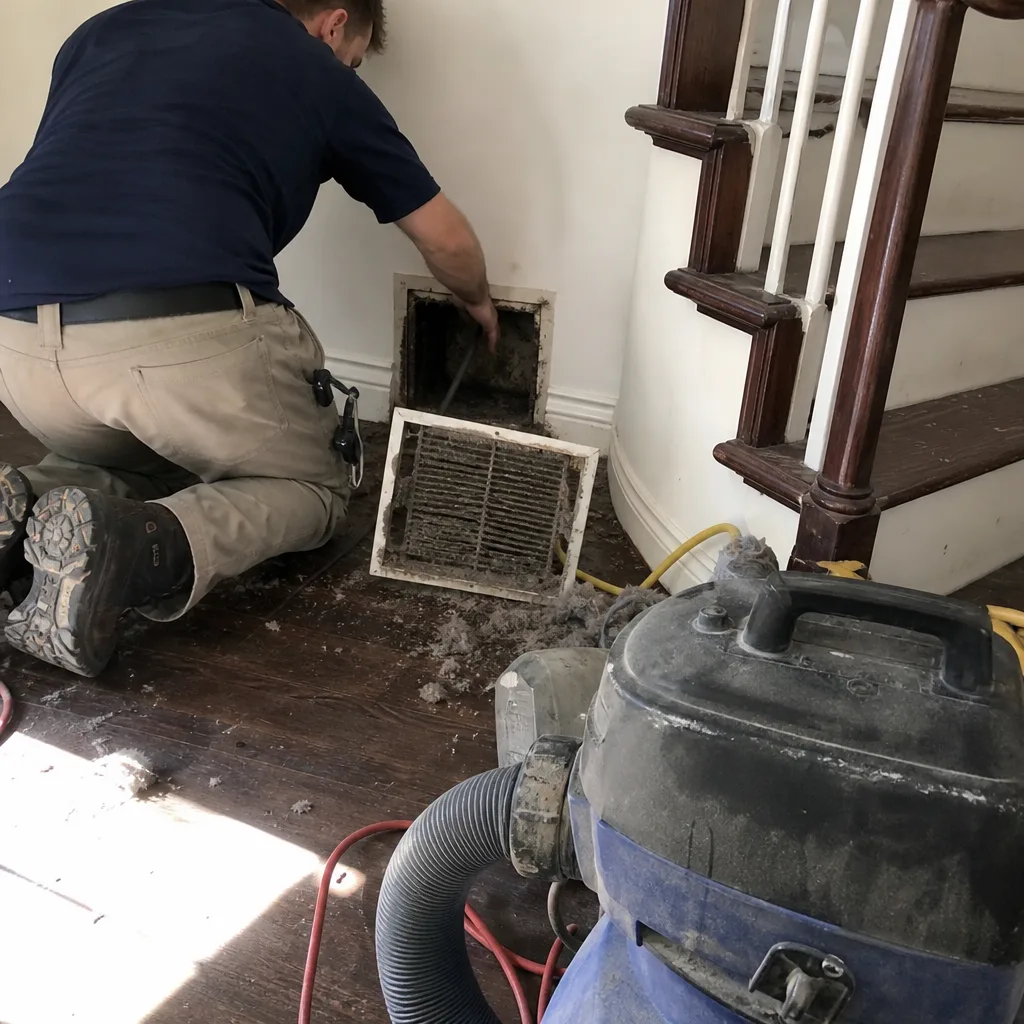 Before
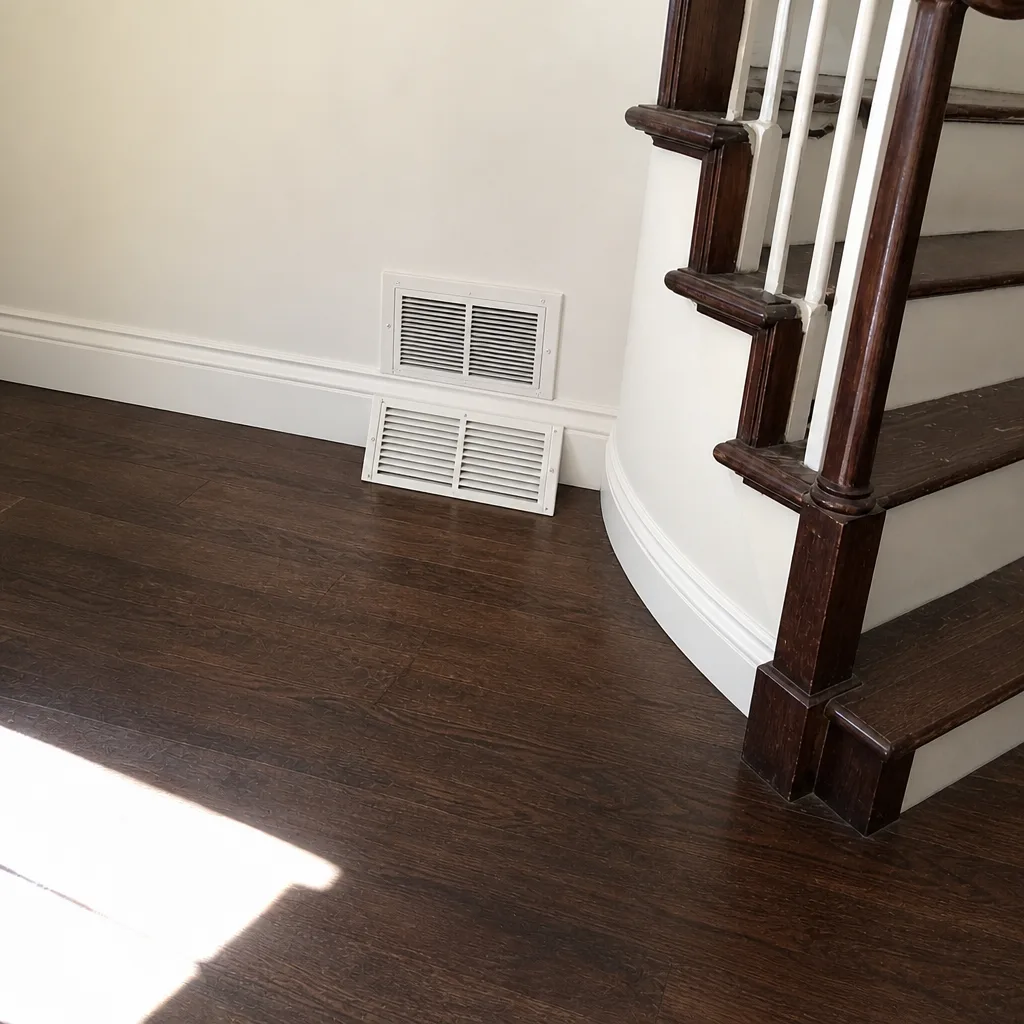 After
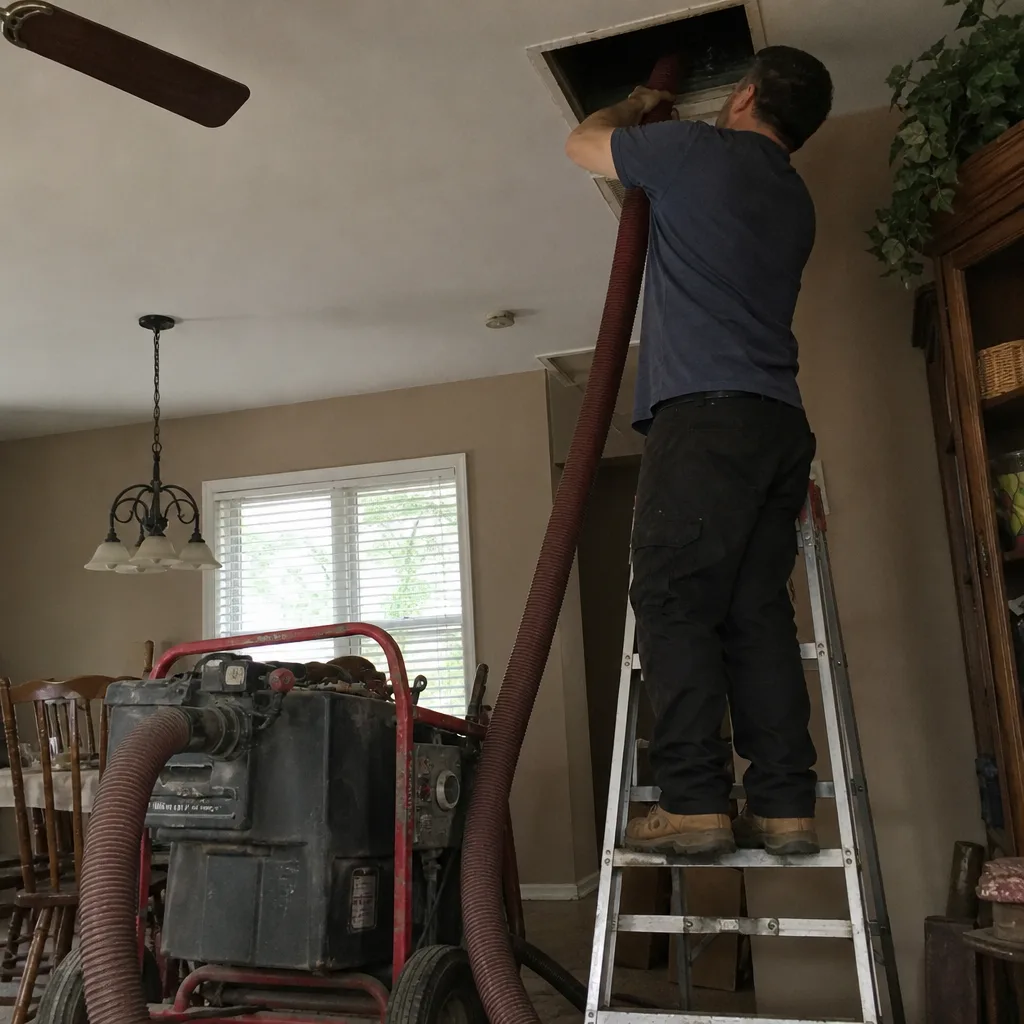 Before
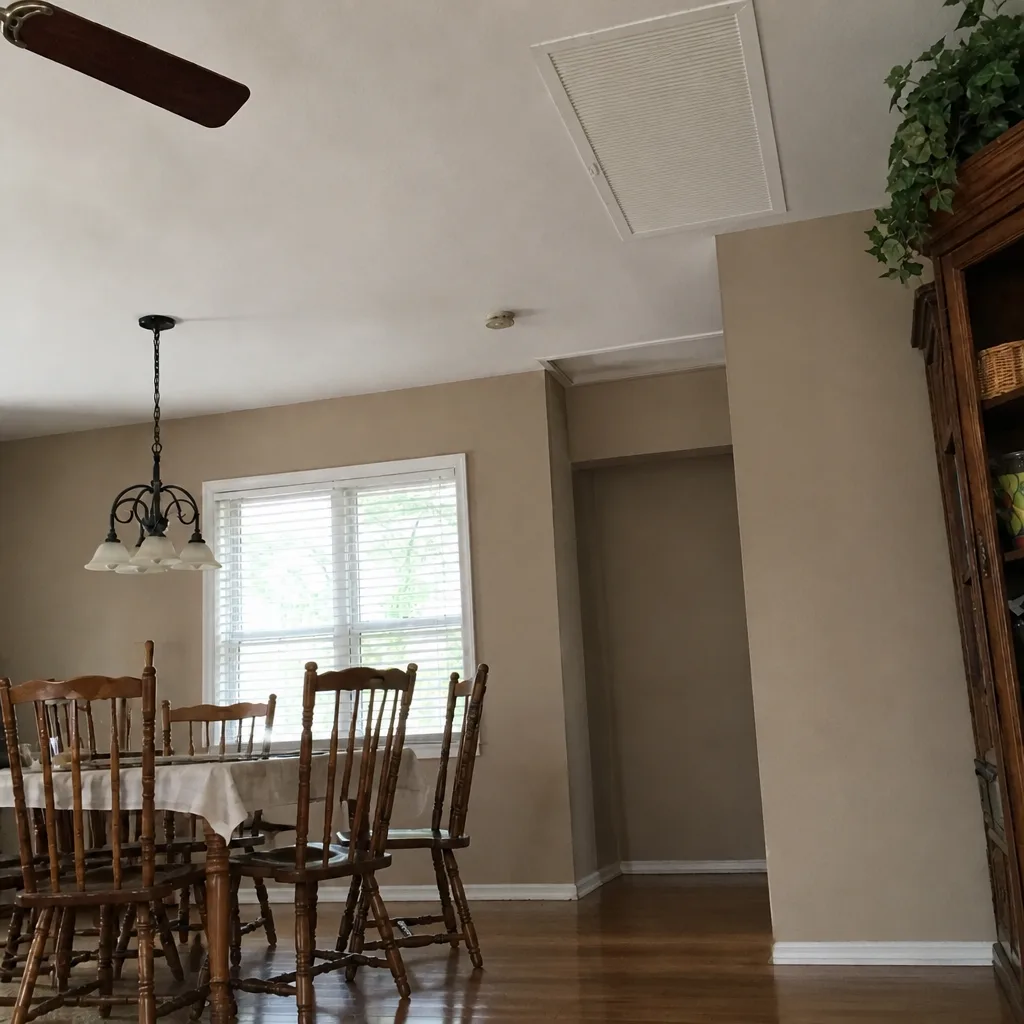 After
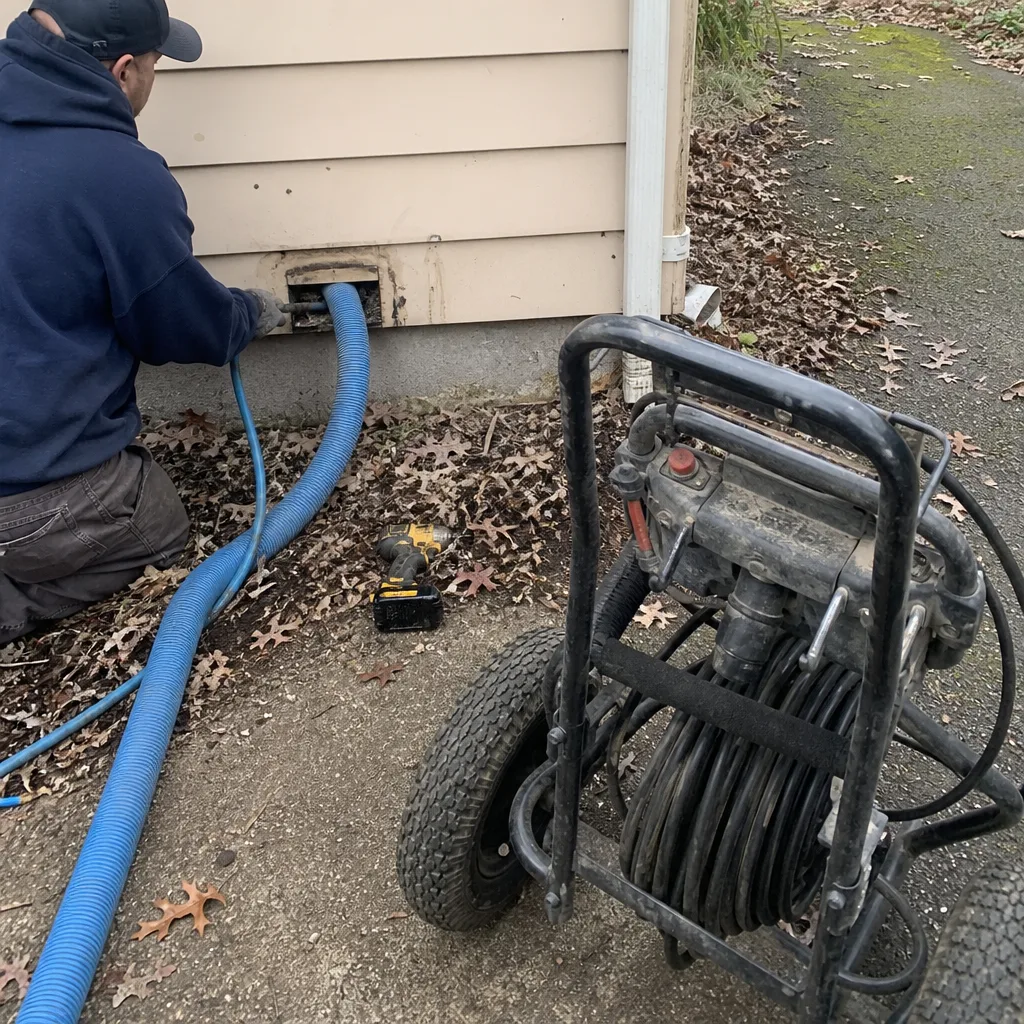 Before
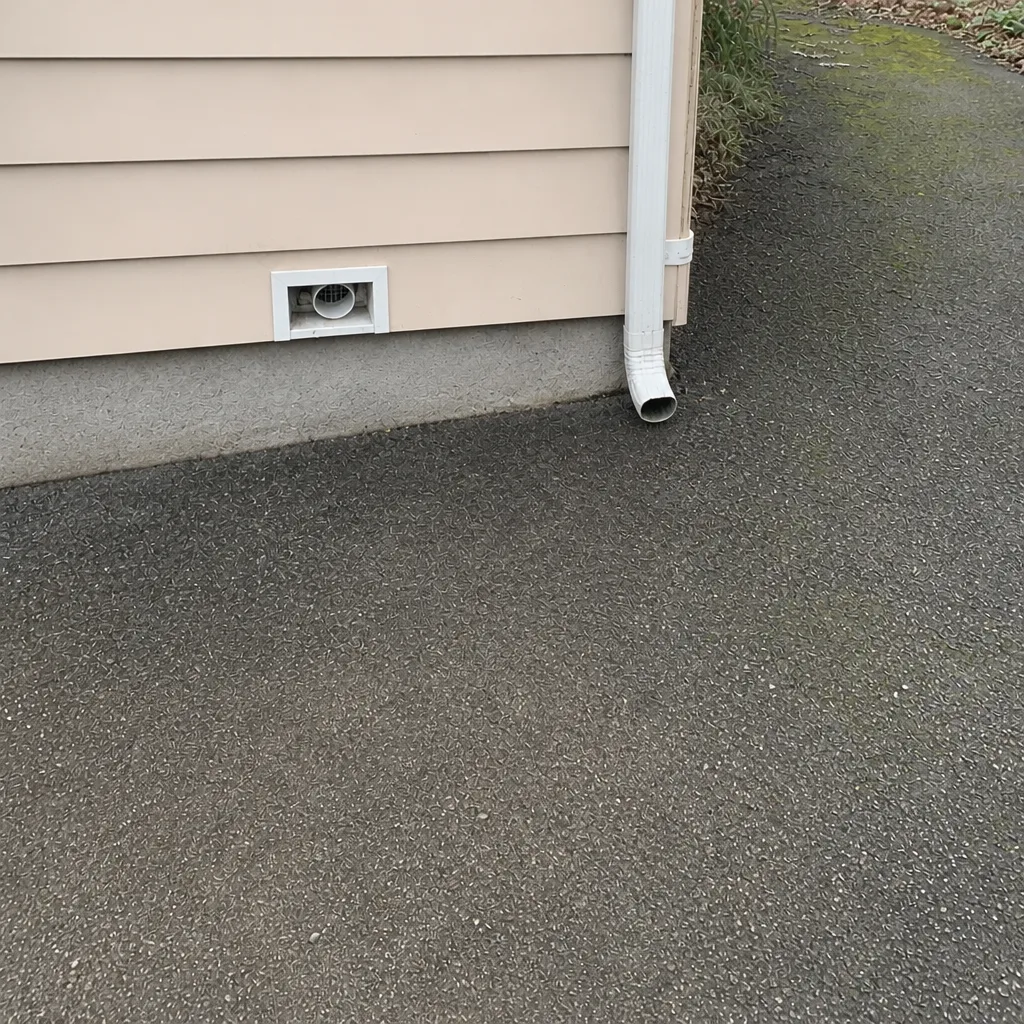 After
When to Call a Professional
The call to a professional is appropriate when the situation is beyond the register-and-filter layer: visible debris inside the duct run, uneven airflow between rooms, a recent renovation that generated large amounts of drywall dust, a household with asthma or allergy sensitivities, a home whose duct history is unknown, or a system that hasn’t been looked at in several years. The other trigger is capacity: if you don’t have the tools to see the interior of the ducts, you don’t know what you’re working with, and the professional inspection is the only way to find out.
Bellmont Air Duct Cleaning offers free estimates in St. Louis. Call (877) 349-6189. We answer 24/7. Fast dispatch 7am-7pm, Sunday through Friday. Our technicians have up to 9 years of experience reading the state of a duct system and knowing what’s worth cleaning versus what’s worth repairing.
Frequently Asked Questions
No. DIY duct cleaning handles registers, filters, and surface dust you can reach, and it’s worth doing. It cannot replicate negative-pressure source removal, which is the process that pulls settled debris out of the duct system and captures it in a HEPA-filtered unit. The gap is structural, not a matter of technique, and the deeper the debris is in the system, the wider the gap. Call (877) 349-6189 for an exact quote on a professional cleaning.
Bellmont quotes one flat price per system, agreed before work starts. A written estimate specific to your home is the only honest way to give you a number, because the price depends on the size of the system, the number of registers, accessibility, and what the technician finds during inspection. Call (877) 349-6189 for a free estimate.
Usually because the scope or equipment differs. Quotes that start low often quote per vent, then add fees for the trunk line, the plenum, or the air handler once the technician is on site. Others use consumer-grade vacuums that don’t provide negative pressure. Ask what equipment will be used, ask for before-and-after photos of your system, and ask for the scope in writing. Call (877) 349-6189 for a straightforward estimate.
Before-and-after photos of your own ducts. A real photo of your register throat, your plenum, and your air handler opening, taken before and after, tells you more than any verbal report. Bellmont takes before-and-after photos of your actual system on every job, and the photos are yours. Call (877) 349-6189 for a free estimate.
For most St. Louis households, professional cleaning every few years is reasonable. Homes with pets, a recent renovation, allergy sensitivities, or damaged ductwork may need it more often. Between cleanings, the filter change schedule and register cleaning are the highest-value maintenance you can do yourself. Call (877) 349-6189 for a cleaning interval recommendation specific to your home.
No. We’re closed Saturday and open Sunday through Friday, 7am to 7pm. Call (877) 349-6189. We answer 24/7, and a call outside dispatch hours is booked into the next opening, Sunday through Friday, 7am to 7pm.
Yes. Air duct repair is a core Bellmont service, not an upsell, and it’s the reason we can diagnose and fix a compromised duct connection or a damaged run on the same visit. Most duct cleaning companies clean and refer; we clean and repair. Call (877) 349-6189 for a free estimate that includes the inspection.
The Bottom Line
DIY duct cleaning is real work, and it belongs in a homeowner’s routine. Registers, filters, and visual inspection are legitimately yours to handle. But the interior of the duct system is where it counts, and consumer equipment can’t get there because the physics of negative-pressure extraction aren’t replicable with consumer gear. The honest calculation in St. Louis homes is: DIY the maintenance layer, call a professional whenever the deeper problem is present. When you do call, ask for equipment specifics, before-and-after photos of your own ducts, a written scope, and a flat price per system. That combination is how you avoid the bait-and-switch this industry is known for. Call (877) 349-6189 for a free estimate. We answer 24/7. Fast dispatch from 7am to 7pm, Sunday through Friday.
For related guidance, see our Bellmont Air Duct Cleaning overview, our dryer vent cleaning page, and our general St. Louis service information. If you’re comparing cleaning options in the city, our air duct cleaning page covers what a complete system job involves.
Written by the team at Bellmont Air Duct Cleaning.