
Last updated November 15, 2026
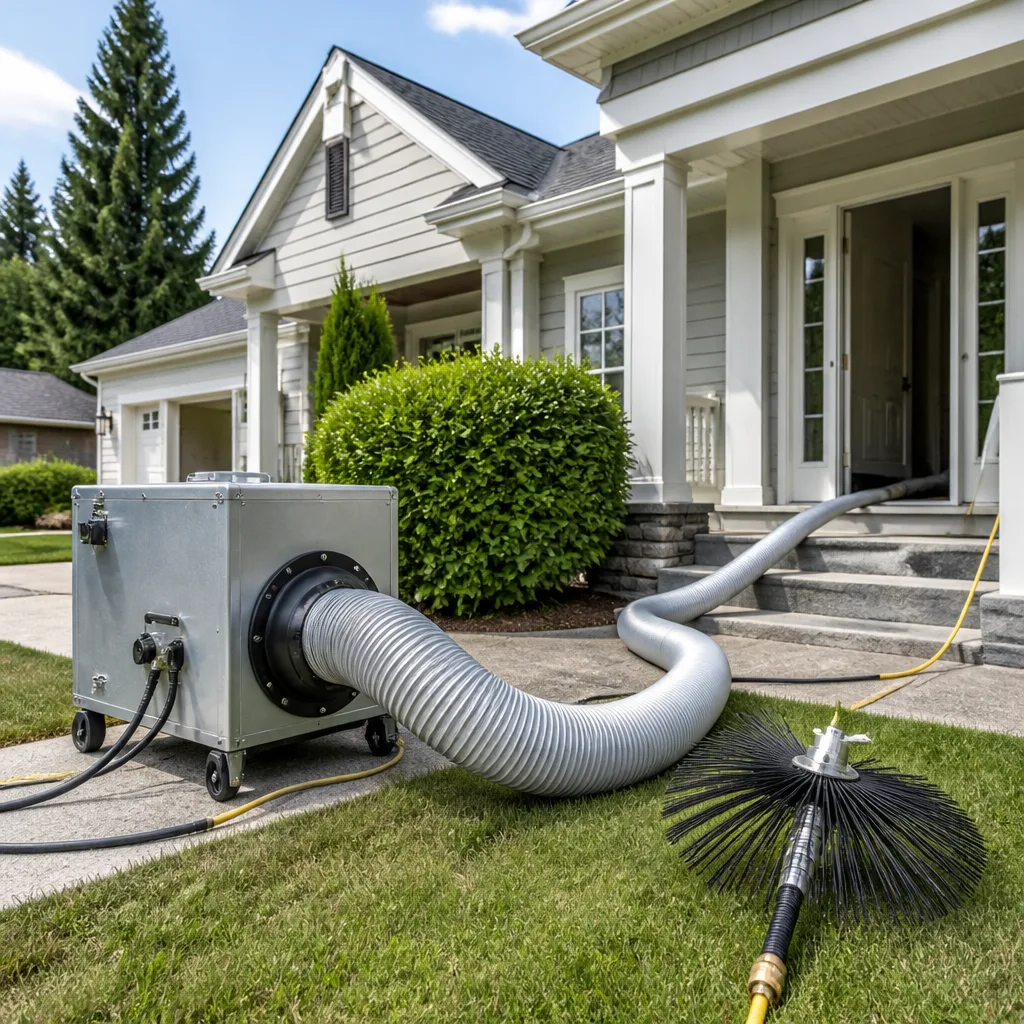 Whole-home duct cleaning
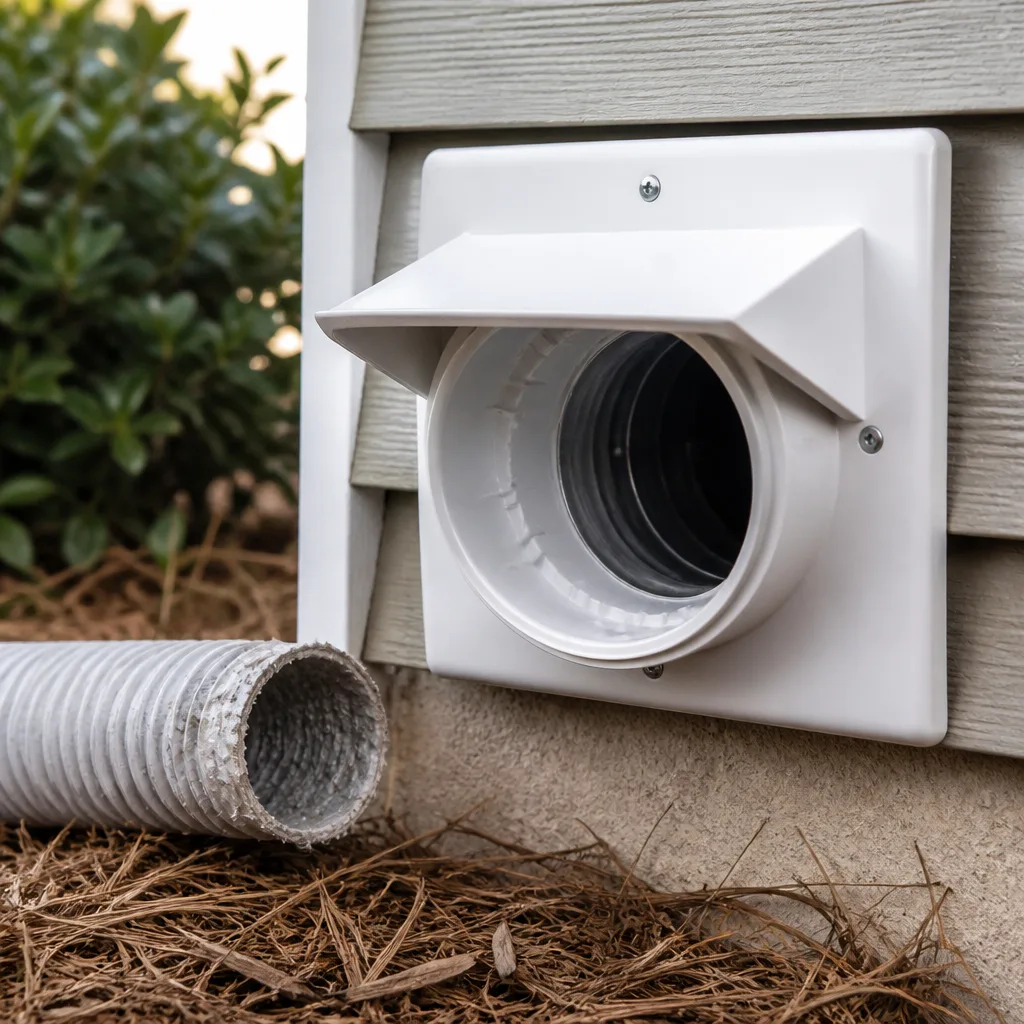 Dryer vent cleaning
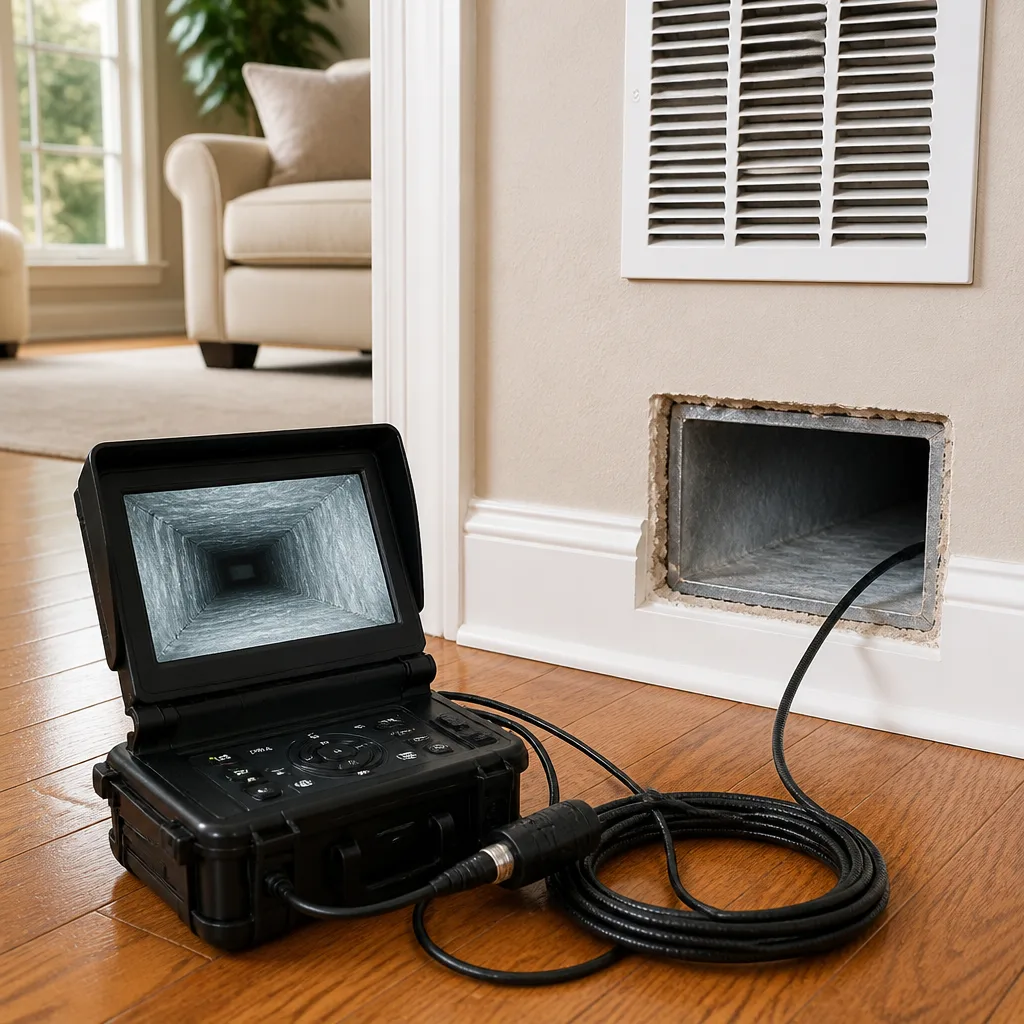 Camera inspection
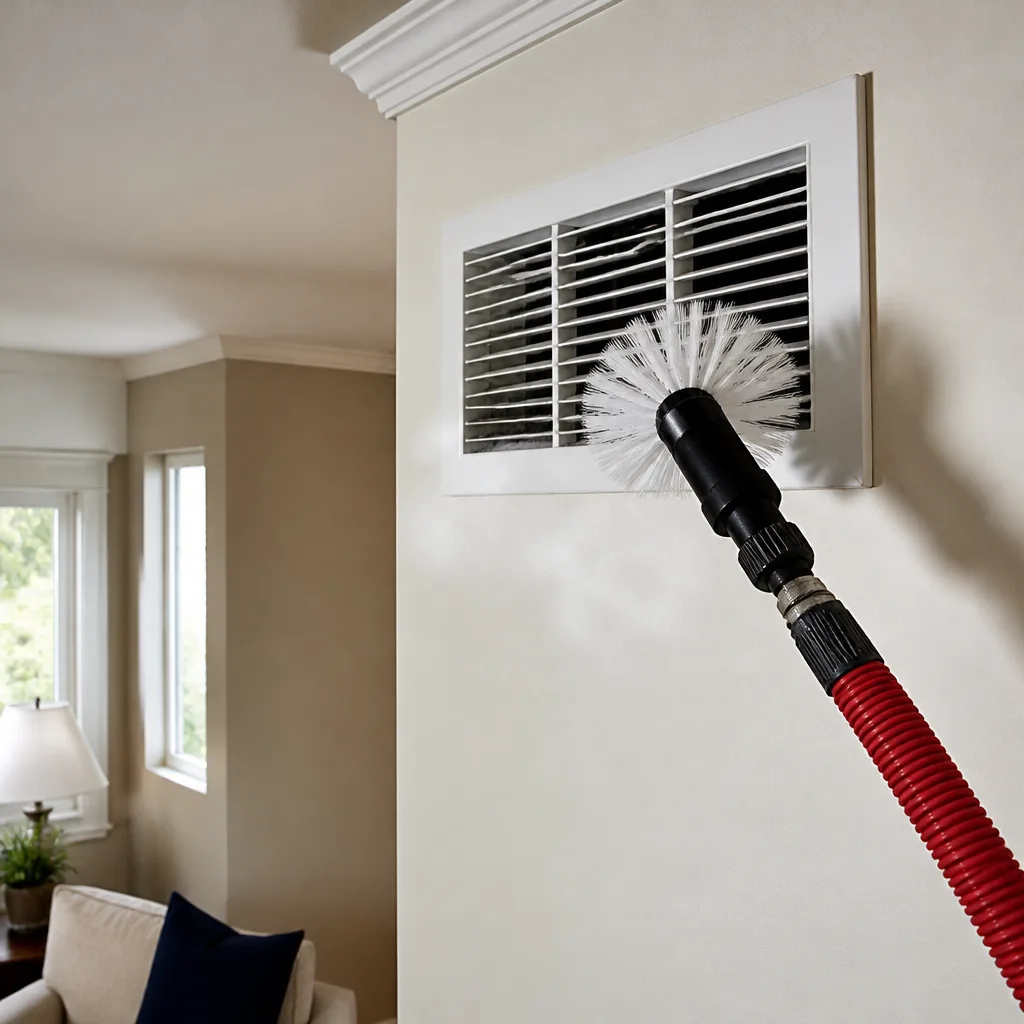 Sanitizing & deodorizing
Whole-system duct and dryer vent check with before-and-after photos - you see exactly what came out of your vents
That "$99 whole-house special" is a bait ad - the real number appears once they are in your hallway, or the "clean" is a shop-vac at the register. We photograph the inside of your ducts before and after instead.
How to Hire an Air Duct Cleaning Contractor in St. Louis: A Step-by-Step Guide
There is no Missouri state license required to operate a duct cleaning business, which means the person who cleaned carpets last week can legally clean your ducts tomorrow. That surprises most homeowners, and it should. When you hire a duct cleaner in St. Louis, you’re not verifying a government credential that doesn’t exist. You’re acting as your own licensing board, and the questions you ask before booking do the work a license would normally do. This guide gives you those questions: what equipment to ask about, how to verify the memberships companies advertise, why a dedicated duct specialist and an HVAC company with a sideline often deliver different results, and how to inspect the finished job so you know you got what you paid for.
Quick Answer
To hire an air duct cleaning contractor in St. Louis, ask three things before you book: the machine type (a source-removal system like Rotobrush or Nikro, not a shop-vac), the negative pressure capacity in CFM, and whether the exhaust carries HEPA filtration. Verify any claimed NADCA membership directly through NADCA, and get a written estimate that itemizes the number of vents, the systems cleaned, and what’s included. A single flat “whole house” number with no scope detail is a warning sign, not a bargain.
Styles & brands we work with
- Whole-home duct cleaning
- Dryer vent cleaning
- Camera inspection
- Sanitizing & deodorizing
Table of Contents
- Why St. Louis Duct Cleaning Is Largely Unregulated
- The Three Equipment Questions to Ask Before You Book
- How to Verify NADCA Membership (and What It Actually Requires)
- Dedicated Duct Specialist vs. HVAC Company Upsell
- What a Legitimate Estimate Should Itemize
- How to Structure the Post-Job Walkthrough
- What St. Louis Housing and Climate Mean for Your Ducts
- When Cleaning Is Fine and When Repair Comes First
Why St. Louis Duct Cleaning Is Largely Unregulated
Missouri does not issue a state license for air duct cleaning, and that single fact reshapes the entire hiring process. In a licensed trade, a state board has already screened the company for you. In duct cleaning, nobody has. The business license the city issues lets someone operate; it says nothing about their equipment, training, or methods. That gap is why the questions below matter more than usual.
The practical effect is a market with enormous range. You’ll find indoor-air specialists running containment systems designed for occupied homes, and you’ll find generalists who bought a vacuum and added “duct cleaning” to their service list. Both can legally advertise the same way. Both can call themselves professionals. The only filter is what you ask and how they answer.
Our technicians have up to 9 years of experience, and in that time the pattern is consistent: homeowners who ask about equipment and scope get better outcomes than those who compare on price alone. Not because price doesn’t matter, but because in an unregulated market it’s the only variable that tells you nothing. A cheap quote is just a number until you know what machines will be in your home.
The good news is that St. Louis has real specialists. The work is finding them. The next sections walk through exactly what to ask.
The Three Equipment Questions to Ask Before You Book
Equipment separates a real cleaning from a surface pass, and it’s the easiest thing to screen for by phone. Ask these three questions and listen for specific answers. A company that does this work daily will answer without hesitation. A company that doesn’t will reach for generics.
- What machine type will you use? You want to hear branded, source-removal equipment – Rotobrush and Nikro extraction systems are the ones IAQ contractors rely on. A push-and-pull brush hooked to a shop-vac, or a consumer-grade blower with no agitation, moves dust around more than it removes it.
- What is the negative pressure capacity, in CFM? This is how much air the system draws out of your ductwork while it works. Higher sustained negative pressure means the loosened debris actually leaves the ducts instead of settling into rooms or re-coating the duct walls. An honest answer names a figure or the machine’s rated capacity. If the answer is “it’s strong enough,” ask what system they run and look it up.
- Does the exhaust carry HEPA filtration? When the machine exhausts air from your ducts, that air carries fine particulate. HEPA filtration on the exhaust traps it. This is where equipment like Bellmont Air Duct Cleaning uses Abatement Technologies containment gear – it’s the difference between capturing dust and exhausting it back into the room.
These aren’t trivia questions. They map directly to how much of the debris ends up removed versus redistributed. A professional-grade setup is not a shop-vac on wheels, and you’re entitled to know which one is coming into your house. For a closer look at what a proper air duct cleaning job involves from start to finish, that page covers the process step by step.
If a technician’s first answer to “what equipment do you use?” is silence or a brand you can’t place, that’s your answer. Move on to the next call.
How to Verify NADCA Membership (and What It Actually Requires)
NADCA – the National Air Duct Cleaners Association – is the closest thing this trade has to a professional standard, and membership is a meaningful signal. But it’s only meaningful if you verify it, because in an unregulated market a logo on a website costs nothing to add and costs nothing to remove. Verify directly through NADCA’s own lookup rather than trusting a badge on a homepage.
What NADCA membership actually obligates a company to do:
- Follow the association’s standard for source removal – meaning clean the source of contamination, not just visible surfaces.
- Adhere to a code of ethics covering how the work is sold and performed.
- Stay current with the association’s technical standards for assessment and cleaning.
- Operate with the equipment and containment practices the standard assumes, including proper HEPA filtration.
What it doesn’t do: it isn’t a license, it isn’t a background check, and it doesn’t guarantee every job will be done to standard. It’s a commitment, not a certificate of quality. Combine it with the equipment questions above and you get a real picture.
In our experience, the companies that hold and maintain membership tend to answer the equipment questions specifically, because the standard they commit to depends on the machines. A member who can’t tell you their CFM is a member in name only. Ask both, and compare the answers.
If a company isn’t a member, that’s not automatically disqualifying – plenty of skilled specialists operate without it. It just means the equipment questions carry all the weight, and you should ask them carefully.
Dedicated Duct Specialist vs. HVAC Company Upsell
An HVAC company exists to install, service, and repair your heating and cooling equipment. Duct cleaning is usually a sideline offered as an add-on, and that structural difference shapes what you’re likely to get. A dedicated indoor-air specialist runs duct equipment as their core work. The generalist runs it between furnace calls.
This matters most when the job turns up a problem. Ducts regularly reveal compromised seam tape, disconnected runs, crushed flex, or deteriorated boots at the register. A dedicated specialist is set up to diagnose and fix those issues, and a specialist that repairs ductwork can correct what they find on the same visit rather than referring you out. A company there to clean has a harder call: fix it as an add-on or finish the cleaning and hand you a problem to solve elsewhere. That hand-off is where a lot of homeowners end up juggling a second contractor for work that should have been one job.
It also shapes the estimate. A specialist plans the cleaning around the state of the system they expect to find. A sideline operation often prices one flat rate and discovers issues once the machine is running. For a detailed comparison of how cleaning, dryer vent cleaning, and repair fit together under one focused specialist, that page lays it out. Dryer vent work is a good example of the same principle: it’s treated as a genuine fire-safety service, not an air-quality upsell.
The test is simple. Ask “what do you do if you find a disconnected run or failing seam tape during the cleaning?” The specialist will describe how they handle it on the visit. The generalist will describe a referral.
What a Legitimate Estimate Should Itemize
A flat “whole house” price with no scope detail is a warning sign, not a bargain. It hides the variables that actually determine what happens in your home: how many vents, how many systems, how many returns, the condition of the ductwork, and what “cleaning” includes. An honest estimate itemizes those line by line. Note that prices are estimates, and the written estimate you receive sets the final price.
A legitimate estimate for a St. Louis home should tell you:
- The number of supply vents, returns, and the number of systems. One HVAC system and two are different jobs at different scopes.
- The equipment that will be used – named, not generic – and whether HEPA containment is included.
- What’s cleaned. Registers and grilles removed and cleaned, the trunk and branch runs, and the air handler area where the ducts connect.
- Whether a dryer vent, if present, is separate. It usually is, and it should be priced separately rather than folded in.
- What happens if repair is needed. Whether it’s assessed separately or handled on the visit, so you’re not surprised later.
Expect honest whole-system ranges rather than a per-vent price from a reputable company. Per-vent pricing is the mechanism behind the coupon-to-invoice bait-and-switch that has given this industry its reputation: a teaser figure that becomes a much larger number once the technician is on site. We don’t quote per-vent prices for that reason – the quote is for a whole system at a flat rate agreed before any work starts. For what a fair figure looks like across different home sizes, the pricing section on the St. Louis service page spells out typical ranges by system count, so you can compare your quotes against real numbers.
One flat price per system, in writing, agreed before work begins. That is the entire standard. If an estimate can’t meet it, keep looking.
How to Structure the Post-Job Walkthrough
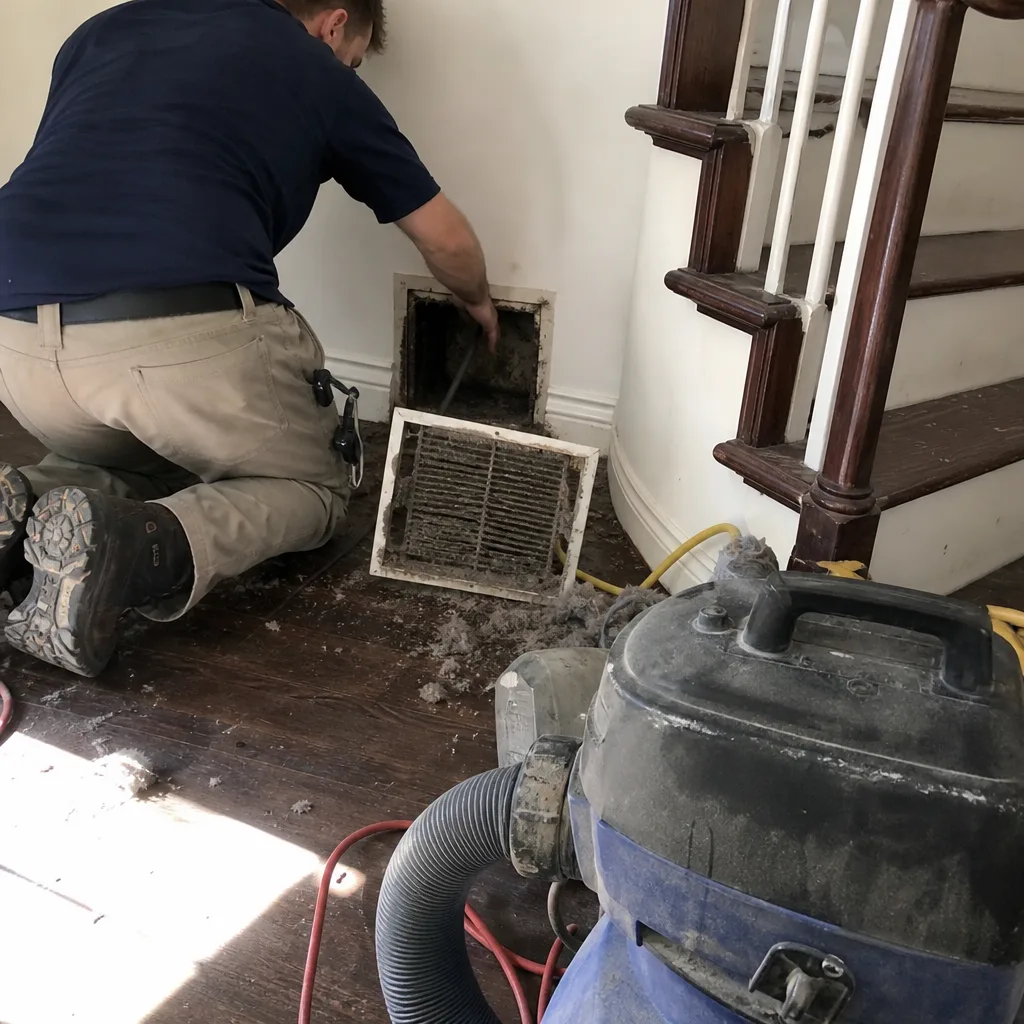
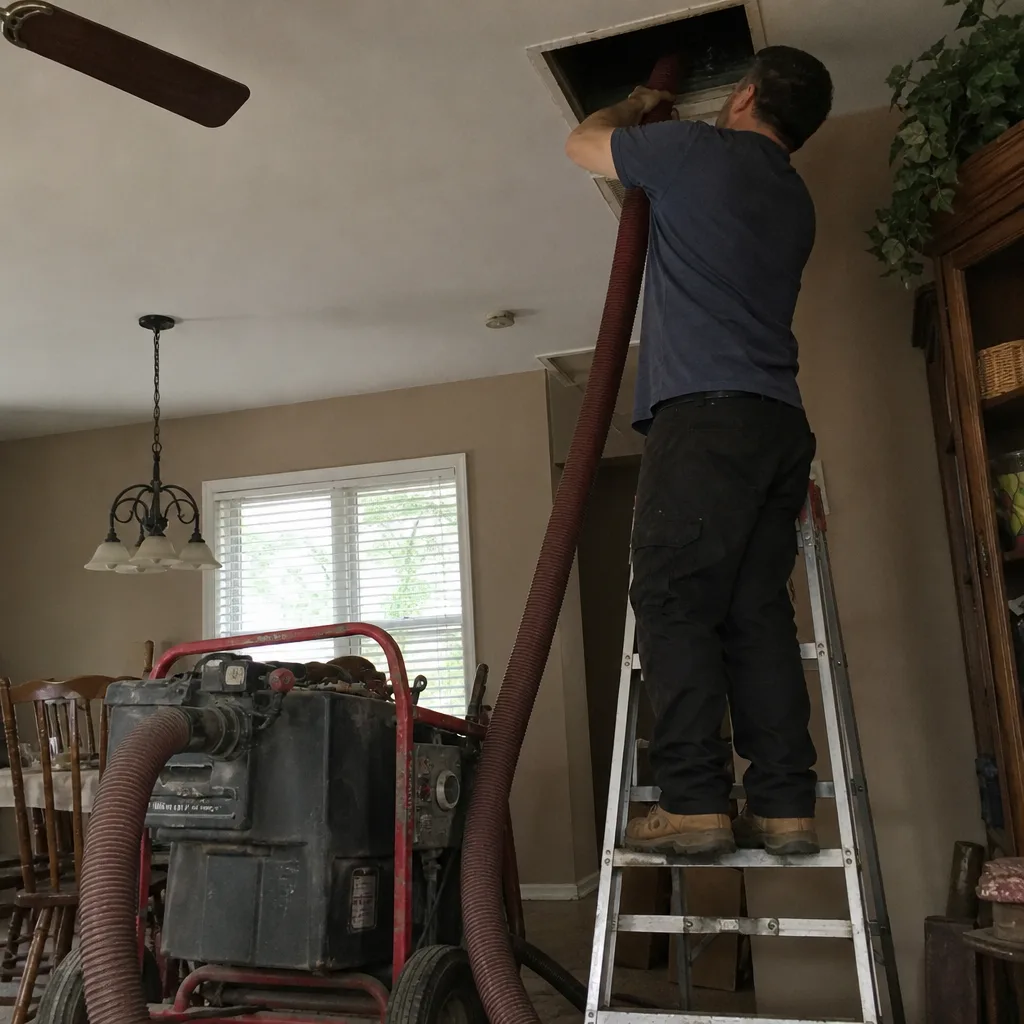
The walkthrough is your proof. Plan it before the technician arrives so you know what to inspect, and don’t sign off until you’ve seen it. Before-and-after photos of your own ducts, not stock images, are the first thing to ask for.
- Before photos of the inside of a run. A technician who documents the starting condition has nothing to hide. Ask to see the before photos taken at the same view.
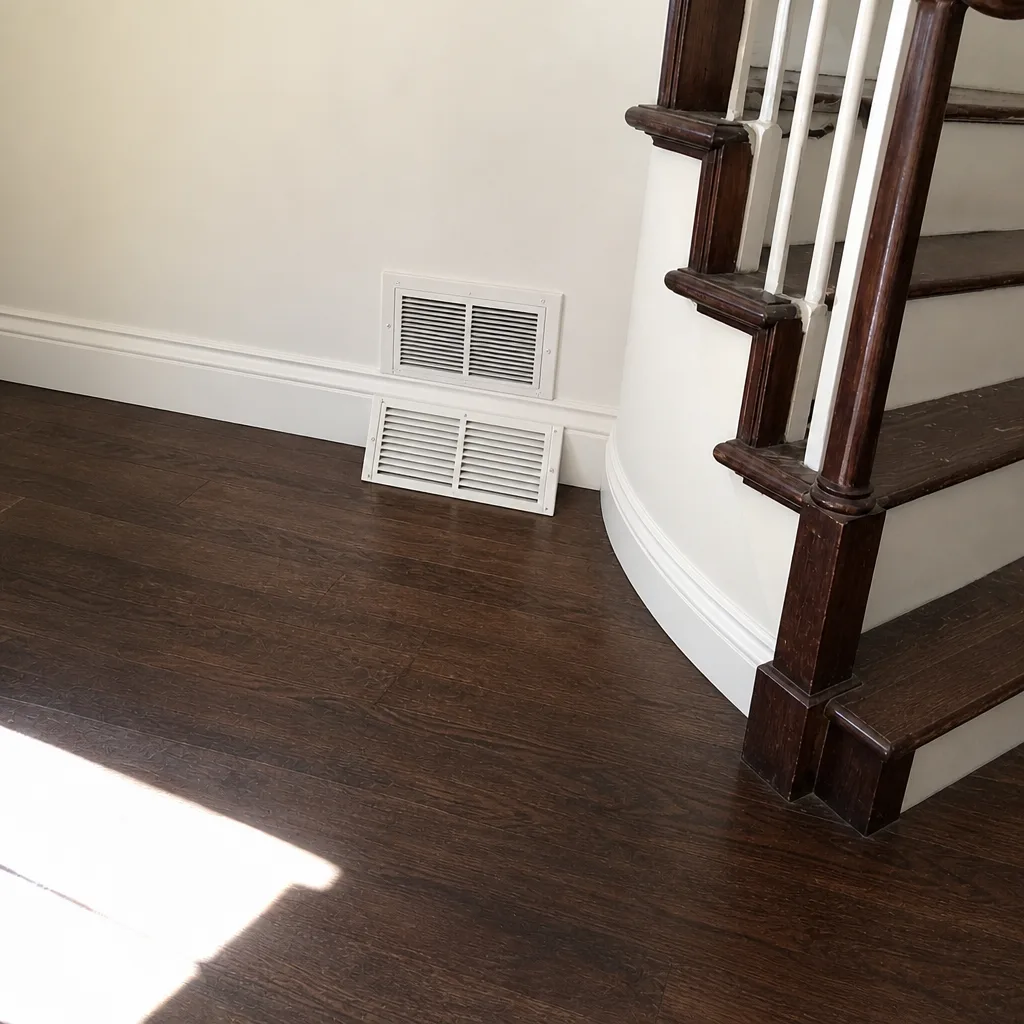
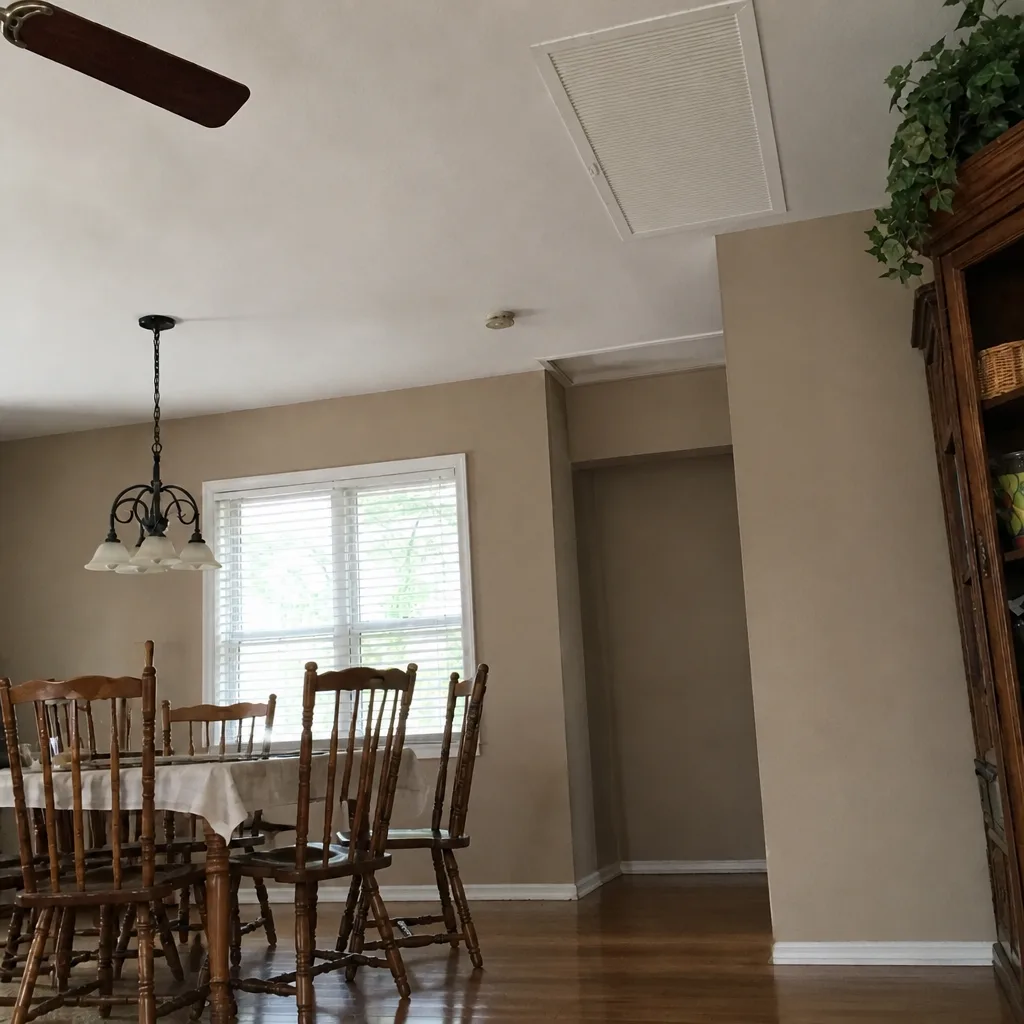
- After photos at the same view. The comparison tells you whether the duct walls were cleaned or merely disturbed.
- The registers and grilles. They should be removed, cleaned, and reinstalled. Look inside one yourself with a flashlight.
- The air handler area. Ask to see where the ducts connect to the unit – it’s a spot that’s easy to skip.
- Containment placement. Confirm HEPA equipment was used on the exhaust and that the containment was set up as promised in the estimate.
- The report. Ask for whatever documentation the company provides on what was found and what was repaired. Walk the summary with the technician before they leave.
How do you know the work was actually done? The combination of your own inspection and the photographic record. A contractor who took before-and-after photos of your ducts, and who walked you through them at the door, has given you something to verify rather than a claim to trust. That structure is what a professional-grade job looks like, and it’s what Bellmont Air Duct Cleaning builds into every visit.
What St. Louis Housing and Climate Mean for Your Ducts
St. Louis sits in a humid subtropical climate with humid summers and cold winters, and that swing shapes what ducts do here. The system runs hard in July for cooling and again in January for heat, and the seasonal shift between humid and dry conditions puts stress on everything the ducts connect to: seam tape, mastic joints, flexible runs. The seams that hold in a mild climate can loosen over a few seasons of expansion and contraction.
The housing stock in St. Louis makes this worse in some neighborhoods. Many homes here were built before modern duct sealing practices, and older systems often have unsealed or loosely sealed trunks and branches. In older neighborhoods across the city – like the brick streetscapes of Tower Grove, the bungalows toward Bevo Mill, the mid-century homes in parts of South County – the ducts often predate the equipment people are now buying to serve them. That’s not a defect. It’s a condition to know about, and it’s why cleaning often turns up repairs worth making while the ducts are accessible.
Renovations are the other recurring trigger. A kitchen or bath remodel in a St. Louis home sends fine dust through the return system, and drywall dust is the kind that settles into every joint. Homeowners often clean afterward for exactly this reason. If you’ve just replaced an HVAC system, the new equipment is more efficient than what came before, and cleaning the runs it connects to helps it perform the way it was designed. For a full account of what triggers a cleaning in this climate and housing stock, the air duct cleaning page breaks down the situations we see most often.
St. Louis ducts deserve more than a surface clean. The climate and the housing stock make that clear.
When Cleaning Is Fine and When Repair Comes First
Not every duct system needs cleaning, and a good contractor will tell you so. A well-maintained system with a good filter, no recent renovation, and no symptoms may be fine left alone. Cleaning makes sense when there’s a reason: renovation dust, a new system, visible dust at the registers, or a return that’s pulling in debris. That’s the honest threshold, and a specialist who quotes a cleaning without asking about any of it isn’t diagnosing – they’re selling.
There are also times repair outranks cleaning. If the system has a disconnected run, a crushed flex section, or failing seam tape at the trunk, cleaning it first just moves air into a leak. A crushed or disconnected duct means the conditioned air never reaches the room it was meant to serve, and cleaning won’t fix that geometry. When our technicians find a compromised run, the fix happens on the same visit, because the cleaning only protects the HVAC investment if the ductwork actually works. Cleaning a broken system and leaving it broken doesn’t protect anything.
That’s why the repair capability belongs to the same conversation as the cleaning. Ask any contractor you’re considering: “if you find a disconnected or crushed run, what do you do?” If the answer is “we’ll let you know and you can find someone,” you’ve learned something worth knowing before you book.
Dryer vents are a separate category and worth their own mention. Lint buildup in a dryer vent is a leading cause of residential house fires, and a dryer that takes longer than it should to cycle is often the first sign. The dryer vent cleaning page covers what to watch for, and it’s genuinely a safety service rather than an air-quality add-on. St. Louis homeowners who spot a slow-drying load should treat it as a prompt to get the vent checked, not an inconvenience to schedule later.
Common Mistakes to Avoid
- Comparing on the cheapest quote. In an unregulated St. Louis market, the lowest number is often a teaser that inflates on site. Price tells you nothing until you know the equipment and the scope behind it.
- Trusting a NADCA badge without verifying it. A logo on a website is not a membership. Look it up through NADCA’s own lookup before you book.
- Accepting a flat “whole house” price with no itemization. No vent count, no system count, no equipment named. That’s a quote you can’t compare and an invoice you can’t predict.
- Skipping the equipment questions. If you don’t know whether a Rotobrush, Nikro, or a shop-vac is coming into your house, you don’t know what you’re buying. Ask before you book.
- Hiring an HVAC company for a sideline cleaning. When they find a broken run, you’re likely to end up managing a second contractor for work that should have been one visit.
- Never looking inside afterward. If you don’t take the post-job walkthrough seriously, you have no way to know the work happened. Before-and-after photos of your own ducts are the whole point.
- Waiting for a slow dryer. In St. Louis homes, a load that takes longer than it should is an early sign. Treat dryer vent cleaning as a fire-safety check, not a seasonal maybe.
See the difference
 Before
 After
 Before
 After
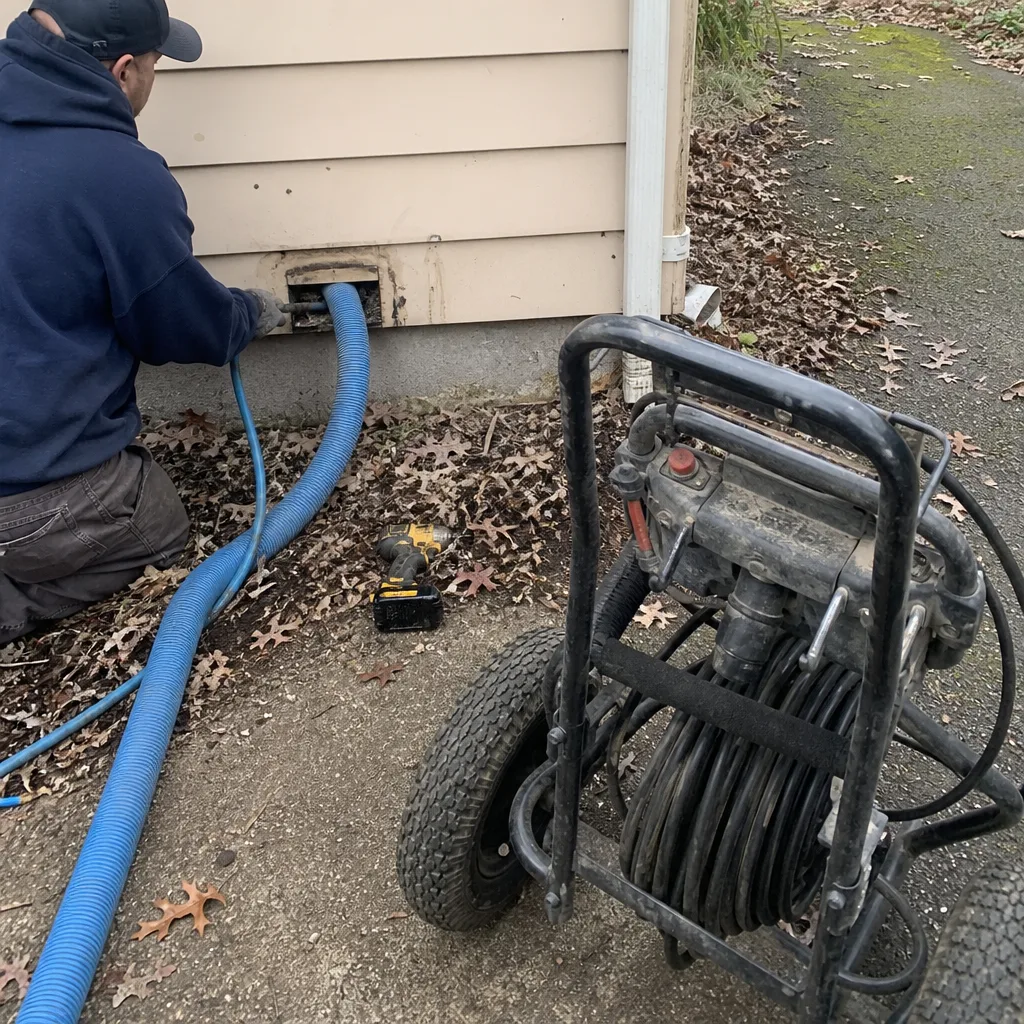 Before
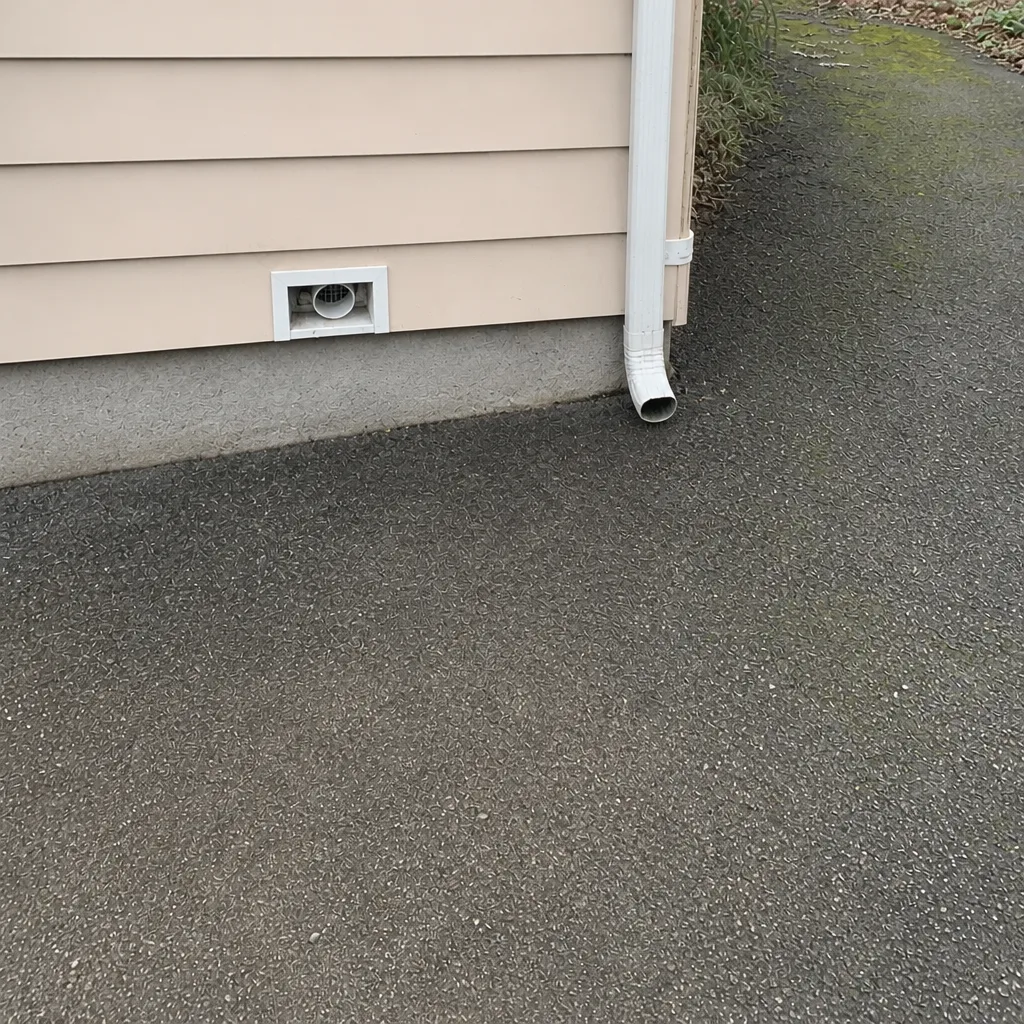 After
When to Call a Professional
Call a professional when you see dust at the registers shortly after cleaning the rooms, when you’ve just finished a renovation and drywall dust has moved through the return, or when a new HVAC system is going into ducts you don’t know the condition of. Call if your allergies get worse indoors, if the system runs but rooms don’t heat or cool evenly, or if a dryer load takes twice as long as it used to. For property managers in St. Louis, a professional assessment before leasing season saves explaining duct condition to a tenant later. Bellmont Air Duct Cleaning offers free estimates in St. Louis – call (877) 349-6189.
Frequently Asked Questions
No. Missouri does not issue a state license for air duct cleaning, which means vetting the contractor is entirely up to you. Ask the equipment questions and verify any claimed NADCA membership through NADCA directly.
Ask for the machine type, the negative pressure capacity in CFM, and whether the exhaust has HEPA filtration. A professional setup uses source-removal equipment like Rotobrush or Nikro with HEPA containment. Call (877) 349-6189 for an exact quote – estimates are free.
Cost depends on the number of systems, vents, and returns in your home, which is why an honest quote is a whole-system range, not a per-vent price. The written estimate sets the final price, and the price is flat per system agreed before work starts. Call (877) 349-6189 for an exact quote – estimates are free.
Check NADCA’s own lookup, not the company’s homepage. Membership obligates a company to a source-removal standard and a code of ethics, but it isn’t a license or a guarantee, so pair it with the equipment questions.
Usually because they’re teasers – a low headline price that inflates on site, or a surface pass with a shop-vac instead of a source-removal system. The estimate should itemize vents, systems, and equipment; a bare “whole house” number hides all three. Call (877) 349-6189 for an exact quote – estimates are free.
Only when there’s a reason: recent renovation, a new system, visible dust at the registers, or symptoms indoors. A well-maintained home with good filtration can go years without it. The job is done when there’s a reason for it, not on a schedule.
Ask for before-and-after photos of your own ducts and take the walkthrough seriously, checking a register yourself with a flashlight. A contractor with nothing to hide documents the starting condition and the result. Call (877) 349-6189 for an exact quote – estimates are free.
The Bottom Line
Hiring a duct cleaner in St. Louis means doing the vetting the state doesn’t do for you. Three equipment questions (machine type, negative pressure in CFM, HEPA exhaust), a direct NADCA verification, and an itemized written estimate cover the basics. A dedicated specialist who repairs what they find protects your HVAC investment better than a generalist bidding a flat rate on equipment they rarely run. And the price should be one flat rate per system, agreed before work starts. Ask the questions, inspect the result, and the odds of a bad job drop sharply. Bellmont Air Duct Cleaning uses Rotobrush and Nikro extraction and Abatement Technologies containment, and repairs ductwork on the same visit.
Call (877) 349-6189 for a free estimate. We answer 24/7. Fast dispatch from 7am to 7pm, Sunday through Friday.
Written by the team at Bellmont Air Duct Cleaning.