
Last updated November 15, 2026
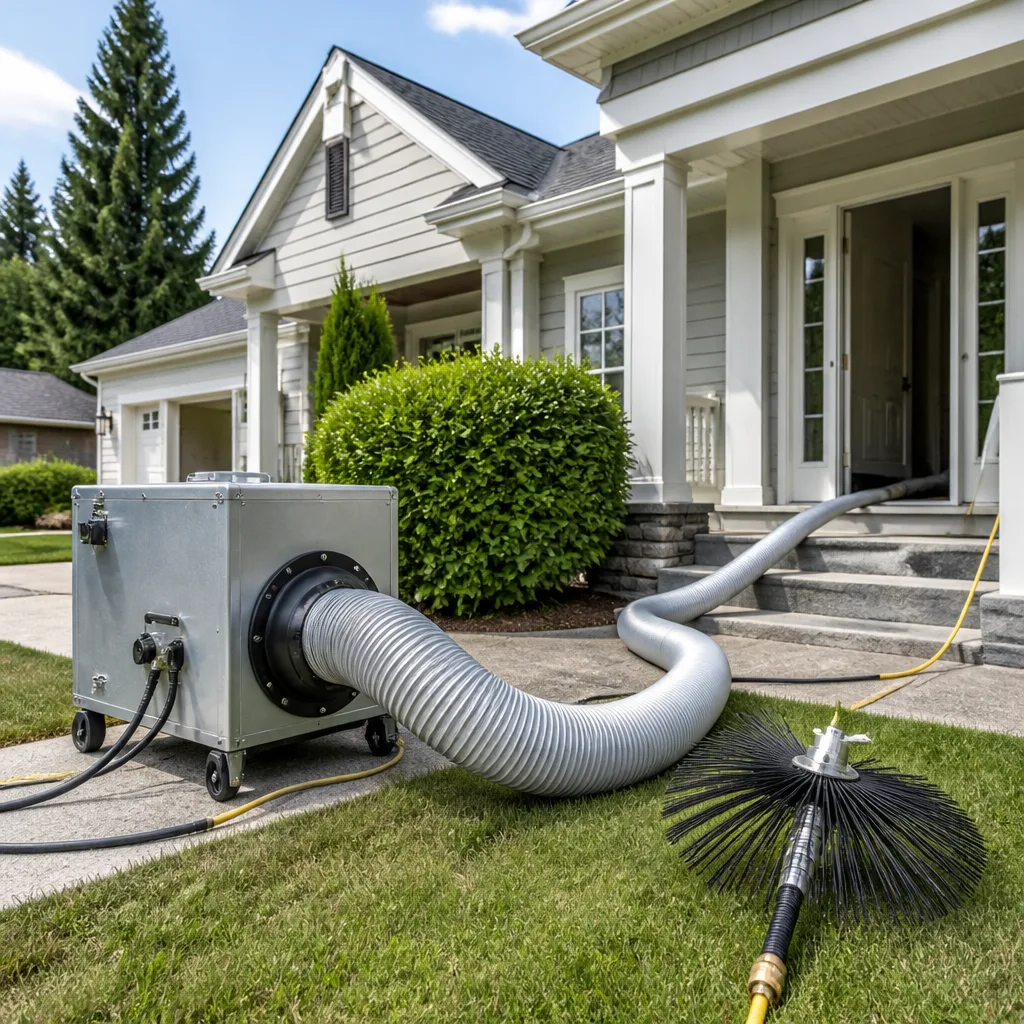 Whole-home duct cleaning
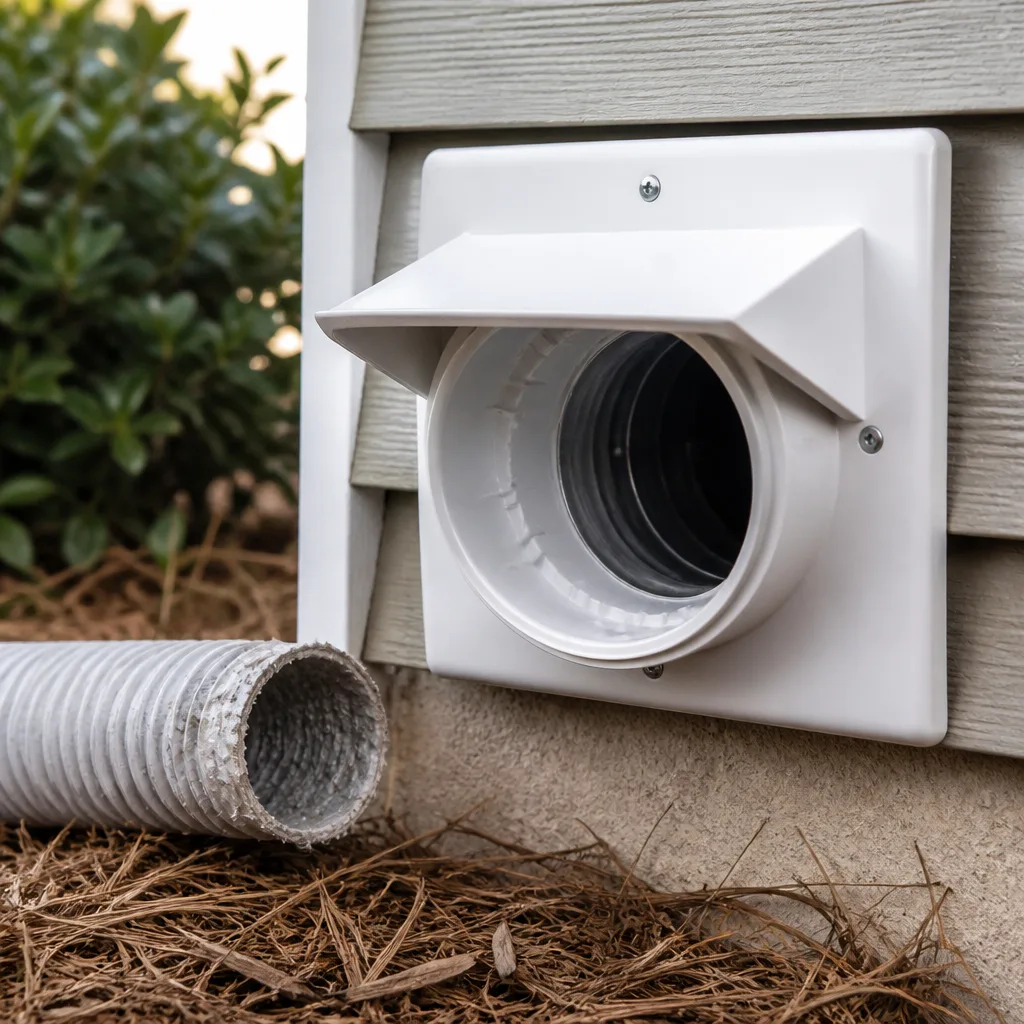 Dryer vent cleaning
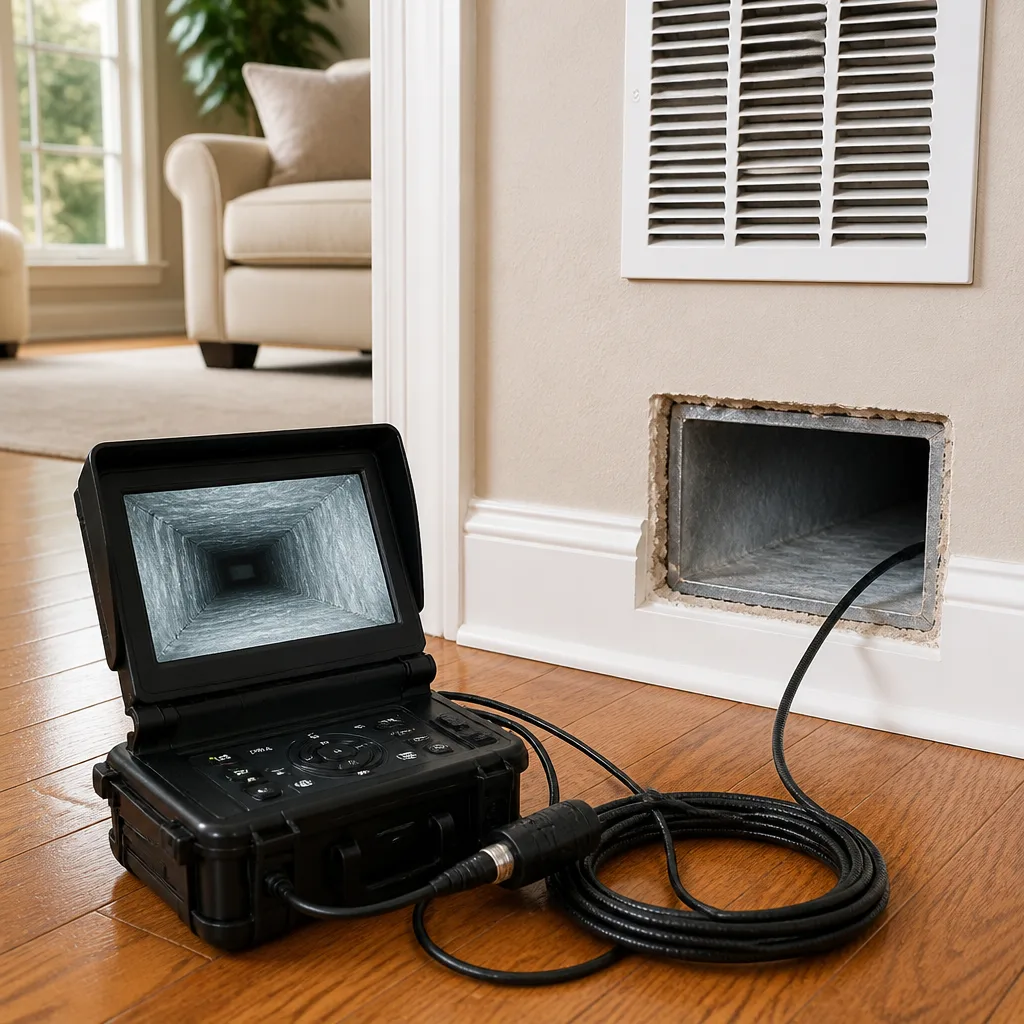 Camera inspection
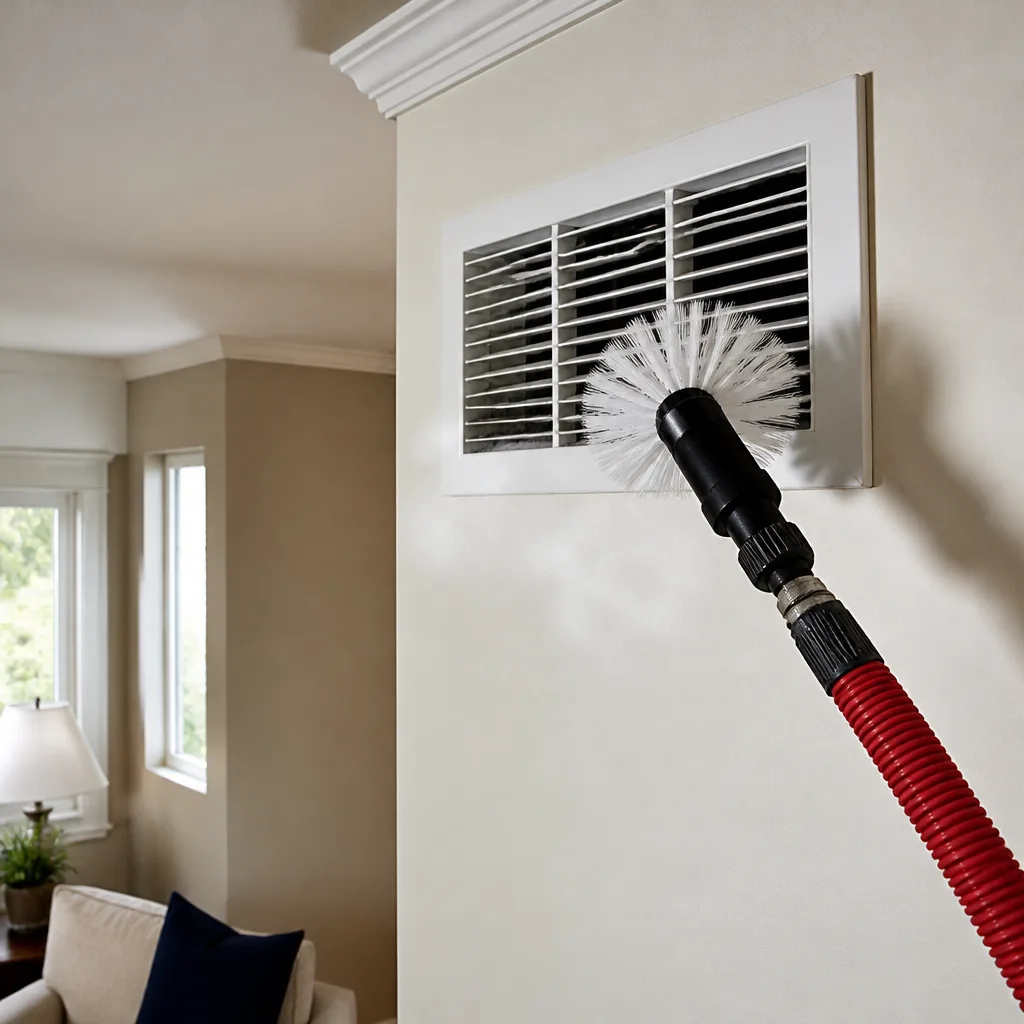 Sanitizing & deodorizing
Whole-system duct and dryer vent check with before-and-after photos - you see exactly what came out of your vents
That "$99 whole-house special" is a bait ad - the real number appears once they are in your hallway, or the "clean" is a shop-vac at the register. We photograph the inside of your ducts before and after instead.
Air Duct Cleaning Emergency Preparedness Guide for St. Louis Homes
Most homeowners in St. Louis know the emergency drill for a flood or a fire: shut off the gas, snap photos, call the insurance company. Ductwork rarely makes the list. That’s the problem. Your HVAC system is the one part of the house that can spread contamination into every room at once, and it keeps doing it for days after the disaster itself is over. This guide covers the three emergencies that actually hit St. Louis homes hardest – basement flooding, tornado and storm debris infiltration, and house fires – and what each one means for the ducts that carry your air. By the end you’ll have a real plan, not a vague sense that you should call somebody eventually.
Quick Answer
If a flood, storm or fire has affected your St. Louis home, shut off the HVAC system immediately and do not run it until ductwork has been inspected and cleaned – running it can distribute mold spores, soot or debris through the whole house. Emergency duct work after a covered event is a different job than routine cleaning: it needs HEPA containment, sometimes chemical treatment, and documentation detailed enough for your insurance adjuster. Call a duct specialist early, before you rebuild, because ducts are cheaper to clean than walls are to replace.
Styles & brands we work with
- Whole-home duct cleaning
- Dryer vent cleaning
- Camera inspection
- Sanitizing & deodorizing
Table of Contents
- Post-Flood Protocol for St. Louis Basement Homes
- Tornado and Storm Debris: How Infiltration Differs
- Post-Fire Duct Response: Why Standard Cleaning Falls Short
- What to Tell Your Insurance Adjuster
- How to Vet an Emergency Duct Contractor Fast
- Building Your Duct Emergency Plan Before You Need It
- Common Mistakes to Avoid
- When to Call a Professional
Post-Flood Protocol for St. Louis Basement Homes
Here’s the part that surprises people: after a basement flood, ductwork can start growing and circulating mold spores within 48 to 72 hours – often before the carpet upstairs has fully dried. Heat pumps, furnaces and air handlers sit in St. Louis basements by the thousands, and when water rises into the unit or the ducts that run through a damp basement, the whole system becomes a spore distribution network the moment the blower kicks on. The house can look fine on the ground floor while the air tastes like a wet basement.
If your basement has taken on water, the order of operations matters more than the speed.
- Kill power to the HVAC system at the breaker, not just the thermostat. A wet blower or control board can short and is a shock and fire hazard. Water and electricity don’t negotiate.
- Document before you touch anything. Photograph the water line on the ducts, the furnace, the air handler and any supply registers in the basement. Note the date and time the water arrived and how high it got. Time stamps and water lines are what adjusters look for.
- Stop the source and dry the structure. The ducts won’t dry usefully while the basement is still wet. Structural drying comes first.
- Don’t run the system “to see if it works.” If the ducts took on water or the basement is still humid, running the fan pushes moisture and organisms through the house.
- Have the ductwork inspected and, if needed, cleaned with HEPA containment. Cleaning without proper negative-pressure containment just spreads the problem into the living space.
St. Louis’s older neighborhoods – Tower Grove, Bevo Mill, Dutchtown, parts of South City – are full of homes with finished or semi-finished basements where the ducts run low and close to the floor. That’s exactly the placement that catches water first. Our technicians have up to 9 years of experience, and one pattern we see is a homeowner who replaced the furnace after a flood but never addressed the duct interiors that fed the old unit. The ducts need their own evaluation, separate from the mechanical equipment.
A crew with proper containment setup makes the difference here. We use Abatement Technologies equipment for negative-pressure containment and HEPA filtration, which is the standard for keeping contamination in the work area instead of in your kitchen. That’s not a detail you can pad later.
Tornado and Storm Debris: How Infiltration Differs
Storm infiltration isn’t the same as dust. Routine contamination is slow, gradual buildup. What a storm puts into your ducts is a sudden load of outdoor particulate – insulation fibers, roofing granules, soil, pollen, mold from soaked debris – pulled straight through return-air systems when a house loses power, windows break, or wind-driven rain finds its way into openings. The volume and the composition are both different, and so is the response.
In a high-wind event, the return side of an HVAC system is the vulnerable side. The system is designed to pull air in; if the return-air path is compromised because a window or wall opening let debris in, the first place it concentrates is the return plenum, then the filter, then the blower compartment, then the supply runs. Some homes in St. Louis also have dedicated return-air systems that take air from multiple rooms – a design that, in a storm, moves debris further than a single central return would.
What this requires, compared with a routine cleaning:
- Inspection before cleaning. Storm events can crush, disconnect or collapse duct runs. Cleaning a broken duct is pointless until the break is found and repaired.
- Containment from the start. Loose debris is much easier to spread than it is to remove. Negative-pressure containment is standard, not optional.
- Full-system extraction. Professional-grade extraction systems – we run Rotobrush and Nikro – pull the debris out under controlled air rather than stirring it up. A blower with a bag on it doesn’t do that.
- Filter and blower inspection. The filter caught some of it; the blower may be coated. That’s not something to ignore.
- A repair path. If the storm damaged a run, the same specialist should fix it. We clean it, and if it’s broken, we fix it – same visit.
St. Louis’s spring severe weather season puts real pressure on scheduling, and after a widespread storm, the phone lines at every contractor in the metro go hot. That’s why the next section on vetting a contractor quickly matters. The earlier you book, the sooner you have answers, and the sooner the HVAC system can be brought back into service safely.
Post-Fire Duct Response: Why Standard Cleaning Falls Short
After a house fire, smoke residue is not just a smell. Soot and smoke carry microscopic particles that settle into duct surfaces, and the oily portion of smoke residue clings to metal and ductboard in a way that ordinary vacuuming doesn’t remove. That’s the reason a standard duct cleaning after a fire is insufficient: the problem isn’t loose particulate, it’s a residue on the surface. Removing the residue is a different job than removing debris.
What a proper post-fire response includes:
- System shut down and sealed off. Fire-damaged homes should not have air moving through the duct system until the ducts are evaluated.
- Full inspection, including areas of hidden damage. Ductboard, flex runs and metal duct that sat through the fire and the water used to extinguish it may have warped, delaminated or become a home for mold.
- HEPA extraction under containment. Soot is fine enough that standard equipment makes it airborne.
- Chemical treatment for smoke residue. Surfaces affected by smoke need a treatment step to neutralize residue and odor; cleaning alone doesn’t address absorbed smoke.
- Verification before the system is returned to service. A duct system should be inspected after treatment, not assumed clean.
House fires are the emergency St. Louis homeowners most often underplan for on the duct side. The insurance claim tends to cover what’s visible – the roof, the kitchen, the charred framing – and ductwork gets lumped into general cleaning. Ask specifically that duct treatment be itemized. If your home runs a whole-home air-quality system fed by a Honeywell or Aprilaire control, that equipment also needs inspection; smoke can foul sensors and filters in ways that affect how the system reads the house afterward.
What to Tell Your Insurance Adjuster
Adjusters are not duct specialists. Your job is to make the duct portion of the claim legible, which means specific and documented. Most covered-event claims for duct contamination are approved because the homeowner or their contractor documented the connection between the event and the ductwork; they’re denied or reduced when the file is vague.
What actually supports a duct contamination claim after a covered event:
- Photographs with timestamps. Water lines on ducts, soot staining, visible debris accumulation in registers, before any cleaning.
- A written description of the event and the HVAC impact. When the system last ran, whether it ran after the event, and what was operating at the time.
- Inspection findings from a duct specialist. A written report noting condition, affected runs and recommended treatment – the adjuster will weigh a specialist’s report differently than a general contractor’s line item.
- An itemized written estimate. Cleaning, containment, treatment, any repair, all broken out. One bundled number is much harder to approve.
- Your HVAC equipment records. Age and history of the system, since the adjuster’s decision may consider whether the ducts fed equipment in good condition.
Keep the paperwork separate from the estimate. The written estimate sets the final price for the work; the report is what the claim relies on. If your adjuster asks whether duct cleaning is “really necessary” after a flood, the answer is straightforward: mold growth in ductwork begins before structural drying finishes, and once the system is back on, contamination reaches every room. That’s not a sales position – it’s the physical reason duct cleaning belongs in the plan. We can work with your insurer and provide the documentation your claim needs.
How to Vet an Emergency Duct Contractor Fast
When you’re standing in a wet basement, you don’t have a week to compare five quotes. Here’s a fast screen that rules out most of the wrong calls in a few minutes on the phone.
- Ask what equipment they run. If the answer is a shop-vac and a hose, that’s a routine cleaning tool, not an emergency tool. Listen for containment and HEPA filtration. Abatement Technologies, Rotobrush and Nikro are the names that mean something in this trade.
- Ask whether they can repair ductwork. Storm events break ducts; floods delaminate them. If the answer is “no, you’d need a separate contractor,” you’re adding two weeks to the timeline and one person to the paperwork.
- Ask what the estimate includes and whether it’s written. One flat price per system, agreed before work starts, is the standard you want. If they quote a low teaser and describe add-ons on the phone, keep looking.
- Ask for before-and-after photos as part of the job. A contractor who documents the work can prove the work happened. That matters for your insurance file too.
- Ask what they’ll hand your adjuster. A specialist who can produce a written inspection report is a specialist who’s done this before.
- Ask about insurance and bonding. For any emergency work, confirm they’re insured and bonded before anyone arrives.
St. Louis has a lot of general home-services companies that offer duct cleaning as an add-on. A focused indoor-air specialist is a different category. Our entire menu is three services – air duct cleaning, dryer vent cleaning, and repair – because doing one category well beats doing six categories adequately. That focus is what you’re screening for when you’re on the phone at 9pm with water rising.
Building Your Duct Emergency Plan Before You Need It
The best time to think about ductwork is before anything happens. Put a page in the household folder – or in your phone notes – that covers the sequence below, so the first 30 minutes after an event isn’t spent figuring out where the breaker is. Every household member should know these four things.
- Where the HVAC breaker is. Label it. The main panel is the first stopping point after any water intrusion or fire.
- What to photograph and when. Water lines, soot, visible debris, the furnace and air handler. Do it before cleaning anything.
- The one call you make first. Duct specialist, not the general cleaning crew. Cleaning before inspection can destroy evidence your adjuster would want.
- Your insurance policy contact. Worth keeping alongside your other emergency numbers, since coverage questions need answering early.
One more piece of preparation that homeowners in St. Louis consistently overlook: routine maintenance is the cheapest form of emergency prevention. A duct system that’s been cleaned in a normal cycle has less material to spread if an event happens, and any small compromise – a disconnected flex run, a damaged boot, a crushed return – is something a specialist can find on a routine visit rather than discovering under flood conditions. If you’re in St. Louis and haven’t had the system looked at, that’s a conversation worth having now.
Household air quality systems deserve a spot on the plan too. If your home runs a whole-home humidifier or filtration control from Honeywell or Aprilaire, note where the control is and what it does; after a flood or fire, those systems need inspection alongside the ducts. And if you haven’t had your dryer vent cleaned in a while, that’s a separate emergency risk worth addressing regardless of anything else on this page. Fire prevention in the duct category starts there.
Common Mistakes to Avoid
- Running the HVAC system to “test” it after an event. If water, soot or debris has reached the ducts, running the fan distributes contamination through the entire house. Keep it off and call for inspection.
- Cleaning before documenting. Once a crew starts work, the evidence your insurance adjuster needs is gone. Photograph the water lines, soot and visible debris first, and get a written inspection report.
- Hiring a general handyman for a duct emergency. Post-fire smoke residue needs chemical treatment. Flooded ducts need HEPA containment. These are specialist jobs, and a handyman with a vacuum will confirm the problem rather than solve it.
- Skipping the duct repair that cleaning uncovers. Tornado damage crushes runs. Flooded basements delaminate ductboard. Cleaning a broken system and then reinstalling the broken pieces puts you right back where you started.
- Accepting a teaser price on the phone. A low per-vent number that grows once the technician is inside is exactly the pattern that gives this trade its reputation. One flat price per system, written, before work starts.
- Assuming the standard homeowner policy will cover the ductwork automatically. Duct work is often a line item the adjuster has to be asked to itemize. Ask early and put the request in writing.
- Letting a damp basement sit without drying. Mold growth in ductwork begins within 48 to 72 hours after a flood. The longer a damp basement stays damp, the more duct work is needed.
When to Call a Professional
Call for duct inspection after any of the following: a basement flood that reached the furnace, air handler or any duct run; a storm event that broke windows, damaged a wall or left the HVAC system running while debris entered the house; a fire, even a small one contained to one room; a smell that follows the HVAC system from room to room; visible mold on registers or duct surfaces; or a system that hasn’t been inspected since a major renovation. Those are the situations where the difference between cleaning and not cleaning is a documented job, not a guess.
Our technicians have up to 9 years of experience, and the equipment on the truck is the same equipment certified indoor-air contractors use – Rotobrush and Nikro extraction systems, with Abatement Technologies containment for the jobs that need it. We clean it, and if it’s broken, we fix it – same visit. Our focus is limited to Bellmont Air Duct Cleaning work: duct cleaning, dryer vent cleaning and duct repair. That’s deliberate. You get a specialist, not a generalist with a hose.
Bellmont Air Duct Cleaning offers free estimates in St. Louis. Call (877) 349-6189. We answer 24/7. Fast dispatch from 7am to 7pm, Sunday through Friday.
See the difference
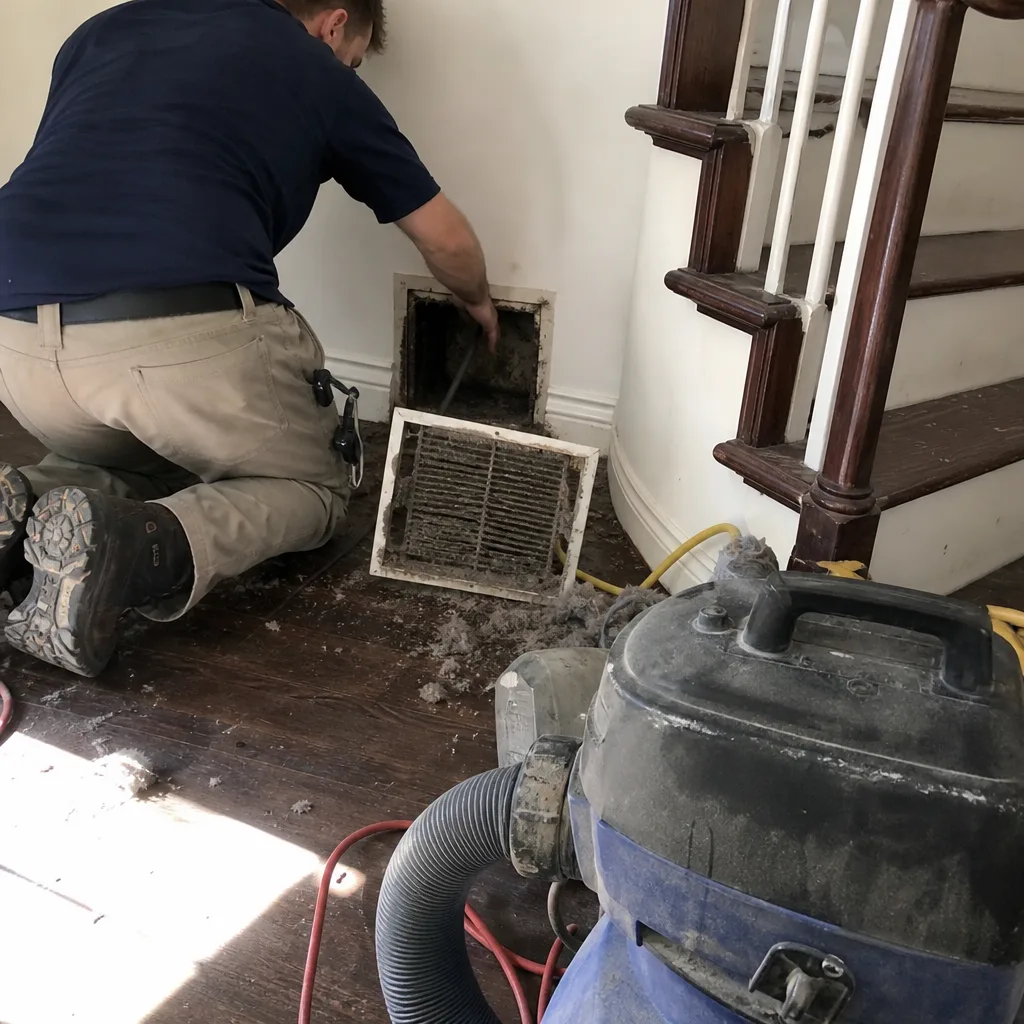 Before
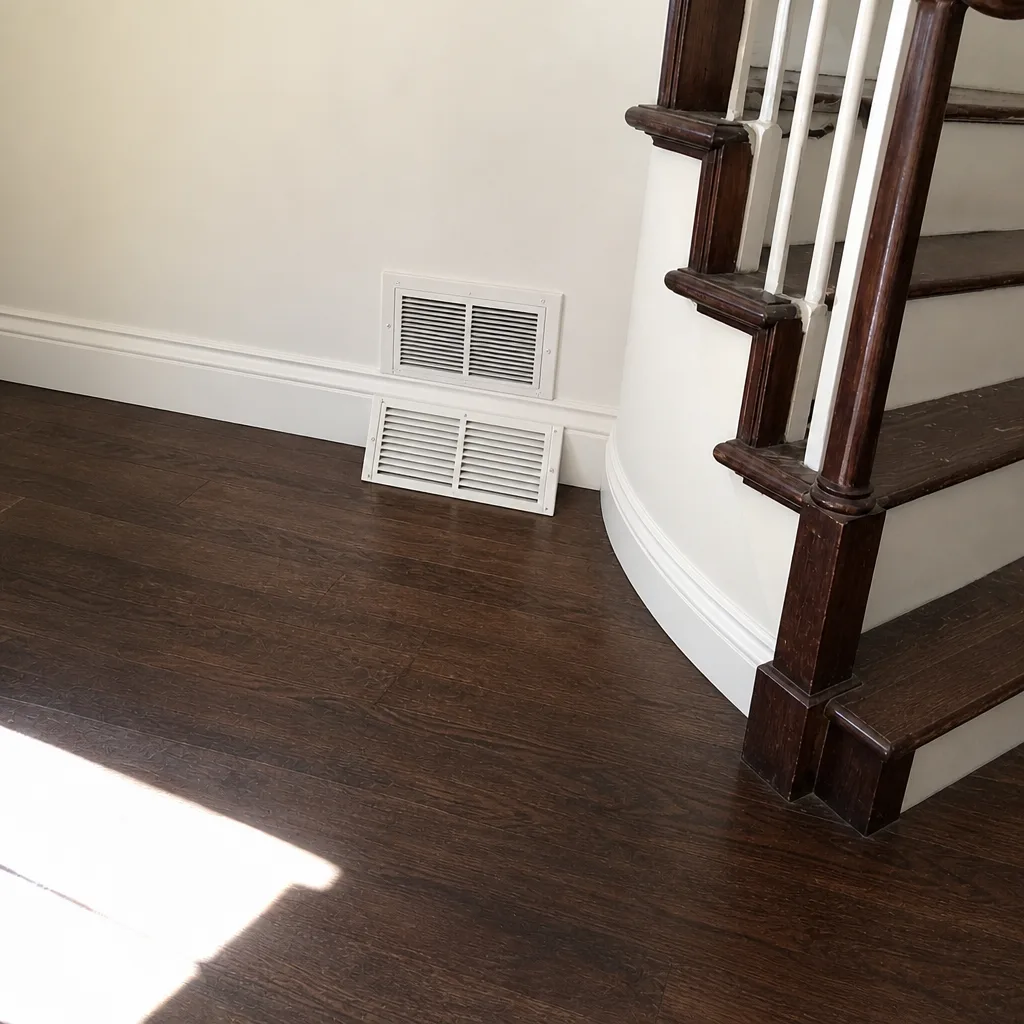 After
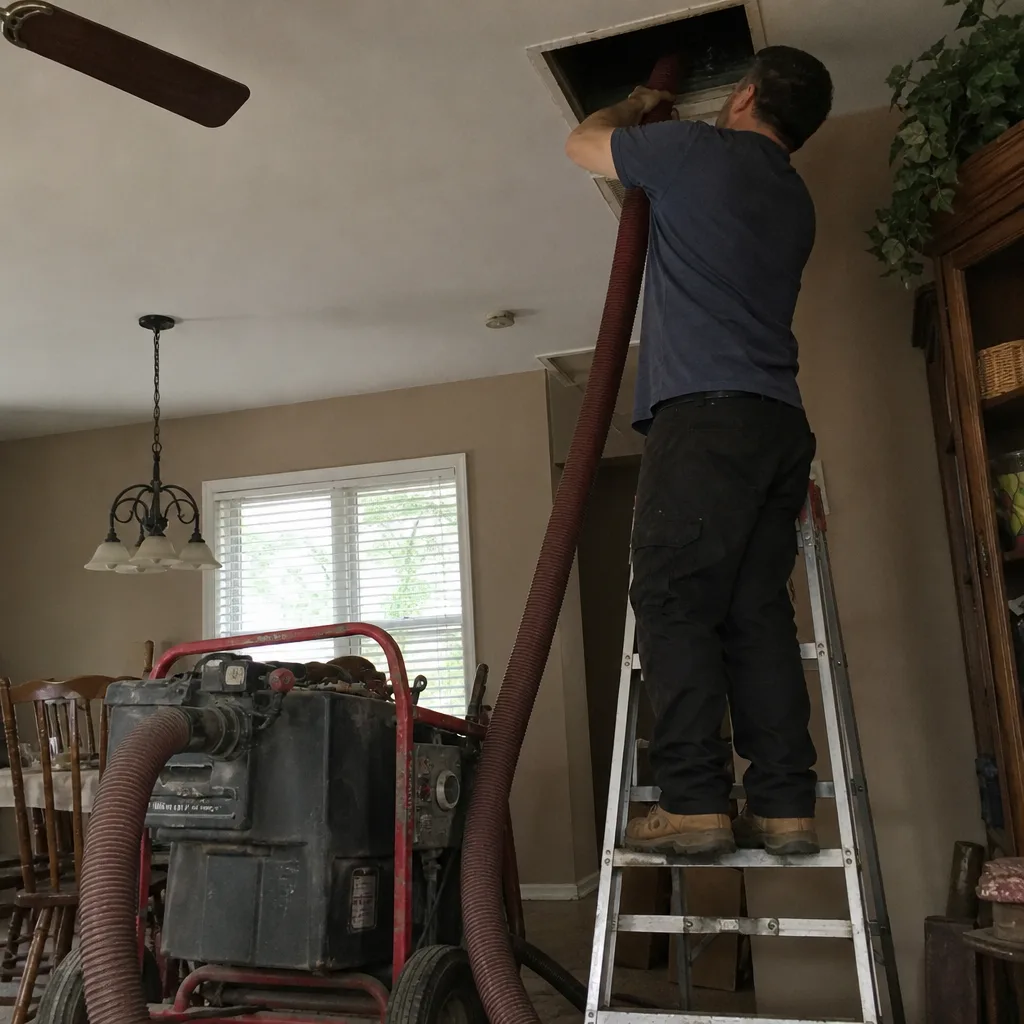 Before
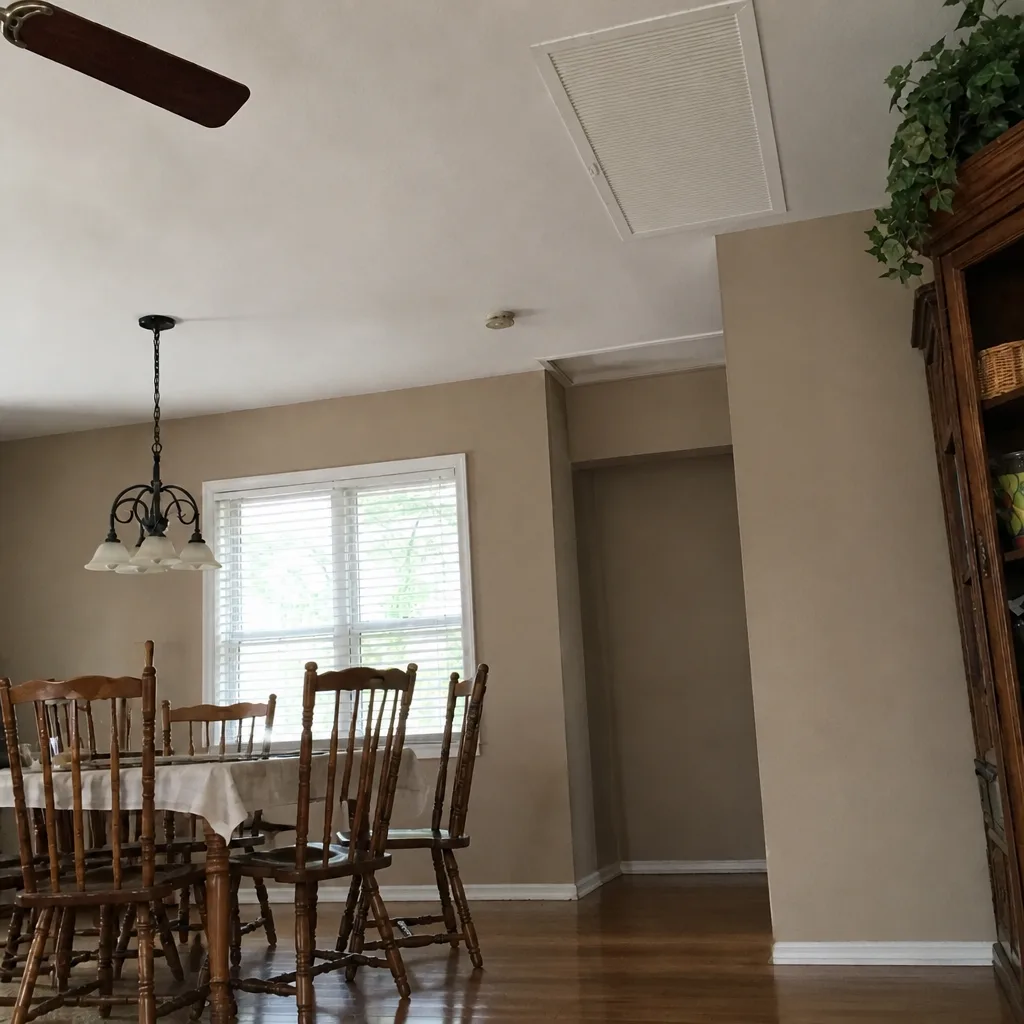 After
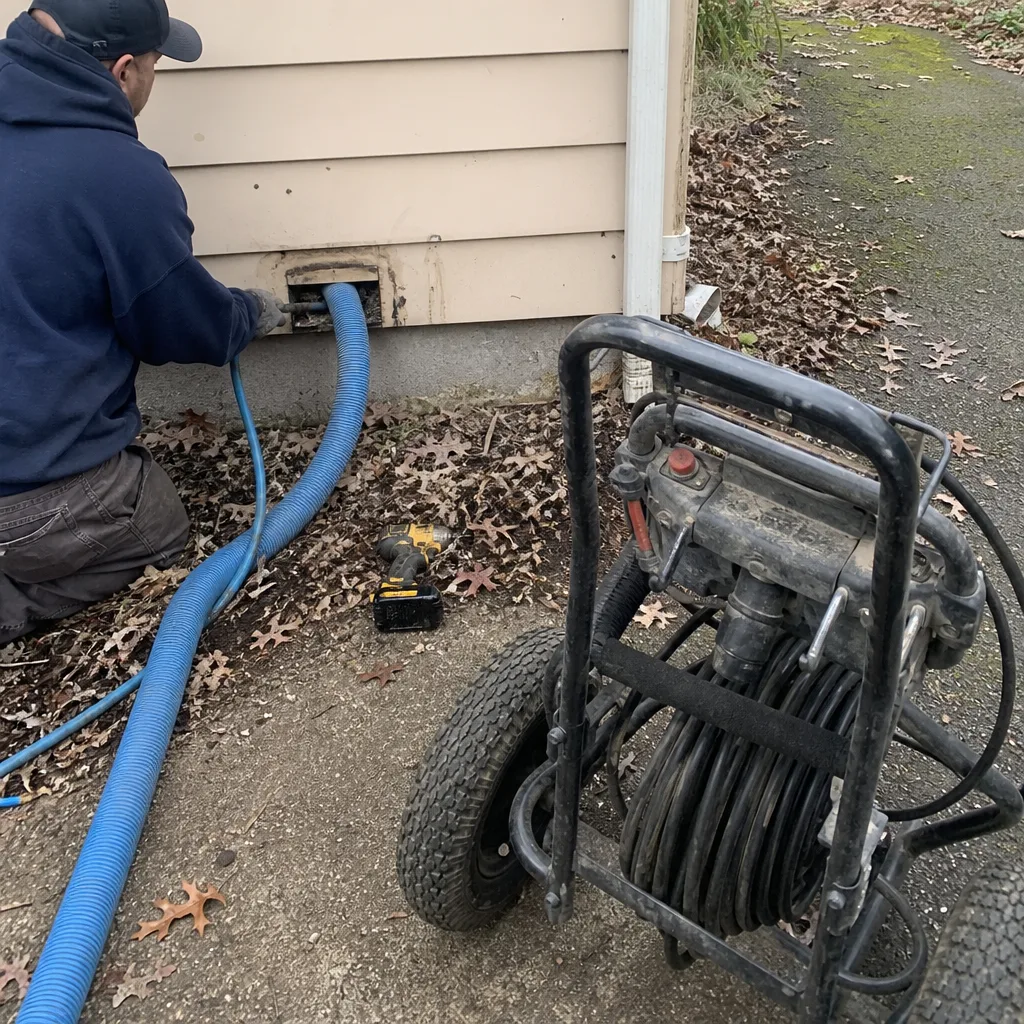 Before
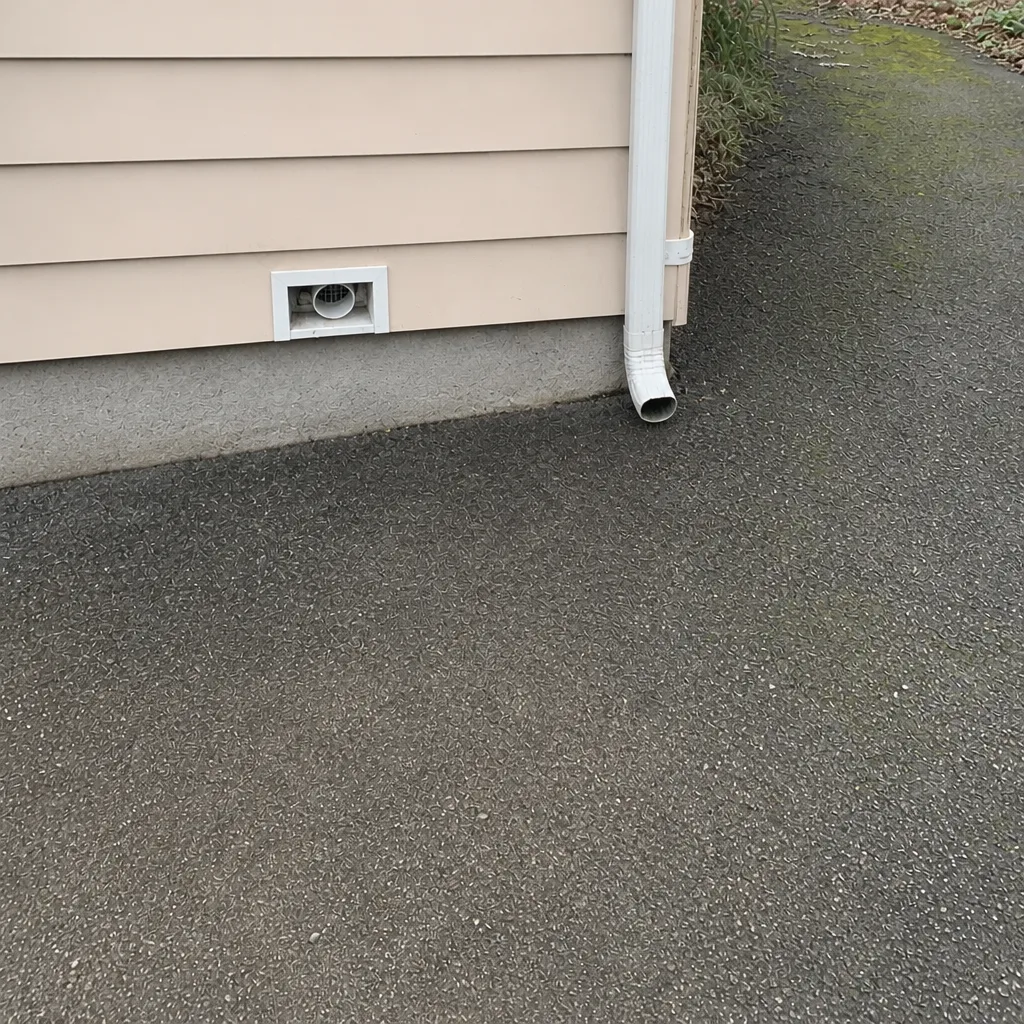 After
Frequently Asked Questions
Post-emergency duct work is priced per system, by written estimate, and ranges above routine cleaning because it includes containment, HEPA extraction and often chemical treatment or repair. The written estimate sets the final price before work starts, so there’s no surprise invoice once the technician is on site. Call (877) 349-6189 for an exact quote – estimates are free.
Yes. Shut power to the HVAC system at the breaker after any basement flood that reaches the equipment or ductwork, and keep it off until a specialist inspects the ducts. Running the blower while ducts are wet or contaminated pushes mold spores and moisture through every room in the house. Call a duct specialist before you turn the system back on.
Often, yes, when the ducts can be tied to the covered event with documentation: photos with timestamps, an inspection report from a duct specialist, and an itemized written estimate. Duct work is frequently a line item the adjuster has to be asked to include, so request it in writing. We can work with your insurer and provide the documentation your claim needs.
As soon as your safety allows and the fire investigator clears the home. Soot and smoke residue settle into duct surfaces quickly, and the longer the residue sits, the more deeply it bonds. The work itself is a specialist job – standard vacuuming doesn’t remove smoke residue, which needs chemical treatment under HEPA containment. Call for an inspection before re-occupying the home.
A storm cleaning deals with a sudden load of outdoor particulate and often with damaged duct runs, which a routine cleaning does not. That means inspection first, containment from the start, and a repair path for any crushed or disconnected duct. Standard cleaning assumes an intact system; storm work verifies it.
No. Post-flood and post-fire duct work involves contaminants – mold, soot, smoke residue – that consumer equipment can’t contain, and doing it yourself typically spreads the contamination into the living space. The job needs HEPA containment and professional-grade extraction. Call (877) 349-6189 for a free estimate.
It’s necessary. Ducts that took on water or fed a wet air handler become a distribution system for mold spores, and the growth window is short: 48 to 72 hours. Skipping the duct work means the house looks dry while the air stays contaminated. Routine cleaning is optional in some homes; post-flood duct cleaning isn’t.
Look for visible debris at registers, dust blowing out of the supply vents after the system runs, unusual noise from the duct runs, or rooms that have lost airflow. A damaged flex run or collapsed hard duct often shows up as a single room losing air. A specialist inspection will confirm what’s actually damaged. Call (877) 349-6189 to book one.
The Bottom Line
St. Louis homes face a specific set of duct emergencies – basement flooding, tornado and storm infiltration, and house fires – and each one calls for a different response than routine cleaning. What every case shares is a short window: mold growth starts before the carpet dries, soot bonds into duct surfaces quickly, and storm debris moves the moment the blower runs. Shut the HVAC off first. Document before you clean. Call a duct specialist early, with a written estimate and a repair path on the same visit. Build the plan before you need it, and the emergency gets smaller. Bellmont Air Duct Cleaning offers free estimates in St. Louis – call (877) 349-6189. We answer 24/7. Fast dispatch from 7am to 7pm, Sunday through Friday.
Written by the team at Bellmont Air Duct Cleaning.