
Last updated November 15, 2026
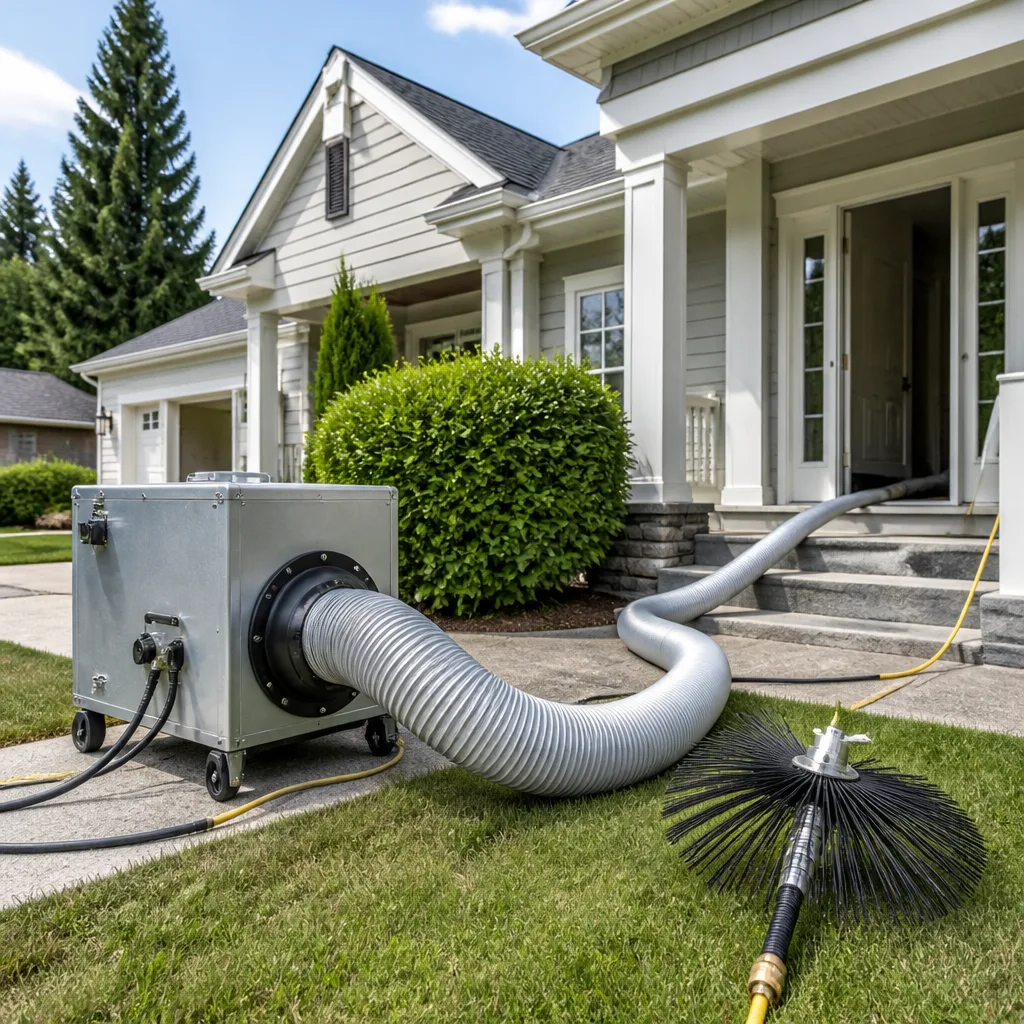 Whole-home duct cleaning
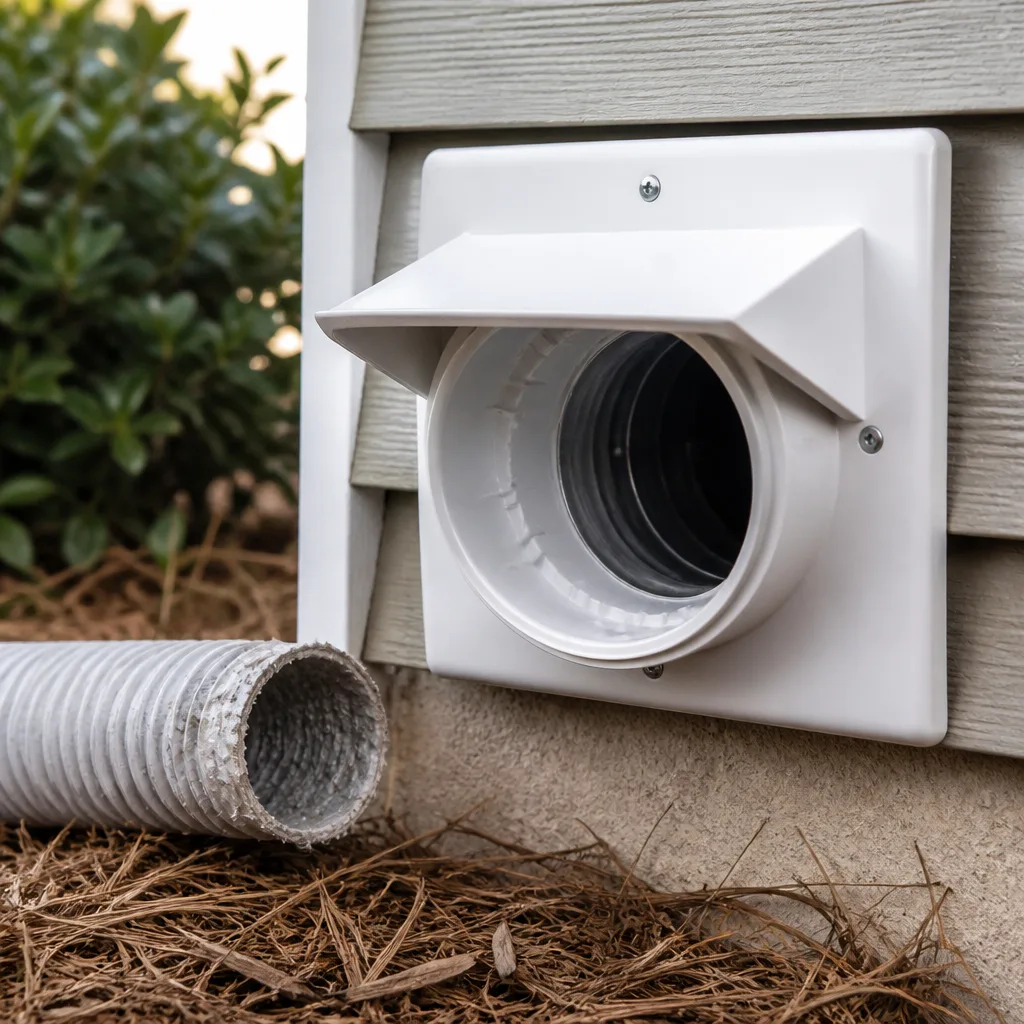 Dryer vent cleaning
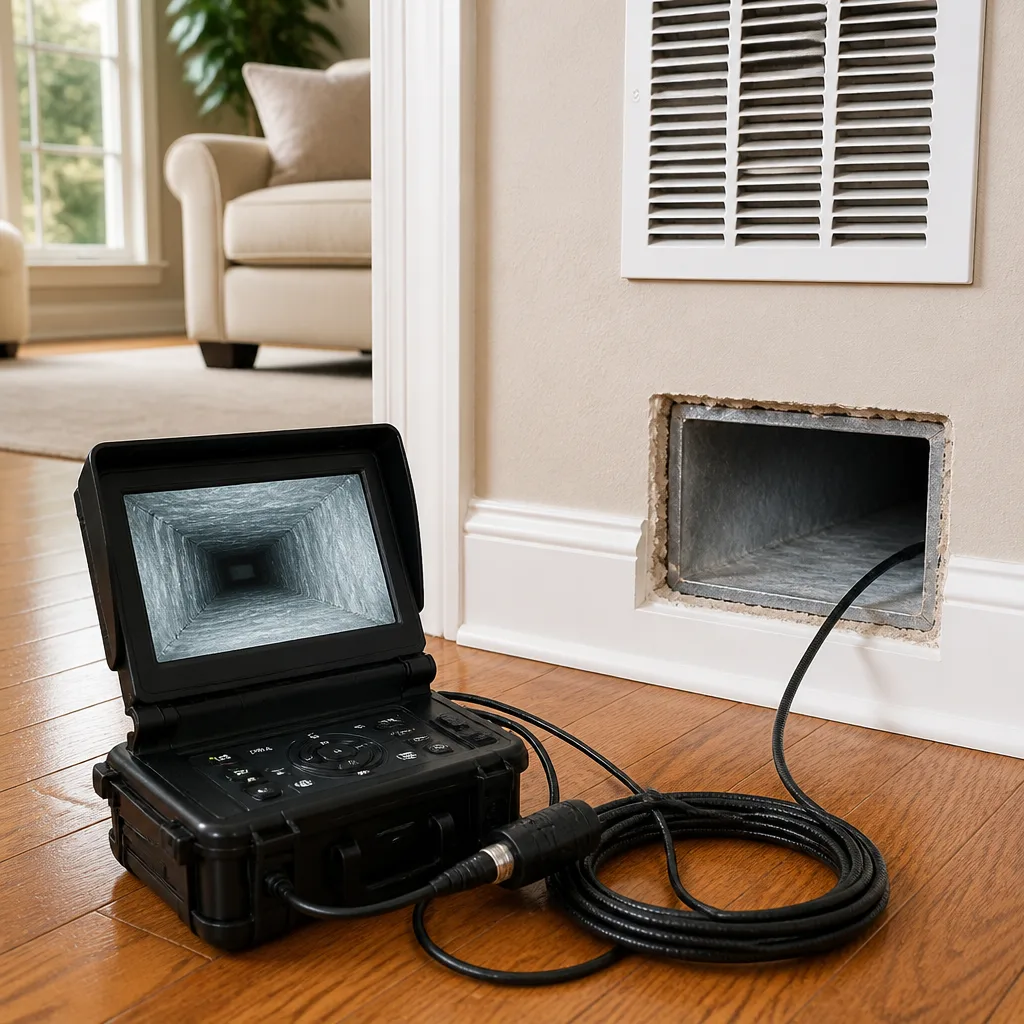 Camera inspection
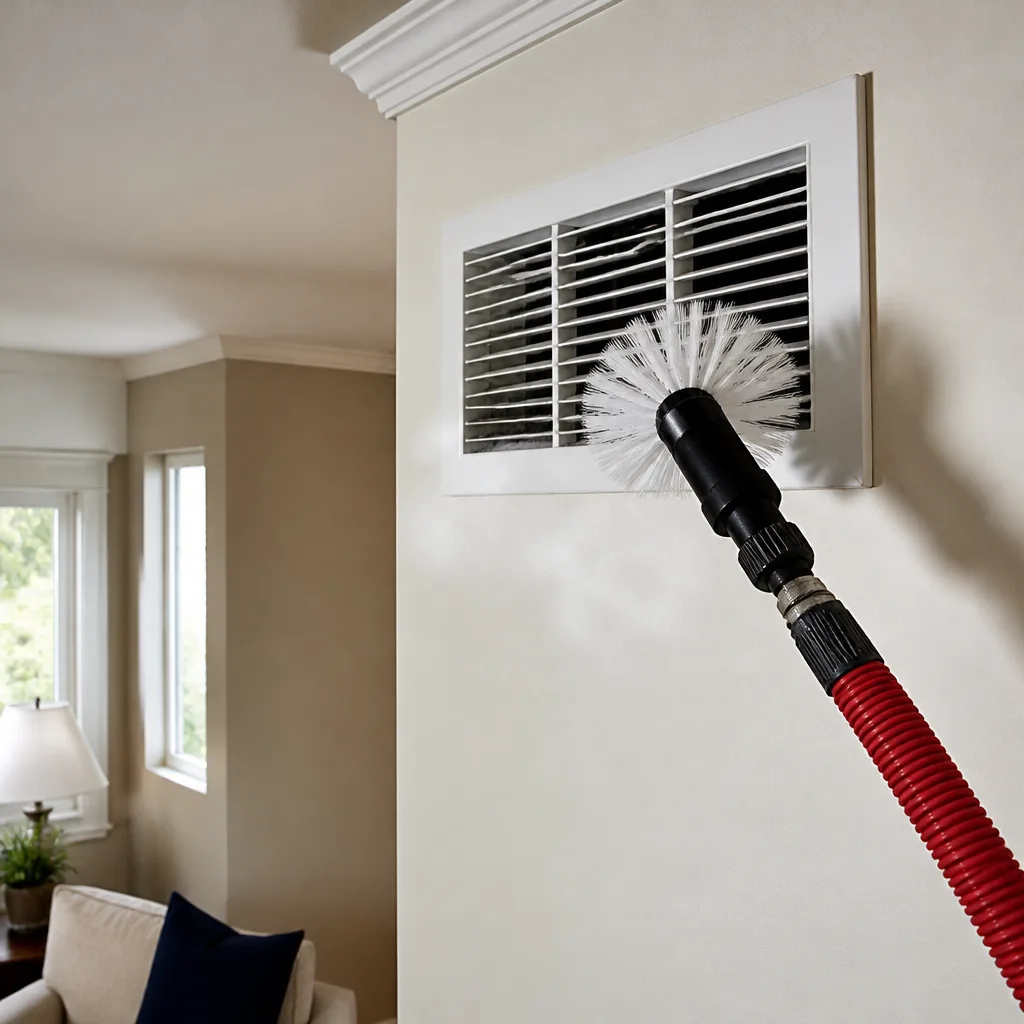 Sanitizing & deodorizing
Whole-system duct and dryer vent check with before-and-after photos - you see exactly what came out of your vents
That "$99 whole-house special" is a bait ad - the real number appears once they are in your hallway, or the "clean" is a shop-vac at the register. We photograph the inside of your ducts before and after instead.
Seasonal Air Duct Cleaning Care for St. Louis: Year-Round Homeowner’s Guide
The worst time to discover your ducts are circulating mold spores is August in St. Louis, which is exactly when most people switch the AC on full blast for the first time since May. By then the conditions that fed the problem have been building for months. Duct care gets treated as one annual errand, something to tick off in spring or forget until the filter looks bad. St. Louis doesn’t work that way. The city runs through four genuinely different seasons, and each one loads your ductwork with a different kind of contamination. This guide breaks the year into four windows, shows you what to check in each, and gives you a simple log so you can tell whether your system is aging faster than it should.
Quick Answer
Seasonal air duct cleaning in St. Louis works best as four smaller checkpoints spread across the year rather than one big annual appointment. Spring and fall are the right times to inspect and clean as your system switches modes, while summer and winter are when conditions inside the ducts get worse fastest. A simple observation log tells you whether the work is due before you feel it in the air.
Styles & brands we work with
- Whole-home duct cleaning
- Dryer vent cleaning
- Camera inspection
- Sanitizing & deodorizing
Table of Contents
- Why Duct Contamination Is Seasonal in St. Louis
- Spring: Post-Winter Dust and the Switch to Cooling
- Summer: Humidity, Coil Condensation, and Growth in Supply Ducts
- Fall: Leaf Debris, Return Air, and Filter Changes Before Heating Season
- Winter: Sealed Homes and Concentrated Pollutants
- How to Build a 12-Month Observation Log
- Repair vs. Cleaning: Knowing Which You Need
- Common Mistakes to Avoid
Why Duct Contamination Is Seasonal in St. Louis
Your ductwork is a closed loop that only gets opened at a few points: the return grilles, the supply registers, and the filter slot. Whatever gets inside stays inside until something moves it out. What changes across the year is what gets in, and how wet the inside of the system happens to be. That’s why a duct system in St. Louis can look clean in October and feel different by mid-July. The dust hasn’t moved. The conditions have.
St. Louis sits in a climate where the same house alternates between well-sealed winter operation and humid summer operation. In winter, the HVAC pulls cold, dry outdoor air through combustion and ventilation points. In summer, that same system runs a chilled coil that condenses water out of the air. The ducts carry air the whole time. The difference is that summer’s air is moist, and heat-pump and AC supply ducts can stay cool between cycles, which leaves condensation on the inside of certain runs.
That’s the part most duct care content skips. The word “dirty” gets used as a blanket term, but contamination comes in at least four flavors, and they don’t show up on the same schedule:
- Dust and lint that settles year-round, accelerating during heating and cooling season.
- Outdoor particulate pulled in through returns, heaviest in fall when leaf litter breaks down and in spring when pollen loads up.
- Biological growth in supply runs that stay damp from coil condensation, most likely in summer and early fall.
- Volatile organic compounds that accumulate in winter when windows stay shut and forced-air heating cycles the same air repeatedly.
Each of these has a window when it’s easiest to catch. Miss the window and the next season pushes the problem deeper into the system. That’s the case for seasonal air duct cleaning in St. Louis: not more cleaning, better-timed cleaning.
This is the kind of work that needs professional-grade equipment, not a shop-vac on wheels. We use Rotobrush and Nikro extraction systems, and we keep Abatement Technologies equipment on hand for proper HEPA containment during cleaning. The rest of this guide walks through the year and how to use each season.
Spring: Post-Winter Dust and the Switch to Cooling
Spring is when the accumulated dust of heating season is still sitting in your ducts, and it’s the best time to deal with it before the AC pulls that dust into every room. After months of continuous forced-air heating, the entire system has run the same air through the same channels hundreds of times. The filter catches most of it. Most. The dust that slips past the filter and settles on the duct walls gets disturbed the moment you switch to cooling mode, because the blower volume typically goes up in cooling season and the AC introduces moisture that clumps the dust.
What to check before you flip the switch:
- Inspect the filter slot. Pull the filter out and look at the frame it sits in. Dust trails along the edges usually mean the filter wasn’t seating properly during heating season.
- Look at the return grilles. A visible gray coating is expected. A gray coating that’s grainy or greasy is not. That one warrants a closer look with a camera.
- Open the register in each room and look inside. You don’t need to reach in. A flashlight at the opening shows whether the supply run is smooth and clean or textured with dust.
- Listen at the air handler. A rattle or a whistle that wasn’t there in the fall means the duct connections have shifted. That’s a repair signal, not a cleaning one.
- Note the smell at first startup. A brief musty smell when the AC first kicks in is normal. A smell that lingers past the first few minutes is not.
Spring cleaning should focus on the main trunk and the returns. The supply runs typically need less attention now than they will by late summer. That’s what separates a good spring appointment from a generic one: cleaning the right ducts for the right season.
One more thing worth knowing. St. Louis spring pollen loads are heavy enough that pulling outside air through a fresh-air intake or an eave vent can push fine particulate straight into the return duct. If your home has an HRV or ERV, that intake grille is worth checking in spring as much as the filter.
Summer: Humidity, Coil Condensation, and Growth in Supply Ducts
Summer is when the ducts stop being a dust problem and start being a moisture problem. The supply runs downstream of the cooling coil sit at around 55 degrees while the surrounding air in the house is often 75 degrees and humid. Between cooling cycles, warm outside air gets pulled into those runs through joints and imperfectly sealed connections, and it condenses on the colder metal. Water plus dust plus a house at 70-something degrees is the exact environment where biological growth starts.
St. Louis summers push relative humidity well above the range ductwork handles well. The same week that feels sticky in your living room feels just as sticky inside a duct run. And the duct run stays dark and undisturbed most of the day, which is the part that matters. Growth in residential ductwork needs three things: moisture, food (dust), and darkness. Summer in St. Louis provides all three.
Signs to watch for in July and August:
- A musty or earthy smell that’s strongest in rooms furthest from the air handler.
- Visible condensation on the outside of supply registers, or water staining around the baseboard grilles.
- Allergy symptoms that get worse in the afternoons when the system cycles on.
- Cold spots that weren’t there in spring.
The right summer move is usually inspection rather than full cleaning. If the supply runs show moisture staining or visible growth, cleaning with proper containment (this is where Abatement Technologies HEPA equipment earns its place) is a real correction. Add-ons matter too: a whole-home dehumidifier from Aprilaire or a properly sized filter media cabinet reduces the conditions that cause the growth in the first place. We work with both Honeywell and Aprilaire systems regularly, and we won’t sell either unless the duct conditions justify it.
If you call mid-July and the ducts smell musty, use the appointment as a diagnosis, not a knee-jerk cleaning. The equipment and the trained eye matter more in July than in any other month.
Fall: Leaf Debris, Return Air, and Filter Changes Before Heating Season
Fall is the most underrated season for duct work in St. Louis. Leaf litter, seed pods, and lawn-care debris break down into fine particulate that gets pulled into returns through any eave vent, gable vent, or fresh-air intake the house has. Add the first big cold snap and the furnace starts pulling air at the highest volume it’ll see all year. By the time you smell “that dusty smell” the first time the heat comes on, that debris is already sitting in the system.
Filter changes matter more in fall than any other season, and the changeover timing is what catches people out. A filter that handled heating season through last winter is probably due for replacement before the new one starts. A filter that was sized for cooling season may not be right for heating season if the blower volume changes.
Fall checklist:
- Replace the filter at the furnace or air handler. Check the filter frame size printed on the filter edge, not the grille. Get the size right before you buy.
- Clean the return grilles. A vacuum with a brush attachment is enough for the grille face. Don’t push anything into the duct.
- Inspect the fresh-air intake. If your home has one, check it for leaf debris that may have collected in the hood.
- Look at every supply register one more time. Compare them to how they looked in spring. If they’re dustier, the return path is moving more particulate than last season.
- Schedule professional cleaning if the filter is loading fast. A filter that needs changing in under a month after cleaning is a duct signal, not a filter failure.
Fall cleaning should hit the returns and the main trunk hard. If you’re going to run a full system cleaning once a year, this is the season for it: dust loads are fresh, heating season hasn’t started, and the cleaning happens before the ducts circulate air into closed rooms for four months.
Winter: Sealed Homes and Concentrated Pollutants
Winter is when a clean duct system matters most and gets checked least. Houses stay closed from November through March in St. Louis. Windows stay shut, doors stay shut, and the forced-air furnace runs through the same volume of indoor air many times a day. Every contaminant in the ductwork gets cycled into every room multiple times. The concentration is what changes: indoor air in a closed house in January is more concentrated than indoor air in an open house in May, even if the ducts haven’t changed at all.
Winter is also when combustion byproducts become a real consideration. A furnace running clean produces harmless exhaust, but a poorly sealed return duct near the furnace can pull combustion gases back into the duct loop instead of letting them vent. That’s not a duct cleaning problem. It’s a duct sealing and safety problem, and it’s worth taking seriously.
What to do in winter:
- Change the filter on a short interval. Heating season loads a filter faster than cooling season in most St. Louis homes.
- Watch for the “new smell” at first heat startup. A brief odor is dust burning off. A smell that lasts more than a few cycles is a duct problem.
- Open a window for a few minutes every couple of weeks. It sounds counterintuitive in January. It still helps dilute accumulated indoor pollutants while the furnace keeps cycling.
- Note any room that stays colder than it should. A duct with a dislodged joint is a duct repair job, not a cleaning job.
In our experience across St. Louis duct systems, the winter calls we see are usually about two things: air quality complaints (musty smells, allergy symptoms) and air balance complaints (one room too cold). Both point to the same underlying need. Layering in a Honeywell or Aprilaire filter cabinet makes a real difference for indoor air in winter, but only when the ducts feeding it are sound.
One final note about heating season in St. Louis: the big swings between 20-degree nights and 60-degree afternoons in a single week are common. When the furnace short-cycles through those swings, the air in the ducts stalls, and a stalled duct is a duct where dust settles instead of being carried to the filter. That’s another reason winter is when you want your duct system at its cleanest, not at its dustiest.
How to Build a 12-Month Observation Log
The single most useful tool for seasonal duct care isn’t on a technician’s truck. It’s a notebook or a note on your phone. A simple 12-month log tells you whether your ducts are aging faster than normal, whether the last cleaning did what it was supposed to, and whether a repair is due before a bigger problem lands. It takes about five minutes a month.
Build the log at the top of a page with the date you started. Then set up nine fields you’ll check monthly:
- Filter condition (clean, dusty, greasy, loaded) and the date you changed it last.
- Register check for each room, with a brief note on visible dust.
- Smell test at the air handler when the system first cycles each morning.
- Sound check for any new rattle, whistle, or click.
- Humidity reading inside the house, taken in the same spot each time.
- Allergy symptoms for household residents, in one sentence.
- Outdoor conditions that might have affected the system that month: pollen peak, leaf fall, first frost, first heat wave.
- Filter times between changes, so you see the trend line not the snapshot.
- Anything else you noticed in one line, no pressure to be precise.
After 12 months, read the log end to end. A duct system that consistently needs a filter every three weeks is running harder than one that needs it every three months. A house that always smells musty in the July-to-August window points to a moisture source that needs professional attention. A house with a specific room that goes cold in winter but never has visible dust is likely dealing with a duct joint that’s come loose, which is a repair, not a cleaning problem.
Bring the log to your next appointment. A technician who can see the year’s pattern makes better decisions on the visit than one who can only see what today’s inspection shows. And a homeowner who has the log knows whether the answer they’re being given matches the evidence.
Repair vs. Cleaning: Knowing Which You Need
Cleaning and repair are two different jobs, and confusing them is the most common reason homeowners end up frustrated with duct work. Cleaning removes what’s inside the ducts. Repair fixes the ducts themselves. A system that has lost a joint, torn a flex run, or disconnected a return is a repair job whether or not the ducts are dirty. A system that’s fully intact but has accumulated dust is a cleaning job.
What repair covers:
- Reconnecting or replacing dislodged duct joints.
- Replacing torn or crushed flex runs.
- Sealing leaks in older metal trunk lines and plenums.
- Repairing disconnected or collapsed returns.
- Correcting duct runs that a past install left undersized or misrouted.
What cleaning covers:
- Extraction of dust, lint, and light debris from supply and return runs.
- Cleaning of the main trunk line and plenum.
- Cleaning of evaporator coil surfaces where accessible.
- Cleaning of register and grille faces.
The reason this distinction matters is that many services offer cleaning and nothing else. When they find a torn duct inside a wall cavity or a crushed flex run in a crawlspace, they can’t fix it. It’s why we offer air duct cleaning and repair together. Same company, same visit. You’re not sent looking for a second contractor the moment the first one finds something.
For homes along the older brick blocks of south St. Louis, or in the century-old housing stock near Tower Grove and Shaw, disconnect and sealing problems are common. Basement trunks in particular are prone to loose joints that leak air year-round. If the log shows a consistent cold-room complaint, ask for a duct inspection rather than a cleaning appointment. That’s the right call, and the right specialist will tell you the same thing.
Common Mistakes to Avoid
- Treating duct care as one annual errand. A single yearly appointment misses the whole point of seasonal cleaning. St. Louis has four distinct contamination windows. Scheduling one appointment means three windows go unmanaged.
- Cleaning in summer to fix an air quality complaint that’s a moisture problem. If the ducts smell musty in July, the cleaning is part of the fix, not the whole fix. Add a dehumidifier or fix the source of the moisture, or the smell returns by August.
- Waiting until the first cold snap to change the filter. By the time the furnace comes on and the dust smell hits, that filter is already overdue. Change it before the switch from cooling to heating, not after.
- Assuming a cheap quote is a good quote. A quote that’s meaningfully lower than everyone else’s usually means less equipment, less containment, or a shorter job. Ask specifically about the extraction equipment and whether containment is used. A shop-vac with a hose on it is not the same tool as a Rotobrush or a Nikro system.
- Using “dirty” as the only signal. A duct system with a musty smell, a cold room, or a fast-loading filter is a system with a problem, whether or not the ducts look obviously dirty. Ignore the “dirty” test and use the log instead.
- Letting a repair item wait for the next cleaning. A dislodged joint that isn’t sealed in March becomes a bigger repair by October. If the technician finds something, get it fixed on the visit rather than on a future visit.
- Hiring a generalist for a specialist job. Duct work is its own trade. The best sign of a specialist is a menu that’s actually focused. If the company also does kitchen remodels and roof replacements, ask whether the duct work is their main category or an add-on.
See the difference
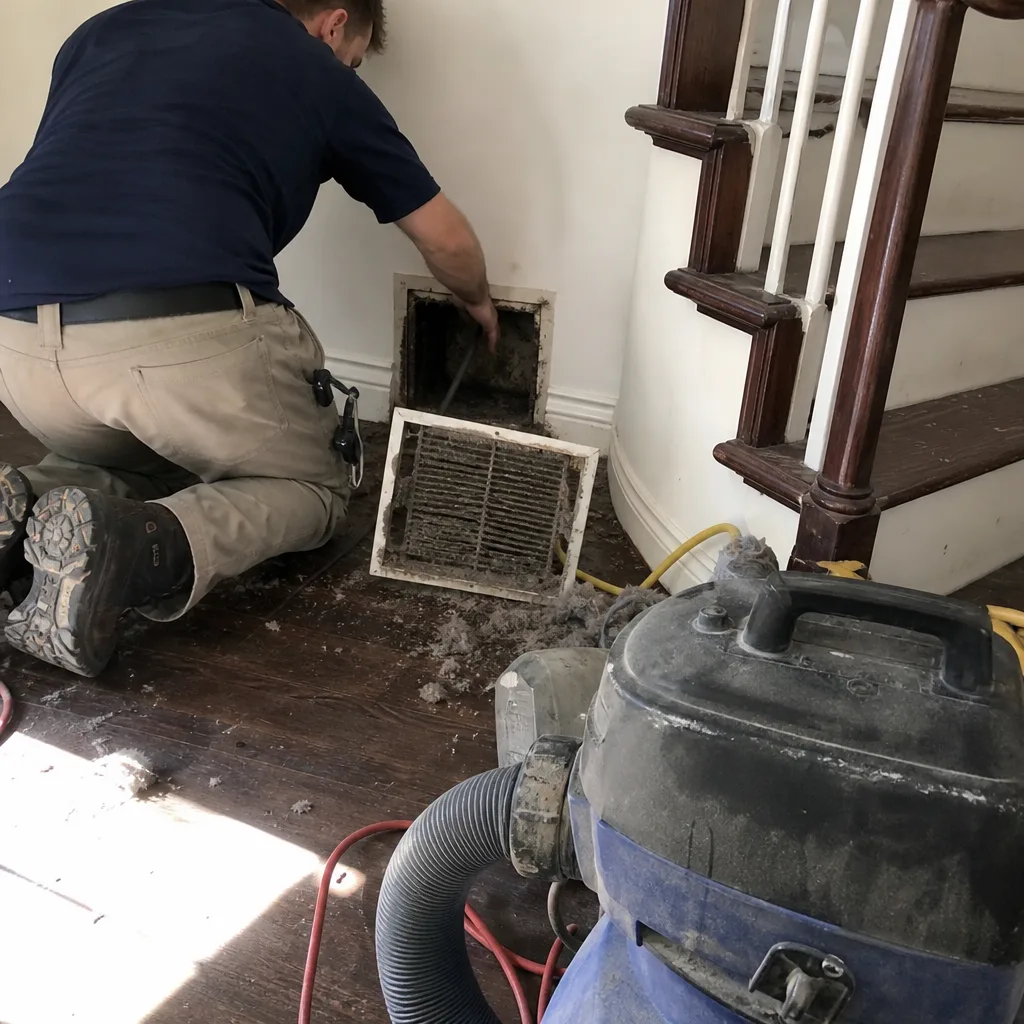 Before
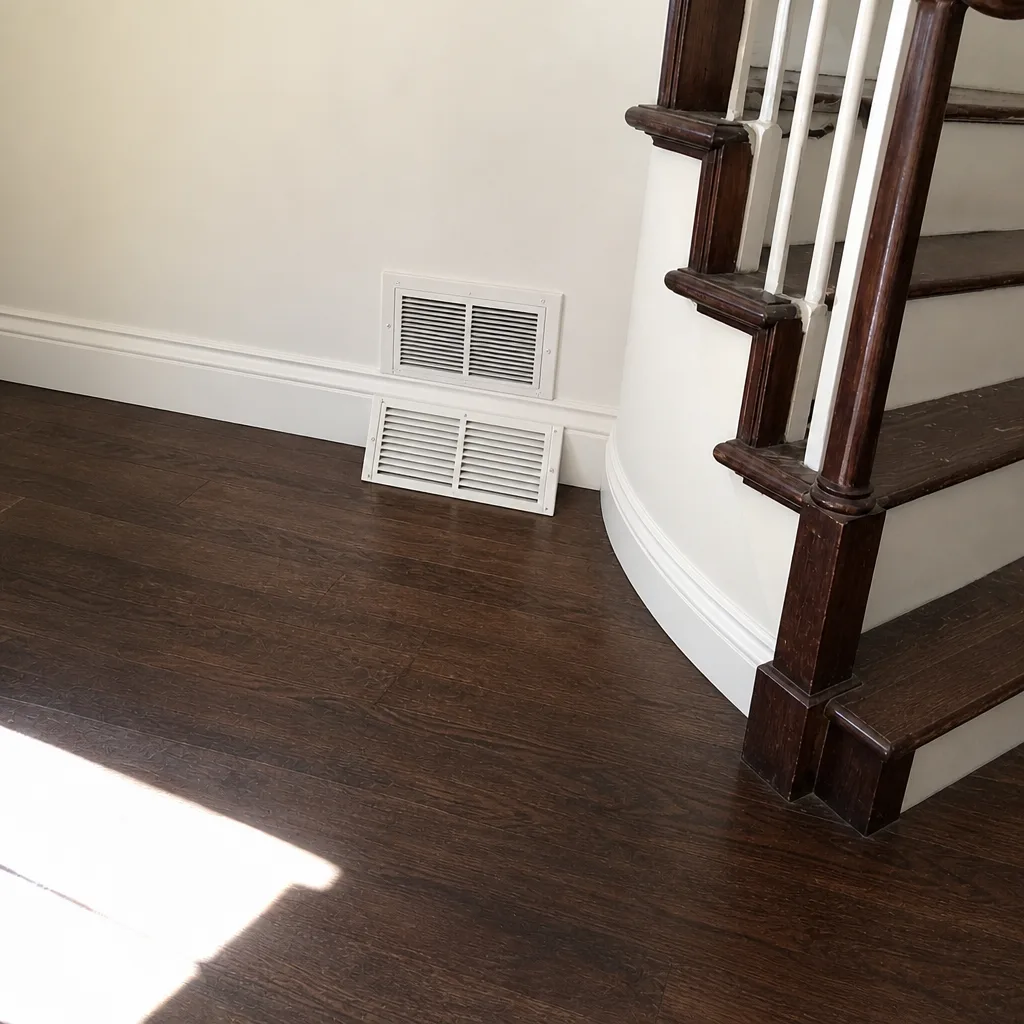 After
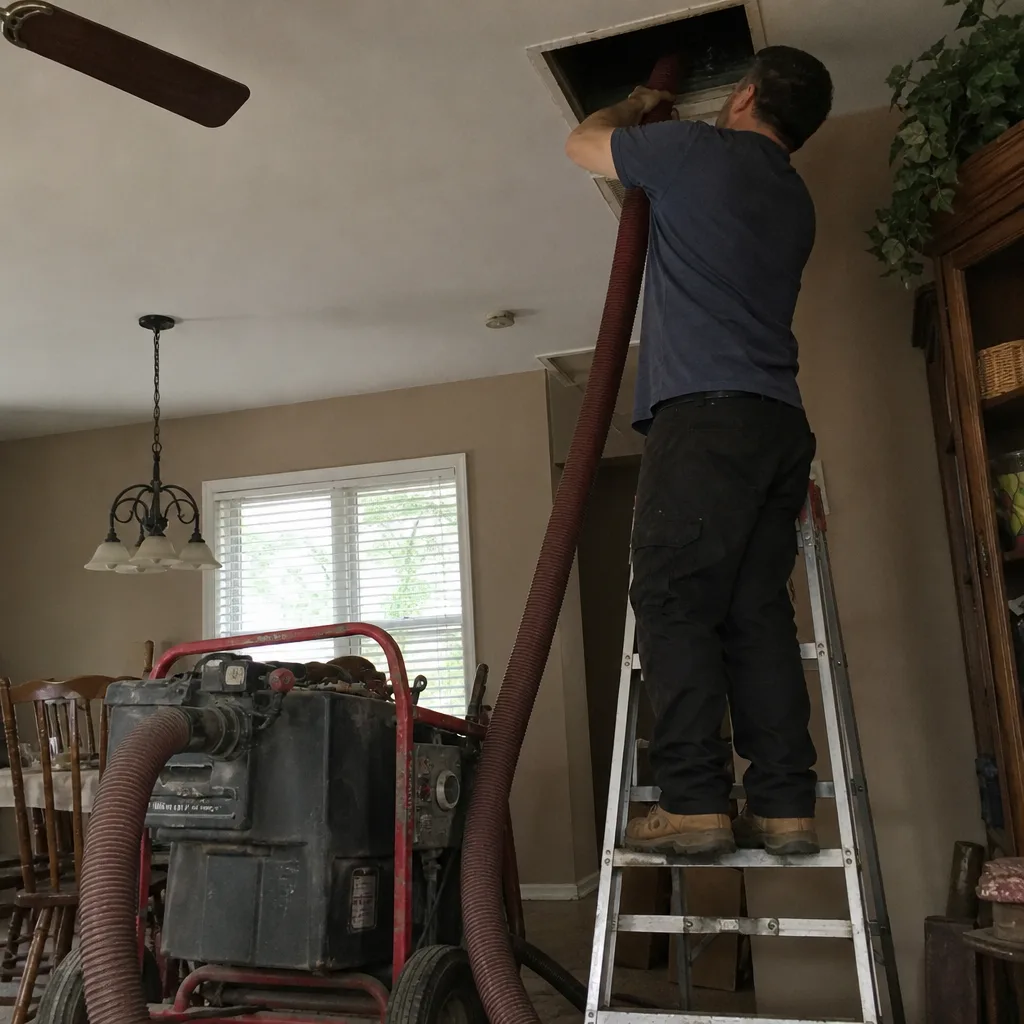 Before
 After
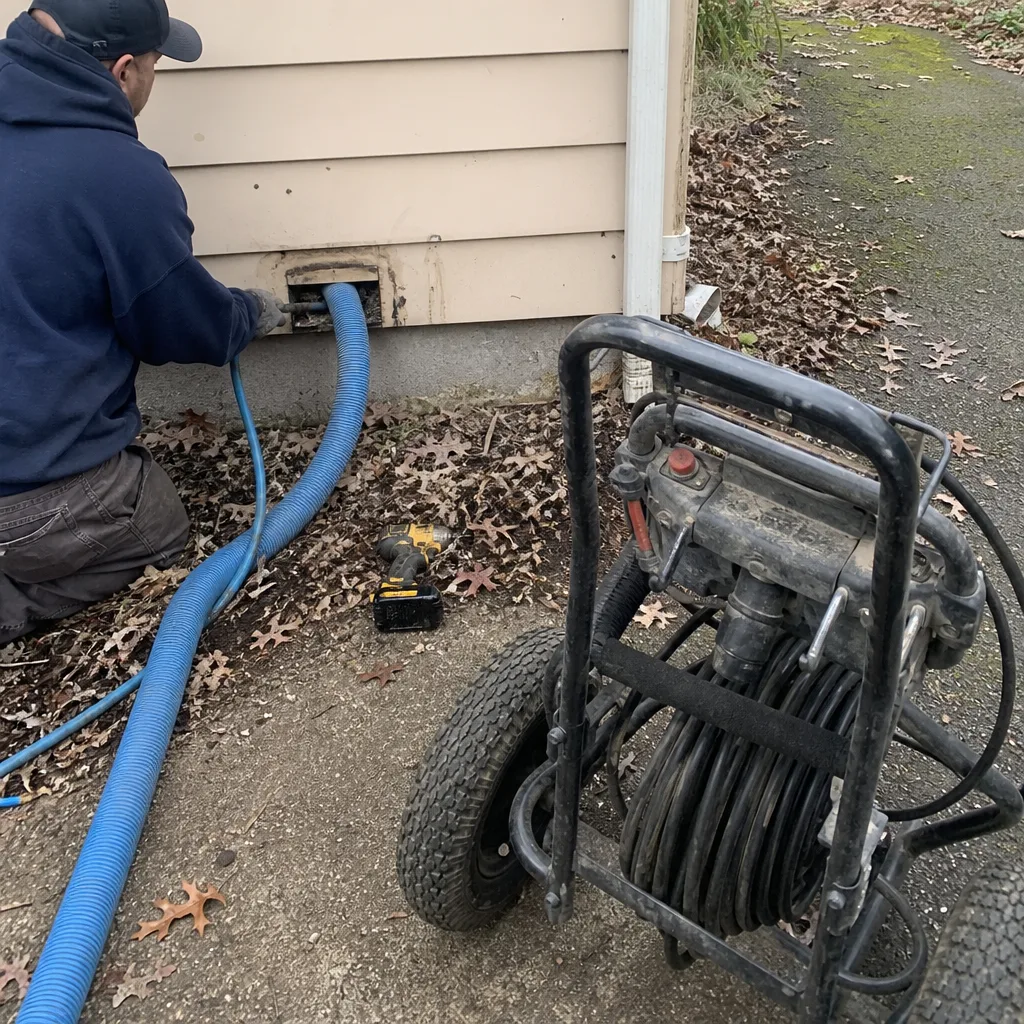 Before
 After
When to Call a Professional
Some duct conditions belong to a specialist the moment they show up. Call us when any of these apply: visible dust trails around every supply register; a musty smell that’s strongest in one area of the house; a filter that needs changing more than once a month after a fresh cleaning; a room that runs cold in winter or warm in summer compared to its neighbors; a rattling or whistling sound that’s new; visible moisture staining near a supply register or a basement trunk; and any duct work that hasn’t been inspected in more than two years.
Bellmont Air Duct Cleaning offers free estimates in St. Louis. We use professional-grade equipment, we clean it, and if it’s broken, we fix it, same visit. Call Bellmont Air Duct Cleaning at (877) 349-6189. We answer 24/7. Fast dispatch from 7am to 7pm, Sunday through Friday.
For the duct cleaning side of the work, our air duct cleaning page walks through our process. For dryer vent concerns, use the same number. Our dryer vent cleaning service addresses one of the leading causes of residential house fires, and it’s a natural add-on to a seasonal duct check. Our service area includes all of St. Louis and the surrounding neighborhoods.
Frequently Asked Questions
Most St. Louis homes do well on an inspection every 12 to 18 months, with actual cleaning in line with what the inspection finds, not on a fixed schedule. Homes with pets, allergy sufferers, recent renovations, or heavy outdoor particulate loads often need cleaning more often than the 18-month mark. The seasonal approach works better than a single annual appointment because four distinct contamination windows means the system’s needs change by month.
Call (877) 349-6189 for a free estimate. We answer 24/7. Fast dispatch from 7am to 7pm, Sunday through Friday.
The most common cause is condensation on the inside of the supply duct runs sitting downstream of the cooling coil plus accumulated dust, which together create a spot where biological growth can start. When the AC first cycles on, that smell gets pushed into the rooms. A thorough cleaning with proper HEPA containment addresses the grown material. A whole-home dehumidifier or a duct sealing job addresses the moisture source. Both matter, and the visit should diagnose which is the primary problem before recommending either.
Call (877) 349-6189 for a free estimate. We answer 24/7. Fast dispatch from 7am to 7pm, Sunday through Friday.
You can absolutely handle the observation-log pieces yourself: filters, register checks, room-by-room temperature notes, and the sound and smell checks at the air handler. The pieces that need a professional are extraction cleaning on the runs, containment, and any duct repair. Consumer-grade vacuums and blowers push dust around more than they pull it out, and they don’t have HEPA filtration, which means fine particulate ends up in your living space. Professional-grade Rotobrush and Nikro extraction is a different category of equipment entirely.
Call (877) 349-6189 for a free estimate. We answer 24/7. Fast dispatch from 7am to 7pm, Sunday through Friday.
September and October are the most useful months for a full system cleaning, because the work happens before heating season and after the summer moisture window closes. March and April are the next best, for similar reasons on the cooling side. A mid-summer cleaning is warranted for a specific problem (musty smell, moisture staining) rather than as routine maintenance. Avoid scheduling full cleanings in the middle of a heat wave, when the system is working hardest and any downtime is least welcome.
Call (877) 349-6189 for a free estimate. We answer 24/7. Fast dispatch from 7am to 7pm, Sunday through Friday.
Cleaning removes accumulated material from ducts that are structurally sound. Repair fixes ducts that are disconnected, crushed, torn, or misrouted. A simple rule: if the ducts are dusty, clean. If a room runs cold or warm compared to its neighbors, or if a technician finds a separated joint or a crushed flex run, repair. In our experience, many St. Louis homes over 40 years old have both issues and need both services on the same visit, which is exactly why we handle both under one company.
Call (877) 349-6189 for a free estimate. We answer 24/7. Fast dispatch from 7am to 7pm, Sunday through Friday.
No. A musty smell can come from a wet filter, moisture in the air handler cabinet, a wet evaporator coil, damp insulation inside the duct, or biological growth on the duct surfaces. The only way to know which is to inspect. Cleaning without diagnosing the source usually fixes the smell temporarily and lets it come back the next humid stretch. A proper inspection with a camera finds the actual source before any cleaning or repair is recommended.
Call (877) 349-6189 for a free estimate. We answer 24/7. Fast dispatch from 7am to 7pm, Sunday through Friday.
The Bottom Line
Duct care in St. Louis works better as four small checkpoints across the year than as one big annual appointment. Deal with post-winter dust in spring. Watch for summer coil condensation and moisture-driven growth in supply runs. Handle fall leaf particulate and the filter change before heating season starts. Keep the winter system clean, because that’s the season when every contaminant in your ducts gets cycled through closed rooms the most. A 12-month observation log tells you whether the schedule is due, and whether a repair is needed rather than a cleaning. That’s the difference between catching up to conditions and getting ahead of them.
We’re Bellmont Air Duct Cleaning, a dedicated indoor-air specialist with a focused three-service menu: air duct cleaning, dryer vent cleaning, and air duct repair. Call (877) 349-6189 for a free estimate. We answer 24/7. Fast dispatch from 7am to 7pm, Sunday through Friday. Serving the St. Louis area and its surrounding neighborhoods. Our technicians have up to 9 years of experience.
Written by the team at Bellmont Air Duct Cleaning.